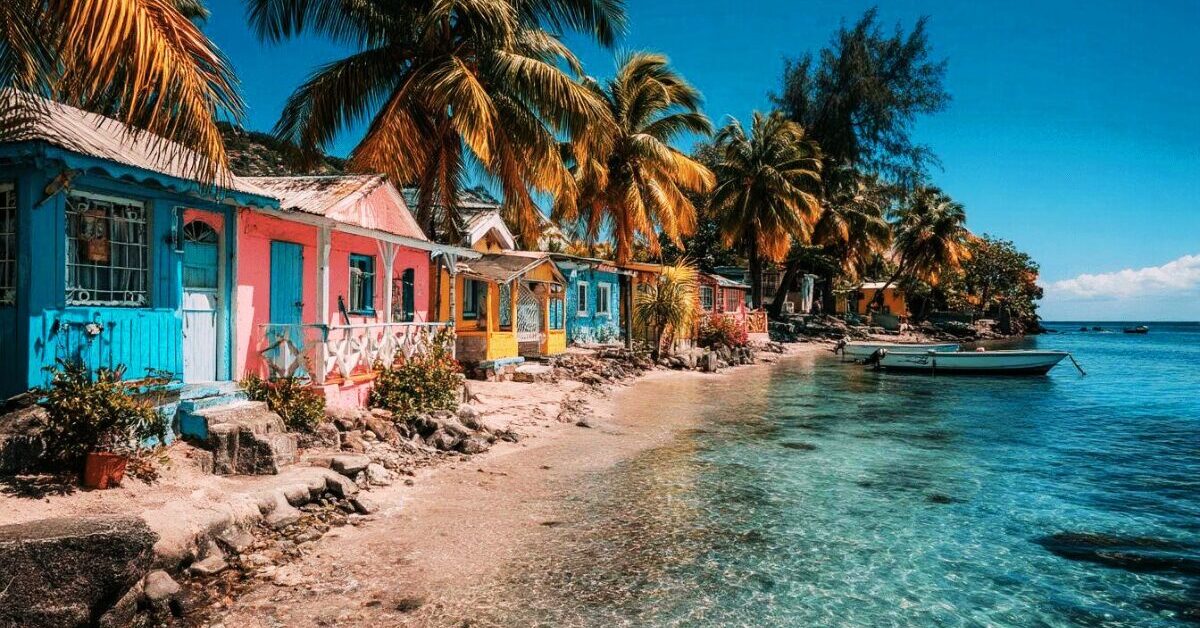
If your next vacation has you stuck in a painful dilemma between France and the tropics, Guadeloupe Island is the answer. Shaped like a butterfly and edged by turquoise lagoons, Guadeloupe is the hottest new place to go this year! The island blends French savoir-faire with Caribbean rhythm: rainforests rising behind white-sand beaches, Creole music drifting past boulangeries, and a pace that invites you to slow down without sacrificing on adventure.
For years, the island lingered just beyond the spotlight, eclipsed by Jamaica’s musical swagger and the Bahamas’ polished resort appeal. Then travel tastes shifted. Travelers began craving places with a distinctive, lived-in local culture, and millions caught a glimpse of Guadeloupe through the British series Death in Paradise, filmed among the island’s pastel towns, palm-lined bays, and blazing tropical light.
Now, travel insiders are discovering all that Guadeloupe has to offer. Just a few hours from Miami, the island delivers the rare luxury of allowing you to choose everything at once: France and the Caribbean, culture and nature, and a party that never ends.
A French State With a Caribbean Rhythm
France extends far beyond Europe, and Guadeloupe is one of its overseas states in the Caribbean, comparable to Hawaii or Alaska in the American imagination, and the people who live here are French citizens. French is the official language, Creole is spoken everywhere, and English is increasingly common as tourism continues to grow. The euro is its currency, and as part of the European Union, the island offers infrastructure and public services that feel reassuringly familiar to visitors. Guadeloupe’s identity has been shaped by centuries of exchange, blending French, African, and Indian influences into a culture that is unmistakably its own. First sighted by Christopher Columbus in 1493 and under French control since the 17th century, the island has developed a strong sense of self, expressed through language, music, food, and celebration.
Travel logistics are simple. American visitors can stay in Guadeloupe for up to 90 days without a visa. There are direct flights from Paris and Miami, often at surprisingly accessible prices. Accommodations range from large resorts, to boutique hotels, to private villas with sea views and swimming pools. Guadeloupe is also one of the more prosperous islands in the Caribbean, and visitors quickly notice the sense of ease and security that comes with it.
Carnival: Two Months of Celebrations

If Guadeloupe has a season that defines it, this is it. Carnival, known locally as Vaval, is not a weekend event or a single parade; it is a way of life that takes over the island for nearly two months. Festivities begin on the first Sunday of January, just days after New Year’s celebrations, and continue until Ash Wednesday in February or March. From December through February, the island barely pauses. Christmas itself is celebrated for weeks, with December 24 resembling a festive marathon of food, music, and dancing that can last until dawn. New Year’s Eve follows the same joyful logic, with neighbors, friends, and extended families celebrating together in the streets. Carnival then picks up immediately. Every Sunday brings daytime parades. Every Friday and Saturday night, drums echo through towns across the island. Costumes change week by week. Early in the season, they are playful and improvised. Dance groups move in tight formations, performing choreographies passed down through generations. The emotional climax comes on Ash Wednesday, when an effigy of Vaval, the symbolic king of Carnival, is burned before crowds dressed in black and white. It is theatrical and cathartic, a collective farewell to excess and celebration.
Music in Guadeloupe is not confined to stages or festivals. It spills into the streets. Drummers gather spontaneously, playing gwo ka as passersby stop to dance. The island is also the birthplace of zouk, now known worldwide. Locals say “an nou zouké” to mean “let’s dance,” and the most popular style today, zouk love, is slow and sensual. Other sounds flow just as easily. Reggae, dancehall, rap, salsa, and compas, introduced by Haitian immigrants, all have a place. Traditional dances like the beguine, mazurka, and quadrille are still performed, often in full traditional dress, keeping history alive through movement.
Eating in Guadeloupe

While you can certainly find traditional French dishes in Guadeloupe, the real reason to come hungry is the local cuisine. Guadeloupean food mirrors the island itself. It is bold, layered, and deeply tied to history, shaped by French technique, African traditions, and Indian spices, all grounded in tropical ingredients. Meals often begin with accras de morue, crisp salt cod fritters served hot and eaten casually, sometimes before you have even settled at the table. Then comes colombo, the island’s signature dish. Introduced by Indian laborers in the 19th century, it is Guadeloupe’s answer to curry, fragrant with turmeric, coriander, and local spices. Chicken is the most common version, but goat, pork, lamb, crab, lambi (conch), and fish are equally beloved. Other dishes appear according to season and tradition. Poulet boucané, smoked slowly over wood fires, is deeply aromatic. Court-bouillon de poisson is a light yet intensely flavored fish stew. During Easter, families prepare matété de crabes, a rich crab-and-rice dish tied to ritual and reunion. When spiny lobster is in season, it is grilled simply and served with lime, letting the sweetness speak for itself. Vegetarians are also well accommodated in Guadeloupe, as comforting dishes like gratin de christophine, made from chayote squash, are widely available. Street food is everywhere and essential to daily life. Roadside stands and food trucks sell bokits, fried bread sandwiches filled with fish, chicken, or vegetables. Vendors circulate with homemade coconut ice cream, while children and adults alike line up for sinobol, shaved ice soaked in brightly colored syrup.
And then there is rum. Guadeloupe is one of the world’s great rum islands, renowned for rhum agricole, distilled from fresh sugarcane juice rather than molasses. Distilleries such as Distillerie Bologne and Distillerie Damoiseau produce powerful, expressive spirits, often bottled at over 100 proof. On Marie-Galante, rum is famously even stronger, sometimes reaching 124 proof, and decidedly not for beginners. The island’s signature drink, the ti-punch, is made simply with rum, lime, and sugar, offering a moment of relaxation after a day of exploring.
What to Do in Guadeloupe
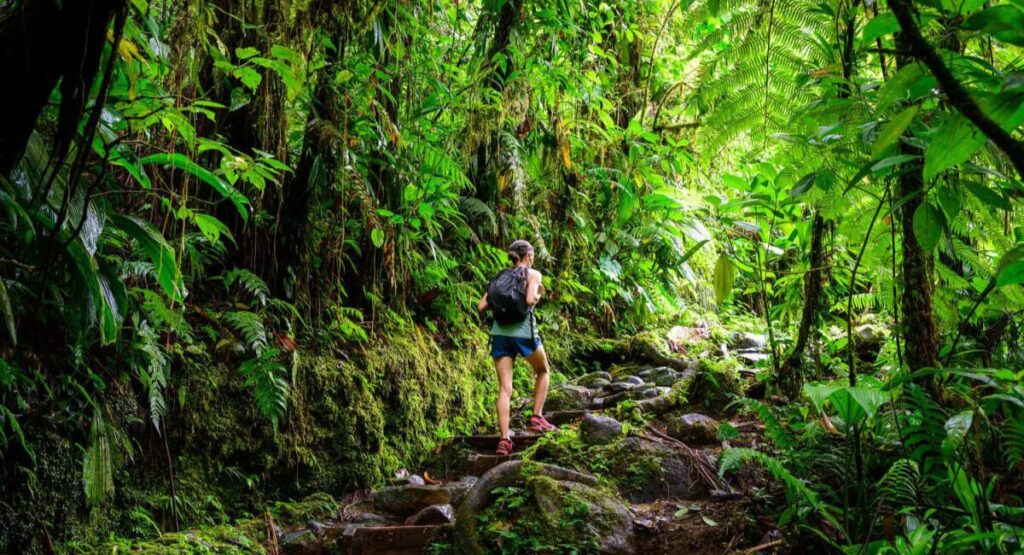
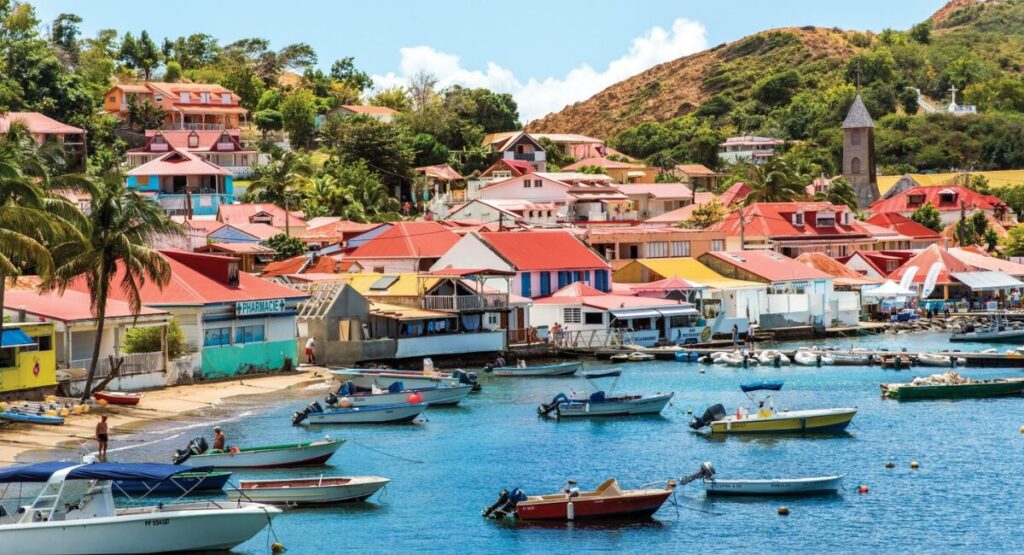
Guadeloupe is one of the Caribbean’s rare destinations where beach time and adventure feel equally compelling. On the western side, Basse-Terre is lush and dramatic. Trails wind through Guadeloupe National Park, leading to waterfalls and cool swimming pools hidden beneath rainforest canopies. More adventurous visitors climb La Soufrière, whose summit offers sweeping views across the island on clear days. Underwater, the island is just as rich. The Cousteau Reserve, off the coast of Bouillante, is one of the Caribbean’s most protected marine areas. Snorkeling and diving reveal coral gardens, sea turtles, and schools of fish in remarkably clear water. To the east, Grande-Terre is built for leisure. Pale sand beaches slope gently into shallow lagoons ideal for swimming and paddleboarding. The coastline is dotted with bakeries, cafés, and markets where mornings stretch easily into afternoons. The island is also popular with surfers, with multiple spots catering to different skill levels. Beyond the main island, day trips are essential. Les Saintes offers one of the most beautiful bays in the Caribbean and an atmosphere that feels intimate and timeless. Marie-Galante is quieter, shaped by sugarcane fields, old windmills, and rum distilleries. La Désirade is rugged and windswept, ideal for travelers seeking space and simplicity.
Markets are another highlight of Guadeloupe. In Pointe-à-Pitre, the island’s largest market, stalls overflow with spices, tropical fruit, and local produce. Vendors, often dressed in traditional madras fabrics, sell everything from fiery piment antillais to local remedies like bois bandé, said to have aphrodisiac properties. Prices are the same for locals and visitors, and bargaining is not customary. Courtesy, however, often comes with a bonus.
Guadeloupe is no longer flying under the radar. But it has not lost its balance. It remains festive without being overwhelming, cultivated without being stiff, and welcoming without being staged. For travelers seeking a Caribbean island with real culture, real flavor, and real energy, Guadeloupe is a long-overdue discovery.
Mariam, originally from Paris, now calls the Bay Area home. A seasoned traveler and writer, she’s always on the lookout for exciting new restaurants, hidden bars, and offbeat experiences. She has a passion for writing about travel, food, people, and all things unexpected. If you’d like to share your tips and events about Paris and France, please feel free to send them her way at [email protected].