
[Sponsored post] There is a building in Palermo that takes a moment to fully appreciate. The Cappella Palatina, the private royal chapel of Sicily’s Norman Palace, was commissioned in the twelfth century by the culturally tolerant ruler, Roger II. Here was a king who held court in Arabic, kept Muslim scholars close, and ordered a ceiling of gilded Islamic muqarnas (honeycomb vaulting) above walls covered in Byzantine mosaics. The chapel’s inscriptions run in Arabic, Latin, and Greek. It is, in the truest sense, a Mediterranean building: a place where three civilizations converged so fluently that what they created together could not have come from any one of them alone.
The Mediterranean does this everywhere. More than a fabled sea, it is a sustained conversation between cultures that traded, conquered, and transformed each other across millennia. The Phoenicians carried the alphabet westward. The Greeks built port cities in Turkey and columns in Provence. The Venetians carved their lion into harbor walls from the Dalmatian Coast to the shores of Crete. Moorish influences crowned fortresses and architectural gardens from Morocco to Andalusia, and from there, by way of the Norman kings, to Sicily.
For those whose Mediterranean begins closer to home, the picture is no less layered. The light of the Côte d’Azur that drew Renoir and Matisse to the coast and changed the way they painted. The Palace of the Popes rising above Avignon was the center of the Catholic world for seventy years. Bonifacio, perched white above its cliffs at the southern tip of Corsica, is a French town that feels like the edge of the world. Each of these places is the living result of the same enduring story—civilizations building from one to the next, intertwined yet entirely unique.

The Mediterranean by Sea
To visit any single Mediterranean destination is to see one frame of a very long film. To move through them by sea, the way the civilizations themselves moved, is to watch the story unfold. A morning in Corfu, a day off the Sardinian coast, an afternoon in Tunis where the ruins of Carthage lie quiet above the bay. The connections may be invisible on a map, but they are unmistakable underfoot.
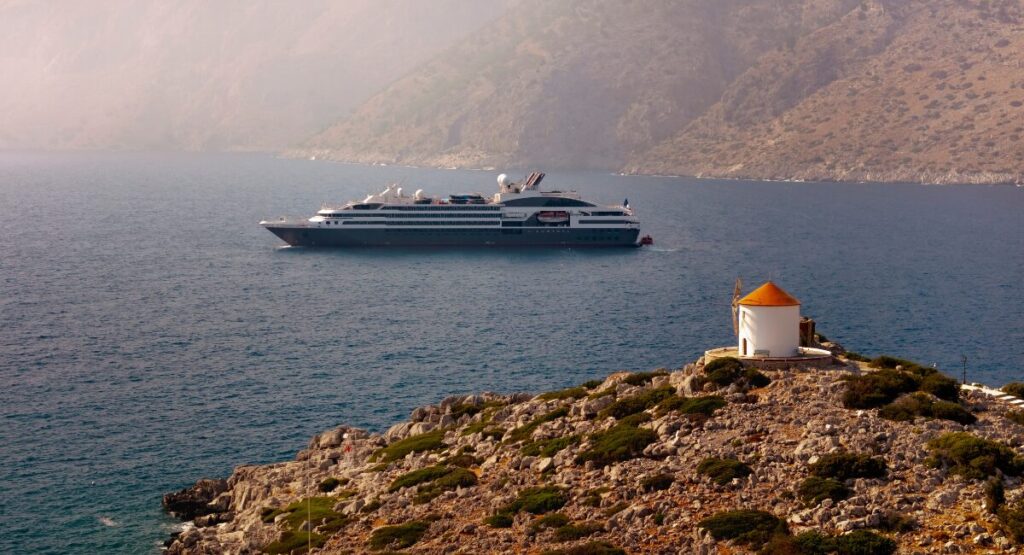
PONANT EXPLORATIONS knows these waters intimately and has built a collection of Mediterranean voyages that reveals their complexity, culture, and beauty in full. Aboard a fleet of small, French-flagged ships, all-inclusive journeys are shaped by a deep commitment to discovery and a French joie de vivre. Cuisine is developed in partnership with Alain Ducasse and his Ducasse Conseil. Historians and cultural specialists travel on select voyages to illuminate what lies ashore with the kind of insight that changes how a place is understood.
Journeys from West to East
Ranging from eight to 10 nights, the roster of itineraries is broad with a journey to suit every schedule and inclination for discovery. A sailing along the Andalusian coast traces the Moorish arc from the Straits of Gibraltar through the whitewashed villages and soaring architecture of Cádiz and Málaga, with a visiting geologist and archaeologist lending context to what guests encounter ashore. On another departure, a total solar eclipse with four minutes of totality unfolds over the Atlantic. Witnessed from the deck on the open sea, it is an experience that inspires the same awe today as it did in ancient times.
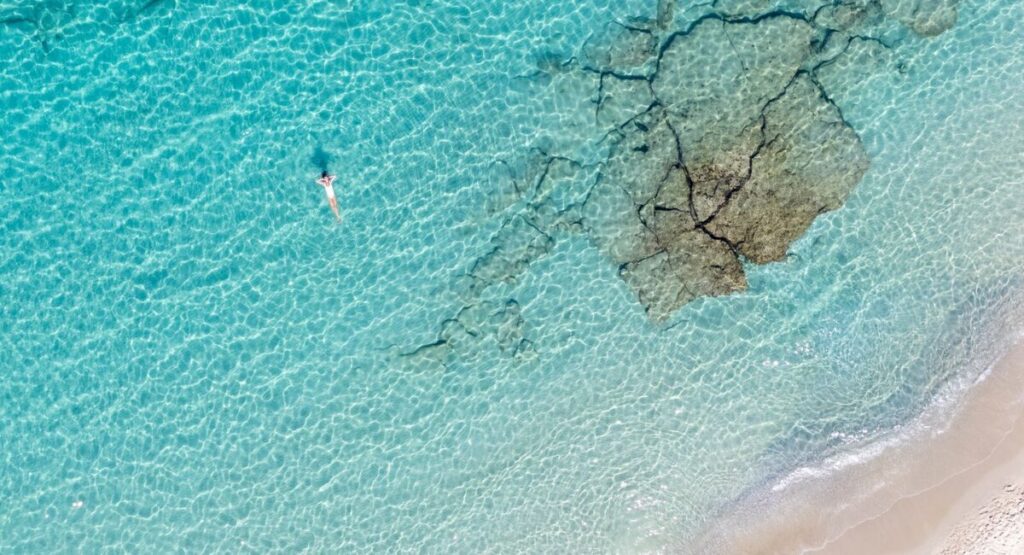
The islands of the western Mediterranean form one natural arc of discovery, from Corsica’s imperial city of Ajaccio and Sardinia’s turquoise coast to the Balearics where Ibiza and Mahón carry centuries of influence in their stones. With extended stays and included shore experiences in every port, sailings move through waters the Greeks and Phoenicians once knew as intimately as we know roads.
The French and Italian Rivieras offer a different kind of richness. From Marseille through Nice, where Bonnard and Miró found their color, the coast moves eastward through Portofino and Porto Venere to Livorno, the gateway to Florence and the Cinque Terre, where villages cling to cliffs above the Ligurian Sea.
Further south, the North African coast offers some of the most ancient shorelines in the Mediterranean. Tunis holds the ruins of Carthage above the bay, alongside the treasures of the Bardo Museum. A journey along the coasts of Algeria and Morocco loops north toward Cartagena and Málaga, closing the circle of the Moorish arc where it began. On a sailing offered in alliance with Relais & Châteaux, a Michelin-starred chef brings the flavors of this southern world to the table, while an oenologist leads tastings from terroirs as old as the empires that planted them.
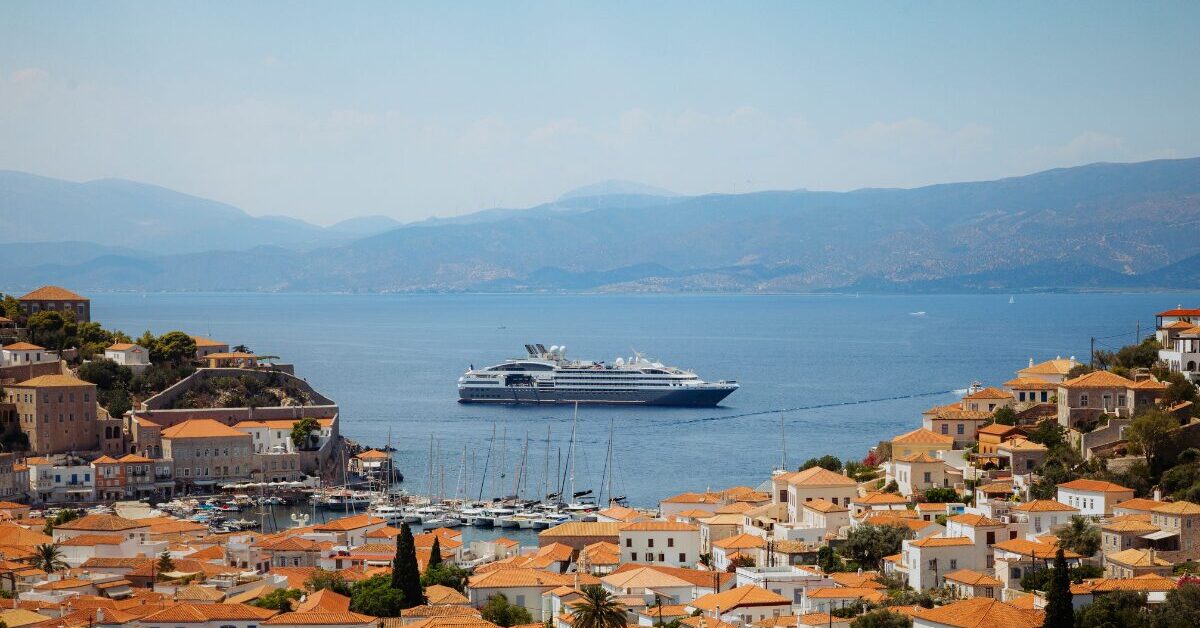
The eastern Mediterranean carries the story of discovery to its oldest chapters. Reserved for the smallest, most purposefully built ships, the Corinth Canal opens a passage few travelers ever make. Beyond lies Ephesus, where marble columns still stand in the grass, and Istanbul, a city of minarets and mosques where a single strait holds two continents apart. Islands like Mykonos and Santorini hold a particular enchantment, while the stone mansions above the harbor in Hydra have kept the same composure for two centuries.
The Tapestry of Time
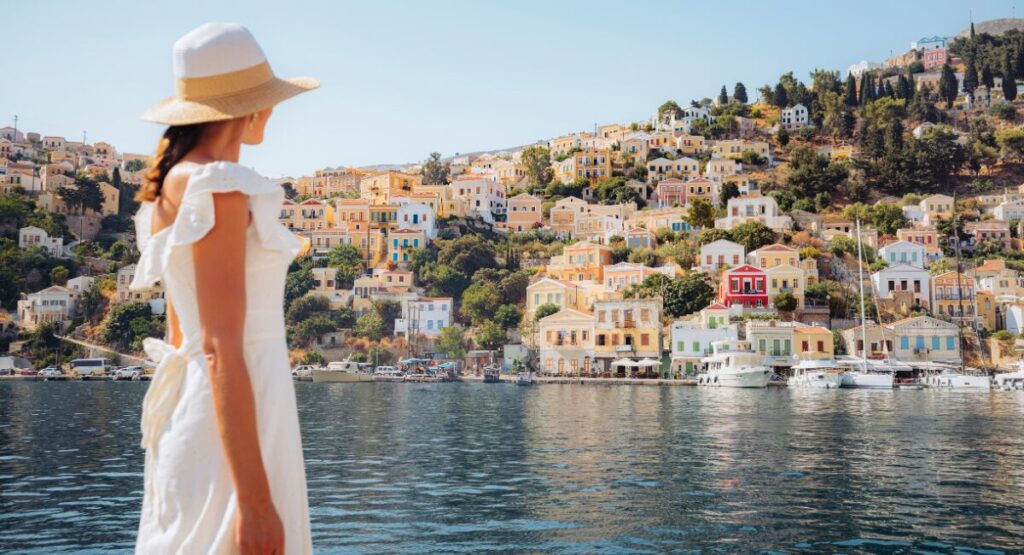
What the sea offers, finally, is perspective. The understanding that comes from watching one civilization’s fingerprints appear in the next country’s stones. The Mediterranean has been absorbing and transforming for longer than recorded history. A minaret and a cathedral share a skyline. A Norman king orders a ceiling in the language of the mosque. A Greek theater looks out over an active volcano and does not flinch.
To sail through the Mediterranean with PONANT EXPLORATIONS is to carry that perspective home.
Begin your Mediterranean journey by visiting the PONANT EXPLORATIONS’ website for a full list of voyages.
—
Sponsored articles do not belong to the editorial team at Frenchly. They are provided or written at the request of the advertiser, who determines the content.


