
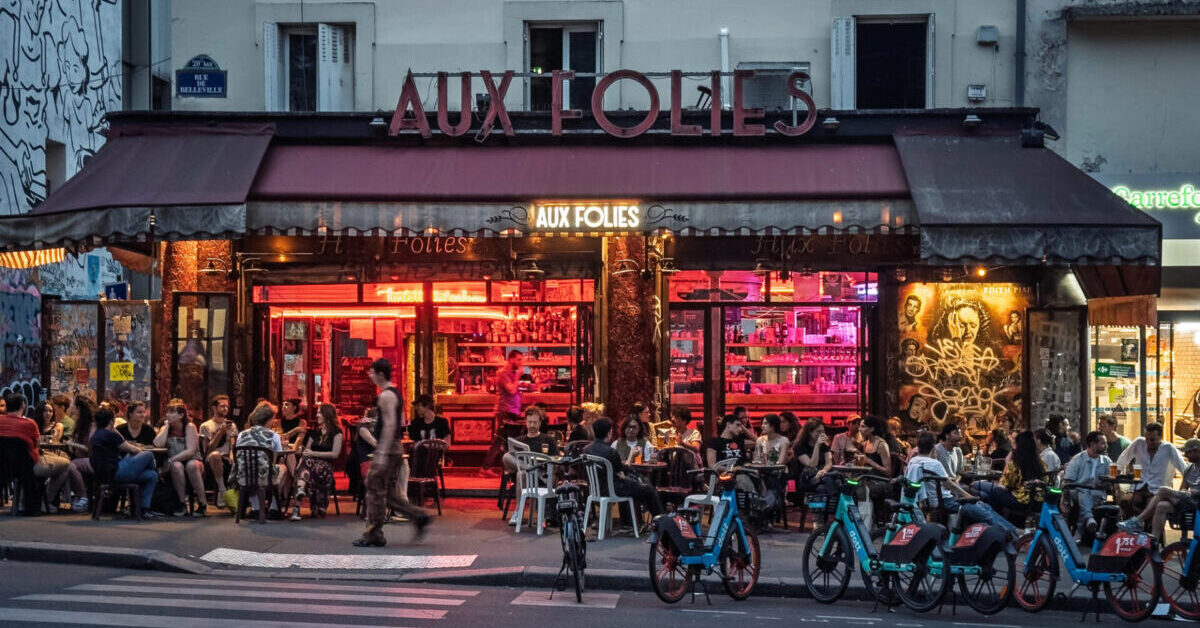
Belleville has always been a little bit rowdy, whether it meant to be or not. Long before it was folded into Paris in 1860, it existed as its own working-class wine village perched on a hill, slightly removed from the city both geographically and ideologically.
In recent years, as Paris’s 10th and 11th arrondissements have slid fully into hipster territory, and even the gritty Barbès neighborhood feels increasingly polished, Belleville has held onto its identity with surprising resolve. Sitting high above the city, it’s a neighborhood you either get or you don’t, with its own rhythm and rules.

The History of Belleville
Belleville’s political identity took shape in the late-19th and early-20th centuries, when it became a stronghold of labor movements and leftist organizing. Socialist and communist networks thrived here, and to this day, you can still find the hammer and sickle above some doors. Back then, cafés doubled as meeting rooms. Workers gathered to organize strikes, share resources, and build systems of mutual support, eventually resulting in 1871 in the Commune of Paris, a radical, short-lived revolutionary government that ruled Paris for about 72 days.
The neighborhood became known as le quartier rouge, and Communist mayors governed here well into the 20th century. Belleville absorbed successive waves of immigration—Armenian, Jewish, North African, Chinese—each community layering new languages, cuisines, and rituals onto the same streets. The neighborhood’s physical density, its steep streets and compact housing, reinforced that collective way of life. Even now, that inheritance is tangible: in the way public space is used, in the unapologetic mix of people, and in the sense that this is a place that belongs to those who occupy it, not those who pass through it.
Only after understanding that context does Édith Piaf make sense here. According to legend, she was born under a lamppost on Rue de Belleville, or at least nearby, wrapped in noise and precarity. Raised among street singers and performers, her voice was shaped by grit long before it reached a stage. Whether the story is entirely true matters less than why it endured. Piaf came to symbolize Belleville itself. She didn’t emerge from salons or conservatories. She rose from sidewalks, cafés, and crowds.

Where to Stay
Babel
Babel Belleville is a low-key, design-forward hotel that mirrors the bohemian nature of the neighborhood itself. Set above a café-bar on the edge of Belleville, it feels like a local pied-à-terre, and the price per night matches that. It’s ideal for travelers who prefer to stay just outside the walkable core of tourist Paris.
La Belle Ville
La Belle Ville is a thoughtful, modern hotel bordering the 19e. Minimal but warm, it prioritizes function—less boutique theatrics, more lived-in ease—making it a smart base for exploring Paris beyond the center.
The People Paris
The People is a modern, design-forward hostel-hotel hybrid chain that prioritizes community without sacrificing style. The Belleville location attracts a mix of travelers, creatives, and locals drawn to its social energy and practical comfort.
Airbnb
If you’re looking to stay local, Airbnb is always a solid option—and Belleville often offers room to negotiate. A beautifully decorated one-bedroom near Jourdain sleeps two and costs about the same as a lower-end hotel per night, but with the added comforts of a kitchen, a proper workspace, and Haussmannian balconies. A more petite option, starting around $94 per night, feels like a Scandinavian library—a cozy guest-favorite that even includes an organic breakfast. Finally, a parkfront bungalow, at $112 per night, is a true local’s dream. All told, Belleville is a neighborhood full of easy, unfussy places to stay that feel local and save you a few euros.

Things to Do in Belleville
Take in the View from Belleville’s Parks
Parc de Belleville: The neighborhood’s main park and the one worth climbing for. Enter from Rue Piat or Rue des Couronnes. Terraced lawns, vineyards, and benches open onto one of Paris’s most underrated Eiffel Tower views. This spot is at its best in the late afternoon, when locals bring groceries to picnic and kids run loose.
Parc des Buttes-Chaumont: Rougher, greener, and more cinematic than most Paris parks, Buttes-Chaumont feels almost anti-Haussmann. Built on former quarry land, it’s all cliffs, suspension bridges, waterfalls, and sudden views. Enter from Rue Botzaris or Place Armand Carrel and climb toward the Temple de la Sibylle for city panoramas.
Square de la Tour des Pins: Small, quiet, and hyper-local—more of a pause than a destination. Good if you want shade and silence between errands or café stops.
Admire Belleville’s Abundant Street Art
Belleville is super abundant in street art, expressing its strong culture and mind on the walls just about everywhere. Head to the following addresses to explore the main streets.
Rue Denoyez: The epicenter. Entirely legal, constantly repainted, and unapologetically loud. Come knowing that whatever you photograph today may be gone tomorrow.
Rue Ramponeau: Less chaotic than Denoyez, but still rich in layered murals and tags. Look at doors, corners, and alley walls—not just facades.
Rue de Belleville (upper stretches): More scattered works, often political or poetic rather than decorative.

Eat Like a Local in Paris’s Chinatown
Belleville’s Chinatown is informal and spread out. Rather than a single gateway or landmark, it unfolds along Boulevard de Belleville, especially between Rue de Belleville and Rue Ramponeau, spilling naturally into the surrounding side streets. Grocery stores, bakeries, casual restaurants, and sidewalk produce stands blend seamlessly into the neighborhood’s daily rhythm.
Look out for:
- Chinese bakeries like Bonjour Pâtisserie 你好蛋糕, New Youwei, and Délices de Belleville
- Vietnamese (BÚN CÀPHÊ Pho 168 and Viet Passion); Cantonese (Restaurant Wen Zhou Mei Shi Lin and Mian Guan); and Thai (Ama Siam) restaurants.
- Grocery stores like Paris Store, Belleville’s essential Asian supermarket, and cheap daily item stores like Bazar de Belleville, an essential neighborhood bazaar.
Explore the Ateliers d’Artistes de Belleville
Belleville’s long-standing creative backbone. Once a year—usually in late spring—hundreds of artists open their working studios to the public. Addresses vary year to year, spread across Rue de Belleville, Rue Julien Lacroix, Rue des Cascades, and beyond.

Pay Your Respects at Père Lachaise
Père Lachaise Cemetery is both a historic burial ground and a living public space, home to writers, artists, musicians, and political figures spanning centuries. On the Belleville side, it feels less monumental and more neighborhood-driven—locals jogging, sketching, or reading among the graves as part of their daily routine. Enter from Rue des Rondeaux or Boulevard de Ménilmontant for a quieter experience than the main gates.
Climb La Butte Bergeyre (The Almost-Secret Hill)
A tiny residential hill with cobblestones, modest houses, and city views in the distance. No cafés, no shops—just calm. Access via Rue Georges Lardennois ou Rue Barrelet de Ricou. Go slowly and respectfully; people live here.
Wander La Petite Ceinture
Paris’s abandoned railway loop cuts through Belleville in fragments. Not all sections are accessible, and entrances change.
Common legal access points near Belleville include:
- Rue de la Mare (20th)
- Rue des Couronnes (depending on current openings)
Look for posted signs—some stretches are open as green corridors, others remain closed or semi-wild. Expect gravel paths, overgrown tracks, graffiti, and a feeling of the city exhaling.
Restaurants in Belleville
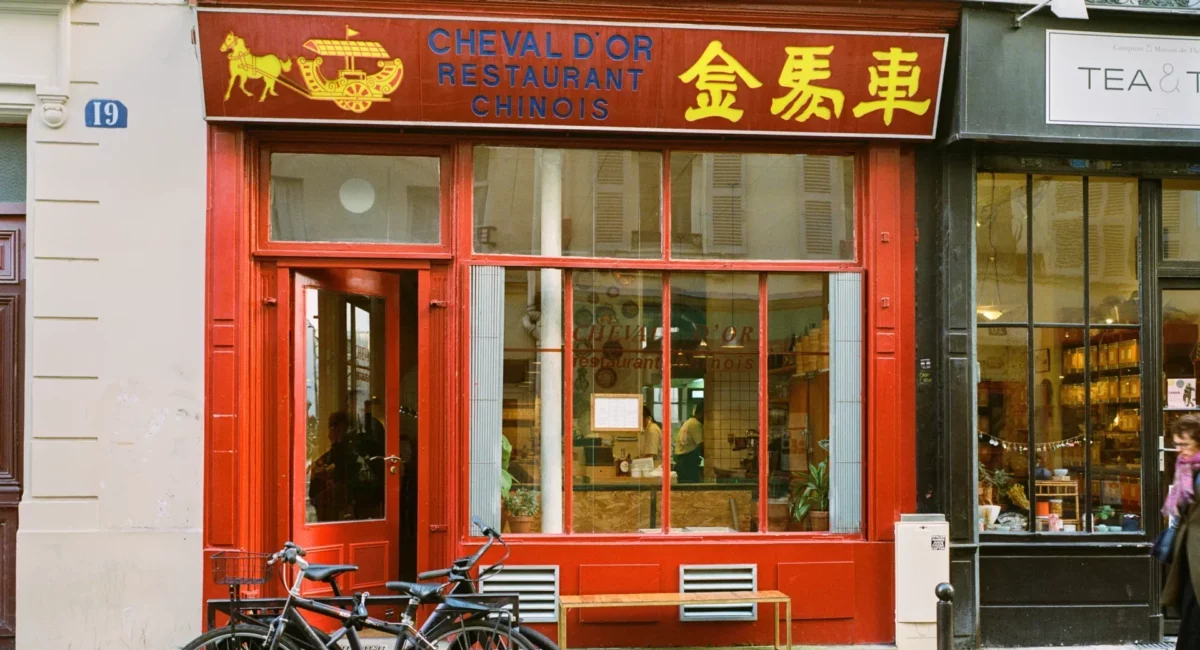
Belleville may not always carry the reputation of a gourmand neighborhood, but it’s quietly one of Paris’s most exciting and diverse places to eat. So much so that we asked proud Belleville resident Nadim Smair of Le Cheval d’Or—arguably Belleville’s most outstanding restaurant (and a must to eat in Paris)—to share his personal list of the best spots.
Le Cheval d’Or: Cult Belleville address known for its precise, flavor-driven cooking that blends Chinese techniques with French sensibility, all delivered with quiet confidence and zero fuss.
Best Tofu: No-frills favorite, prized for its freshly made tofu dishes that are simple, deeply comforting, and endlessly reliable.
Lao Siam: Longtime local staple for soulful Lao–Thai cooking, known for bold flavors, generous portions, and a menu that never changes. It also has a Michelin Bib Gourmand.
Petit Raviolis: Counter known for its handmade Chinese dumplings—fast and inexpensive, served boiled or pan-fried.
Grand Bol: Canteen for generous bowls of Taiwanese-leaning comfort food.
Loan Vietnamese: A low-key Vietnamese spot people return to for simple, comforting bowls and cooking that doesn’t try to be anything other than good.
Cendrillon: One of Belleville’s most talked-about restaurants thanks to its global-inspired sharing menu, stylish interior, playful atmosphere, and natural wine list, making it a favorite among locals and Paris food lovers alike.
Mensae: Contemporary bistro by chef Thibault Sombardier, known for its seasonal, fresh-flavored French cooking, friendly atmosphere, and a small terrace that makes it especially pleasant in warmer months. Featured in the Michelin Guide.
Le Bar Fleuri: Classic, old-school Parisian bistro-bar tucked just behind Parc des Buttes-Chaumont, beloved for its humble, hearty French comfort food (especially its famously affordable roast chicken with fries) served in an unpretentious, convivial setting that draws locals and regulars alike.
Le Grand Bain: Low-key canteen built around seasonal, market-driven cooking, with a loyal local crowd and a reputation that’s grown quietly by word of mouth.
Cafe des Selices: Straightforward café-restaurant known for generous, unfussy cooking and the kind of local crowd that comes for reliability.

Bars, Cafes & Bakeries in Belleville
Soces: Neighborhood wine bar with a loyal following, known for its relaxed atmosphere, well-chosen natural wines, and unfussy but cool plates.
Buttes Snack Bar: Cozy Belleville wine bar and small-plates spot known for natural wines and seasonal shared dishes right by Parc des Buttes-Chaumont. Its relaxed indoor vibe makes it a favorite apéro stop after a wander through the park.
Mardi: Neighborhood coffee spot by day that eases into a relaxed wine bar at night, making it one of those Belleville places people drop into at any hour rather than plan around.
Candle Kids: Minimalist Belleville coffee shop and pastry spot run by two brothers, known for specialty espresso drinks, playful lattes, and house-baked pastries.
Quedubon: Relaxed neighborhood bistro and wine bar, known for seasonal cooking and good bottles.
Pâtisserie Ginko: Highly-praised independent bakery and pastry shop in the 19ᵉ arrondissement near Parc des Buttes-Chaumont, founded by a duo of experienced pâtissiers who blend classic French technique with international influences in their viennoiseries, pastries, chocolates, and seasonal desserts.
Paloma: Sits on a sunny Belleville corner with a lively terrace, drawing locals for seasonal plates, natural wine, and the kind of easy, all-day energy that spills into the street.
Kissproof: Late-night wine bar with a playful edge, known for natural bottles, small plates, and a crowd that tends to linger longer than planned.
Bokbar: Cozy Nordic bookshop-coffee spot, where shelves of Swedish, Danish, Finnish and Norwegian titles sit alongside specialty coffee, homemade pastries, and a relaxed vibe perfect for reading or lingering with a cup.
Cave de Belleville: Long-standing neighborhood wine shop, trusted for its thoughtful selection, fair prices, and advice.

How to Get to Belleville
Belleville isn’t one neighborhood so much as a crossroads, and getting there depends on where you want to land. That’s part of the appeal. It sits across four arrondissements and is served by several metro lines, each dropping you into a slightly different version of the area.
The most direct stop is Belleville on Lines 2 and 11, which places you right on the main artery, Rue de Belleville. If you want to approach from a calmer, more residential side, Pyrénées (Line 11) is a good entry point, especially for walking uphill toward the park. Couronnes (Line 2) drops you closer to bars and cafés, while Jourdain (Line 11) offers a quieter, village-like feel on the eastern edge.
You can also arrive via Ménilmontant (Line 2), which sits just south of Belleville and eases you in gradually, or Télégraphe (Line 11), one of the highest metro stations in Paris.
Once you’re there, walking is essential. Belleville reveals itself on foot, through staircases, side streets, and unmarked turns. The hills are real, but so are the rewards. This is not a neighborhood to rush through or neatly map. It’s one you wander.

Daily Life in Belleville Today
Belleville runs on routine, not aesthetics. Bakeries know their regulars, produce spills onto the sidewalk, cafés double as offices and living rooms. Rents are still comparatively accessible by Paris standards—though tightening—and the mix of residents reflects that: longtime locals, immigrant families, and younger creatives who came for density. Shops exist because they’re needed, restaurants feed the neighborhood before chasing trends, and daily life unfolds casually.
Angelika Pokovba is a writer and longtime Francophile originally from NYC, now based in Mexico. She’s into food, wine, skincare, and all things French—especially summers in the South and pharmacy finds she stocks up on way too early.


