
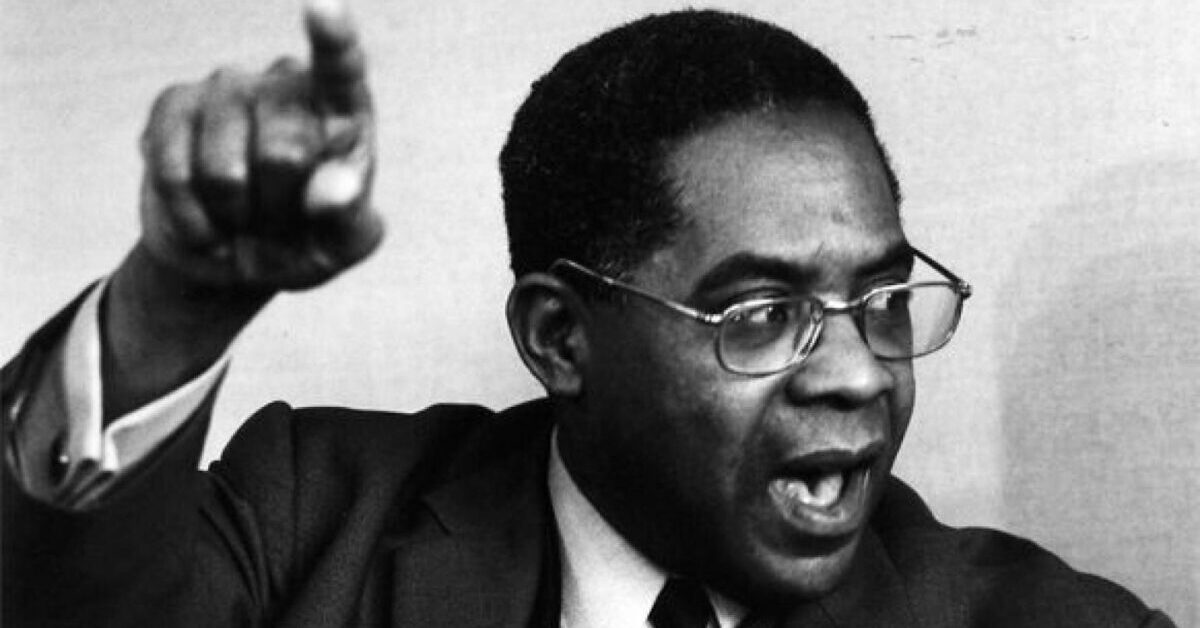
History is full of Black Francophone figures who have shaped politics, culture, science, and resistance across continents. Yet too often, they remain invisible in school textbooks. These individuals challenged colonial power, redefined identity, confronted racial hierarchies, and transformed intellectual and political life in the Francophone world and beyond. From West Africa to the Caribbean, in scientific research and political activism, they forged new paths in the face of oppression and erasure, leaving legacies that continue to inspire freedom, dignity, and solidarity.
Here are 10 Black Francophone personalities who deserve their rightful place in history books.
10 Black French Writers, Activists & Leaders to Know
1. Aline Sitoe Diatta: Voice of Resistance
Aline Sitoe Diatta stands as one of West Africa’s most powerful symbols of resistance, not simply because she confronted French colonial rule in Casamance, a southern region of Senegal, during World War II, but because she rooted her opposition in the spiritual and cultural life of her people. Born around 1920 in Kabrousse, southern Senegal, Diatta came of age in a time when colonial authorities demanded labor, tax payments, and agricultural production exclusively for export crops like peanuts. Rejecting these impositions, she called on her community to reclaim rice cultivation for food sovereignty, to resist compulsory recruitment into the colonial army, and to reject cash taxes that stripped villagers of their autonomy. Diatta’s authority came not only from political resistance but from spiritual leadership; many in her region believed she could heal the sick and even bring rain during droughts. Her message emphasized connection to ancestral lands and a reinvigoration of indigenous practices.
Her rising influence alarmed colonial officials, who increasingly feared that obedience to traditional, locally rooted authority could undermine their control. Arrested in 1943, she was detained and eventually deported to Timbuktu, where she died in 1944 under harsh conditions. In the decades since her death, Aline Sitoe Diatta has become more than a historical figure: she is a mythic symbol of resistance, female spiritual leadership, and cultural self-determination in West Africa. Her legacy lives on through movements that valorize local knowledge, ecological stewardship, and fearless opposition to exploitation.
2. Paulette Nardal: Architect of Black Consciousness
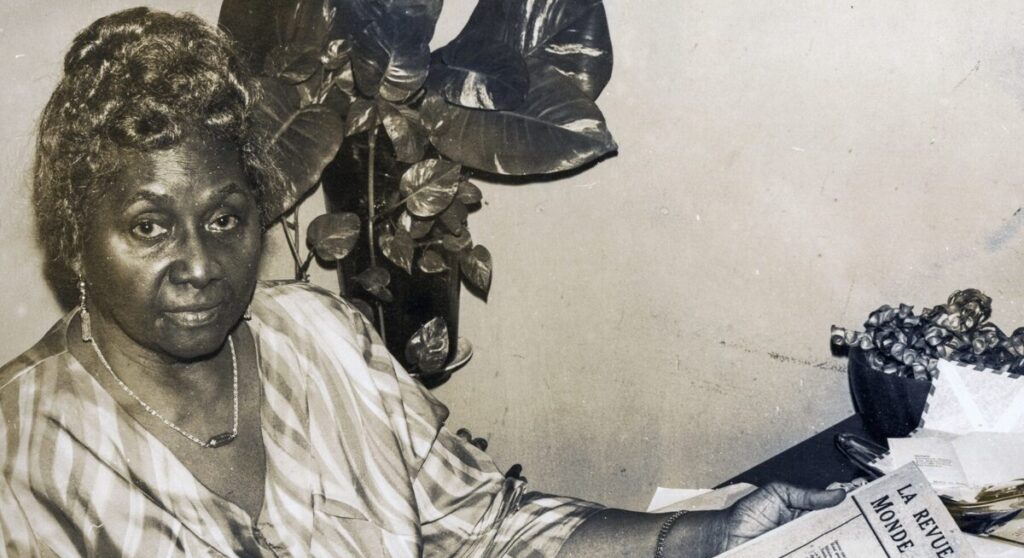
Paulette Nardal was a pioneer whose work helped lay the intellectual foundation for what became globally recognized as the négritude movement—an intellectual and literary movement that celebrated Black identity and culture in opposition to colonial assimilation and racism. Born in 1896 in Martinique, she was one of the first Black women to study at the Sorbonne in Paris, where she encountered writers, thinkers, and artists from around the world. Nardal created salons in Paris that brought together West Indian, African, and African American intellectuals—spaces where ideas about race, culture, and identity could be openly discussed long before such conversations were widely acknowledged in academia or politics. Those gatherings were transformative: out of them came exchanges between figures like Langston Hughes, Léopold Sédar Senghor, and René Maran.
In 1931, Nardal co‑founded La Revue du Monde Noir (“The Review of the Black World”), a bilingual journal that served as a bridge between the Harlem Renaissance and emerging Francophone thought on Black identity. Through essays, poetry, and reportage, the journal challenged racist assumptions and affirmed the cultural richness of the African diaspora. Nardal’s own writings explored the psychological and cultural impacts of colonialism, particularly on women, and argued for the dignity and self‑knowledge of Black people worldwide. Yet for decades her role was overshadowed in histories that emphasized her male peers.
Upon her return to Martinique, Nardal continued to influence public life through education, journalism, and activism. She campaigned for women’s political participation after World War II and brought African American spiritual music into Caribbean cultural life. Today, scholars recognize her as an essential architect of transcontinental Black thought, a connector of movements, and a foundational voice in 20th‑century intellectual history.
3. Aimé Césaire: Poet of Liberation
Aimé Césaire was a generation‑shaping poet and political visionary whose work transformed how the world thinks about colonialism, identity, and resistance. Born in Martinique in 1913, he studied in France, where he helped found L’Étudiant Noir (“The Black Student”) and articulated ideas that would evolve into the négritude movement. Césaire’s writing—most famously Notebook of a Return to the Native Land—interwove lush, rhythmic language with fierce critique of colonial violence and cultural erasure. His verse did not merely describe oppression; it reinvented the terms of resistance, asserting the dignity of Black life in ways that deeply influenced later movements in literature and activism.
Césaire’s leadership extended into politics. Returning to Martinique in 1939, he became mayor of Fort‑de‑France in 1945 and served in the French National Assembly, where he argued for full French citizenship for Caribbean citizens while simultaneously critiquing the racism embedded in French institutions. He founded the Parti Progressiste Martiniquais (Martinican Progressive Party), advocating for economic justice, cultural affirmation, and political autonomy. His long tenure as mayor—lasting until 2001—allowed him to shape policy as well as poetry, grounding his revolutionary ideas in community governance.
Césaire’s legacy is twofold: as a literary innovator whose work expanded the possibilities of language, and as a public intellectual and leader who connected artistic insight to tangible political change. His influence on postcolonial thought and on generations of writers and thinkers worldwide remains profound.
4. Léopold Sédar Senghor: Poet-Président
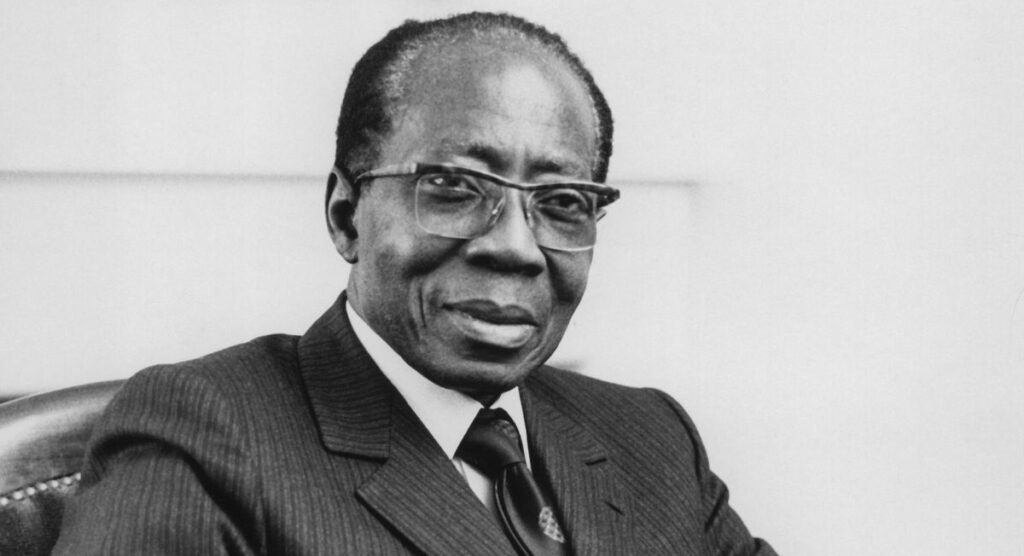
Léopold Sédar Senghor embodied the rare combination of rigorous intellectual inquiry and high political leadership. Born in 1906 in Joal, Senegal, Senghor excelled academically in France, where he met fellow thinkers and helped shape the philosophical framework that became known as négritude. His poetry—marked by its depth and lyricism—asserted the humanity and cultural richness of African societies, challenging European assumptions of superiority. Works such as Chants d’ombre (“Shadow Songs”) and Hosties noires (“Black Hosts”) confronted racism directly while weaving classical forms with African sensibilities.
Senghor’s impact was not limited to literature. Elected to the French National Assembly after World War II, he used his position to advocate for greater recognition of African contributions to global culture and politics. In 1960, as Senegal secured independence, he became its first president, guiding the nation through its early postcolonial years with a philosophy that sought to harmonize African values with democratic governance. Senghor believed that culture was not static, but a living force essential to national unity and human dignity.
Beyond Senegal, Senghor’s voice resonated across the Francophone world, helping to legitimize African intellectual traditions within global conversations about modernity and identity. In 1983 he became the first African elected to the Académie française, signaling a transformation in cultural institutions that once excluded African voices. Senghor’s dual legacy as poet and statesman continues to shape how postcolonial societies understand themselves and their place in a globalized world.
5. Félix Éboué: A Free France Strategist
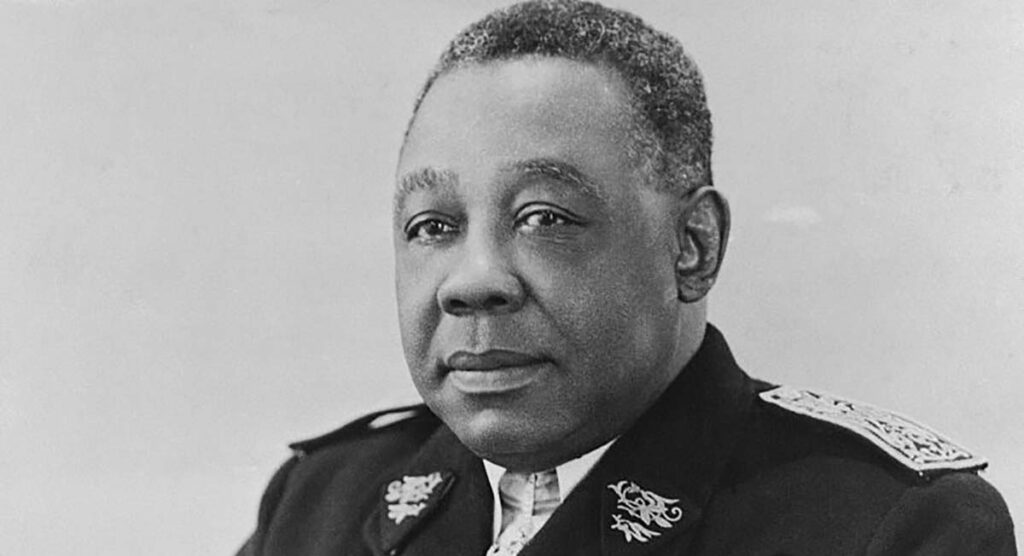
Félix Éboué was a trailblazing administrator and strategist whose decisive actions during World War II reshaped not just the course of French colonial history, but the global struggle against fascism. Born in 1884 in Guyane française (French Guiana) to ancestors who had survived slavery, Éboué climbed the ranks of the colonial administration through talent and determination, eventually becoming governor of Chad. In June 1940, when France capitulated to Nazi Germany, Éboué made a bold choice: he rejected the armistice and declared Chad’s allegiance to General Charles de Gaulle’s Free France. This was more than a symbolic act of defiance; it provided a territorial and moral anchor for the nascent resistance movement.
Éboué’s decision set off a domino effect: other colonies joined the cause, creating a base of operations that helped sustain the fight for liberation. For his leadership, de Gaulle appointed him Governor General of French Equatorial Africa and honored him as one of the first Companions of the Liberation. During his tenure, Éboué worked to unify diverse colonial societies behind the ideals of freedom and equality, challenging the entrenched racism of the colonial system even as he navigated the complexities of wartime geopolitics.
Éboué died in 1944, before seeing the full realization of decolonization, but his legacy endured. In 1949, he became the first Black person interred in the French Panthéon, a testament to his crucial role in both resisting tyranny and expanding the moral imagination of what France—too often defined narrowly in European terms—could represent.
6. Suzanne Césaire: Anti-Colonial Visionary
Suzanne Césaire was a brilliant intellectual whose sharp critiques of colonialism and cultural domination have only recently received the attention they deserve. Born in 1915 in Martinique, she studied at elite institutions in France alongside other Caribbean and African thinkers. Though her life was tragically short, her contributions to postcolonial theory and literary criticism were substantial. With her husband, Aimé Césaire, she co‑founded the literary journal Tropiques, which became a crucial platform for challenging the cultural assumptions of colonial rule.
Suzanne Césaire’s essays—later compiled under titles such as Le Grand Camouflage (“The Great Camouflage”)—explored the intersections of surréalisme, colonial ideology, and Caribbean reality. She argued for a creative and political breaking away from imposed literary standards, urging writers and citizens alike to recognize and reject the distortions of colonial representation. Her work envisioned a liberated cultural imagination rooted in the lived experiences of Caribbean peoples and attentive to how colonial power shaped both consciousness and artistic production.
Her influence extends beyond the written page; by shaping the intellectual environment of Tropiques, she helped foster a generation of thinkers who saw culture as inseparable from political liberation. Though overshadowed for decades by other figures in the négritude canon, recent scholarship has restored Suzanne Césaire to her rightful place as a foundational force in anti‑colonial and postcolonial thought.
7. Gaston Monnerville: Guardian of the Republic
Gaston Monnerville was a jurist and politician whose career became a testament to principled leadership within the French Republic. Born in 1897 in French Guiana to grandparents who had lived under slavery, Monnerville excelled academically and entered the French legal world with distinction. His brilliance led to a rapid rise: he served as mayor, deputy, and ultimately as president of the French Senate for more than a decade. In a political landscape still dominated by metropolitan elites, Monnerville’s voice was a powerful reminder of the pluralistic nature of French citizenship.
Monnerville’s significance lies not only in his positions but in how he wielded them. He championed institutional integrity, civil rights, and the extension of republican ideals to all French citizens regardless of origin. At pivotal moments—such as debates over constitutional reform in the 1960s—he stood firm against what he saw as threats to democratic checks and balances. Monnerville’s opposition to certain executive expansions under General de Gaulle demonstrated his commitment to legal processes over charismatic authority.
He also worked tirelessly for the integration and representation of France’s overseas departments, striving to ensure that political equality was more than a formal declaration. Monnerville’s legacy is a reminder that the struggle for justice and equity often takes place within institutions themselves, and that voices from diverse backgrounds enrich democratic life.
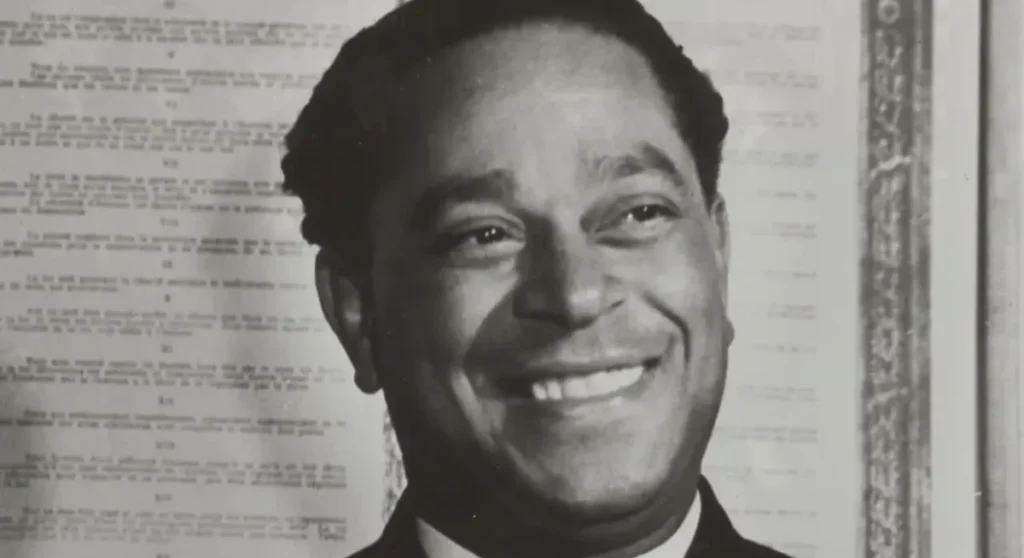
8. Cheikh Anta Diop: Reclaiming African History
Cheikh Anta Diop was a historian, anthropologist, and scientist whose scholarship challenged entrenched narratives about Africa’s place in world history. Born in 1923 in Dakar, Senegal, Diop pursued rigorous study in both the sciences and the humanities, determined to counter the pervasive Eurocentric view that African civilizations lacked historical depth and influence. Through linguistic, archaeological, and cultural analysis, he argued that ancient Egypt should be understood as part of Africa’s Black heritage—a claim that sparked controversy but reshaped debates in African studies.
Diop’s most influential works, such as Nations nègres et culture (“Negrous Nations and Culture”) and Civilisation ou barbarie (“Civilization or Barbarism”), combined empirical research with a passionate plea for intellectual decolonization. He sought not merely to insert Africa into global history, but to assert the integral role African civilizations played in shaping human development. His insistence that the African past be studied on its own terms galvanized scholars across the continent and in the diaspora.
In his later years, Diop returned to Dakar, where he founded a carbon‑14 dating laboratory and taught at the university, mentoring generations of African scholars. Beyond academia, he championed pan‑African political unity and liberation from neocolonial structures. Though some of his theories remain debated, Diop’s broader contribution—establishing African epistemologies that refuse reductive frameworks—remains a cornerstone of contemporary historical inquiry.
9. Gerty Archimède: Law and Equality
Gerty Archimède was a revolutionary figure in law and politics whose career blazed trails for women and Black professionals in the French‑speaking world. Born in 1909 in Guadeloupe, she became the first Black woman admitted to the bar in the French Caribbean, launching a legal career at a time when both racism and sexism were entrenched barriers. Archimède’s courtroom prowess was matched by her dedication to social justice, as she fought for equality, fair wages, and legal rights for marginalized communities.
In 1946, in the wake of women’s enfranchisement in France, Archimède was elected deputy to the French National Assembly. There she worked on justice reform and initiatives addressing the rights of women, workers, and overseas residents. Her efforts included proposals for allowing women into auxiliary judicial professions and advocating for laws that aligned social conditions in overseas departments with those of metropolitan France. Even after leaving the Assembly, Archimède continued her advocacy through legal work and by leading the local bar association as bâtonnière, the elected head of the bar responsible for representing and organizing lawyers.
Archimède’s influence extended beyond law into broader feminist and anticolonial movements. She helped organize women’s associations in the Caribbean, bringing attention to issues like social security, retirement rights, and peace advocacy. Her legacy survives in the institutions she strengthened, the barriers she dismantled, and the generations of women lawyers and activists she inspired—reminding us that legal equality is foundational to broader social liberation.
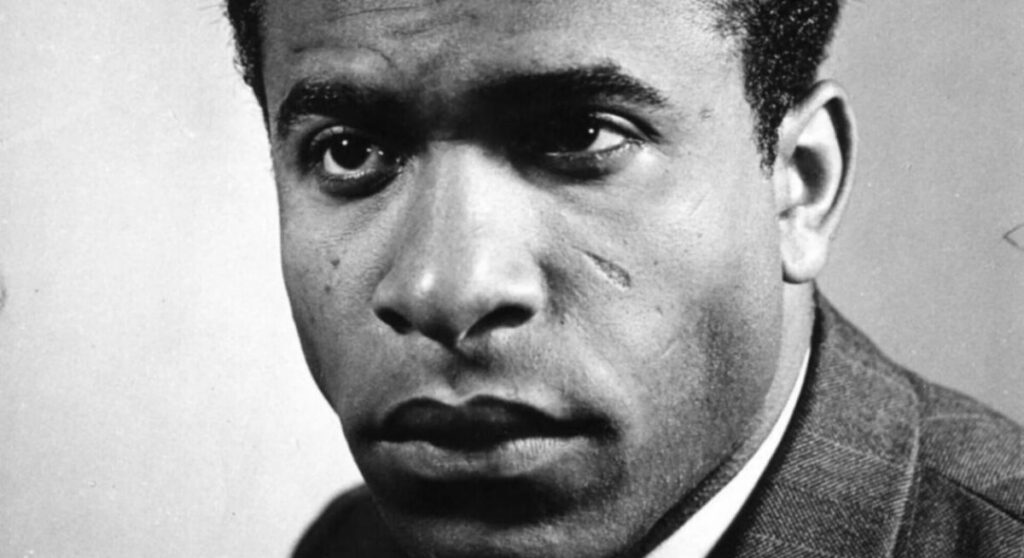
10. Frantz Fanon: Voice of Decolonization
Frantz Fanon may be one of the best‑known Francophone thinkers on colonialism, yet his contributions are still under‑taught relative to their global influence. Born in 1925 in Martinique, Fanon was trained as a psychiatrist and spent time treating patients in war‑torn Algeria, where he became intimately familiar with the psychological dimensions of colonial domination. His experiences shaped works such as Black Skin, White Masks and The Wretched of the Earth, texts that analyze not only the brutality of colonial systems but also how these systems deform identities, relationships, and collective consciousness.
Fanon’s writing fused clinical insight with political urgency. He showed how internalized racism and structural violence produce psychological harm, and he called for radical transformation rather than gradual reform. His ideas influenced liberation movements across Africa, Asia, and the Americas, providing a language for understanding oppression that went beyond economic exploitation to the very core of human subjectivity.
Fanon joined the Algerian struggle for independence, resigning his hospital post to support the Front de Libération Nationale (FLN)—the nationalist movement founded in 1954 to end French colonial rule through armed resistance and international advocacy. He wrote for its newspaper El Moudjahid and traveled abroad to defend the Algerian cause diplomatically, turning his political commitment into a broader theory of decolonization.
Though he died in 1961, Fanon’s intellectual legacy continues to resonate in postcolonial studies, critical race theory, and movements for social justice around the world. His insistence that decolonization requires a fundamental reimagining of the self and society marked him as one of the most profound thinkers of the 20th century.
Valentine Marchou is a French journalist with a keen eye for culture, lifestyle, and society. After honing her skills in several French newsrooms, she now aims to tell stories that bridge French and English-speaking worlds through art, food, and everyday life.