
Rap music has long been framed as a genre of excess: too loud, too violent, too vulgar. From its beginnings, it has been associated with anger, confrontation, and a form of hypermasculinity that leaves little room for alternative expressions. In France especially, rap has often been perceived as the voice of male youth from working-class neighborhoods, carrying narratives of struggle, rivalry, and domination. Within this cultural framework, women were rarely imagined as legitimate rappers. They were expected to remain soft, discreet, and composed, qualities seemingly incompatible with the raw energy of hip-hop.
This opposition between rap and femininity created a lasting barrier. Female voices were not only rare in the spotlight, they were actively questioned. Even when women mastered technique, flow, and lyricism, their presence was often seen as an anomaly. Success stories were treated as exceptions rather than proof of a deeper, structural reality.
According to a 2025 survey by Le Figaro, female artists make up only 13 percent of the French hip-hop scene. Despite rap dominating music charts year after year, women remain dramatically underrepresented across albums, festival lineups, and playlists. This stark imbalance reinforces a common narrative suggesting that female rap is a recent and minor phenomenon. But that perception is not only misleading—it is historically false.
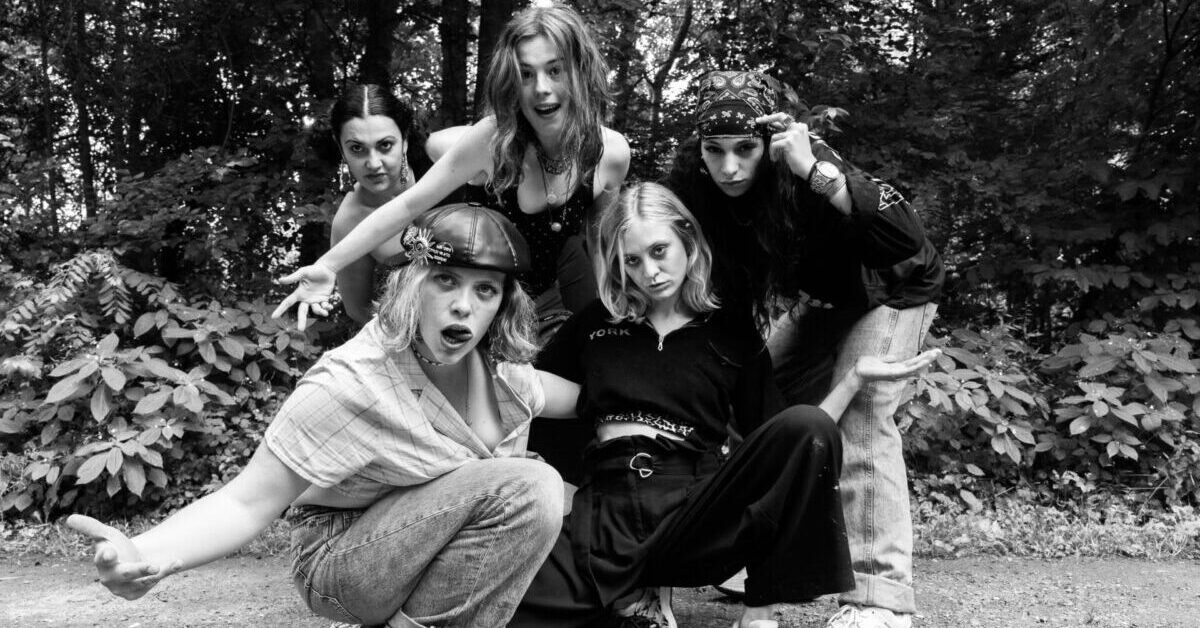
Yet today, in cities like Toulouse, these assumptions are being challenged from the ground up, notably by collectives such as La Cercleuse, a group of four women rappers—Ozna, Babsi, Introspective, and Kyara—accompanied by DJ Chiara, also known as DJ Bapzila. Born out of underground freestyle circles, La Cercleuse stands at the heart of our reporting, offering a concrete lens through which to understand the re-emergence and visibility of women in French rap.
Women Were Always There, Even When History Forgot Them
Long before the current wave of visibility, women were already shaping French rap. In the 1990s, the scene included a significant number of female MCs who were active, engaged, and artistically ambitious. The 1996 compilation Lab’elles brought together 12 women rappers, including Bams, Princess Aniès, Sista Cheefa, Sté Strausz, and Lady Laistee. Their existence alone contradicts the idea that female rap emerged only in the last decade. This perception is reinforced by multiple forces: music industry gatekeepers who have historically promoted male artists, streaming platforms that rarely place women in headlining spots, and even some segments of the audience who assume rap is primarily a male space.
Yet these artists were progressively erased from the dominant narrative. As the history of French rap was written and institutionalized, largely by the music industry and media, male figures were centered, while women were pushed to the margins. Members of today’s underground scene are acutely aware of this erasure. As one rapper from La Cercleuse, the Toulouse-based collective, puts it, “People talk about women in rap as if we just appeared in 2025. That’s not true at all. There were women everywhere in the 1990s, and they were strong.”
At the time, there were arguably more women involved in hip-hop than in other alternative scenes like punk or rock. But because they were not supported or promoted in the same way, their impact was minimized. Their absence from mainstream memory does not reflect their absence from the culture.
Early Pioneers and the Cost of Visibility
Among the first women to break into the French rap landscape was Saliha, the first female rapper to appear on the iconic Rapattitude compilation in 1990. Her lyrics addressed racism, social injustice, and women’s conditions with a political clarity that challenged the norms of the time. In her songs, she vividly depicted life in marginalized neighborhoods, as in the line, “Enfants du ghetto rempli de déception / Pars chercher le bonheur vers d’autres horizons” (“Children of the ghetto, full of disappointment / Go seek happiness in other horizons”), capturing both the hardships and the desire for a better future. In another track, she raps “Les blacks, les blancs, les beurs / Unis par les HLM et par la rage au cœur” (“Blacks, whites, and Arabs / United by public housing and the rage in their hearts”), highlighting solidarity across communities facing similar struggles.
Alongside artists like Destinée and B-Love, she helped create the Mouvement Authentique, a collective aimed at fostering solidarity among women in hip-hop, giving them space to collaborate, perform, and support each other in a male-dominated scene.
B-Love, in particular, developed a distinctive voice that merged afrocentric identity with literary references drawn from the tradition of Negritude. Despite their artistic and ideological strength, these pioneers struggled to find lasting support within an industry reluctant to invest in female artists. All-female groups such as the Mice or Ladie’s Night also attempted to assert themselves on stage, combining rap, dance, and feminist demands. Their presence marked an important but fragile moment in the history of French female rap.
The 2000s Breakthrough and the Diam’s Effect
The early 2000s marked a turning point with the rise of Diam’s. Her success was unprecedented. She topped charts, filled venues, and became a cultural icon. For the first time, a woman was not only visible in rap but dominant. Songs like “La Boulette” made her the voice of a generation, proving that a female rapper could be both commercially successful and socially impactful.
Her impact was undeniable. Many younger artists cite Diam’s as a reference, and her career opened symbolic doors. Yet her singularity also reinforced a problematic pattern. The industry appeared comfortable supporting one woman at a time, rather than creating space for a diversity of female voices.
A Persistently Male-Dominated Industry
Despite increased visibility, gender imbalance remains deeply rooted in the French rap industry. Women are still underrepresented in sales rankings, festival lineups, and editorial playlists. On major streaming platforms, female rappers rarely occupy leading positions. This marginalization persists even as the rap ecosystem itself relies heavily on women, not only as artists but also as journalists, photographers, managers, and cultural workers.
Cultural resistance remains strong. Rap is still perceived as a space for masculine expression, anger, and confrontation.
Women who enter this space are often scrutinized differently, their legitimacy questioned in ways male artists rarely experience. A striking example is the Netflix series Nouvelle École, a rap talent competition, where talented female rappers were eliminated by the judges in favor of male contestants who fit the current clichés more than demonstrating superior technical skill. Young rapper Nayra was one of them, and her early exit in 2023 sparked controversy, with many viewers calling the program sexist—perhaps unintentionally, but undeniably so.
A New Francophone Wave Across Borders
Across France and Belgium, however, a new generation of women is actively reshaping rap. Artists like Shay, Chilla, Lous and the Yakuza, Morgan, or Zinee313 embody a diverse scene that moves between introspection, political engagement, pop influences, and raw lyricism. Some have benefited from the support of established male artists. Booba’s early collaboration with Shay, for instance, helped introduce her to a wider audience. Hatik has publicly described Diam’s as one of the greatest rappers of all time, regardless of gender.
Streaming platforms have also begun to play a role, with initiatives aimed at promoting parity and long-term artist development. These efforts suggest a slow but tangible shift in the industry’s dynamics.
La Cercleuse: Collective Strength in Toulouse’s Underground Scene
It is within this evolving landscape that La Cercleuse emerges. The collective was born not in a studio or a label office, but in the streets of Toulouse, during underground freestyle sessions held every Monday night. For Ozna, those circles were transformative. “I always loved rap, but I never imagined myself doing it seriously,” she says. “Those circles gave me the confidence to write, to perform, to exist in the rap game.”
Babsi echoes this sentiment. “If I had been alone, I would probably never have started,” she admits. “Being surrounded by other women gave me strength. It pushed me to go further.” For Introspective, discovering other women who rapped was a revelation. “I realized I wasn’t alone. There were girls like me who had been doing this quietly for years.”
Their first concert, in April 2023, marked a turning point. One show led to another, without them needing to actively seek opportunities. “We never had to chase gigs,” one member explains. “After every concert, new proposals came.” Their momentum grew quickly, culminating in major performances such as the Ramonville street festival, where they played on a Saturday night in front of a massive crowd.
Sorority as a Creative Force
Although each member of La Cercleuse develops solo projects, the collective remains central. They attend each other’s shows, share advice, and support one another emotionally. “We all come from different backgrounds,” Babsi says. “Some of us did theater, others focused on writing or performance. Together, it just works.”
They emphasize the importance of authenticity. “Don’t wait to please people to start creating,” one rapper advises. “Just be yourself.” Stage experience played a crucial role in building confidence. “From our very first show, we owned it,” Ozna recalls. “Even when we made mistakes, we didn’t lose control.”
Sexism, Resistance, and Changing Mentalities
While the Toulouse scene is often described as welcoming, according to La Cercleuse, sexism has not disappeared. The members recall being invited to shows primarily to fill the role of “the girls’ group,” as well as patronizing attitudes from technicians. “Sometimes they explain to you how to hold a microphone,” one rapper says, smiling.
They also recount more violent experiences, particularly abroad. “In Italy, we once played in front of a handful of guys who filmed us only because of how we were dressed,” one member remembers. “It had nothing to do with the music.” Despite these moments, they remain determined. “There will always be people who sexualize our bodies,” Babsi says. “We just have to keep going.”

One encounter stands out as deeply meaningful. After a concert, a man involved in prison outreach told them he wanted to play their music during workshops. “He said it could help change how rap is seen,” one rapper recalls. “That’s something I’ll never forget.”
Writing the Future of Rap in the Feminine
The rise of francophone female rappers is not a trend. It is a long, ongoing process rooted in decades of invisible work, resistance, and creativity. From the pioneers of the 1990s to icons like Diam’s, and now to collectives like La Cercleuse, women have continuously reshaped rap from within.
As one member of La Cercleuse puts it, “We don’t want advantages or disadvantages because we’re women. We just want to be listened to for our music.”
The future of French rap will not be written by men alone. It is already being written in the plural, in the underground, and increasingly, in the feminine.
Valentine Marchou is a French journalist with a keen eye for culture, lifestyle, and society. After honing her skills in several French newsrooms, she now aims to tell stories that bridge French and English-speaking worlds through art, food, and everyday life.


