
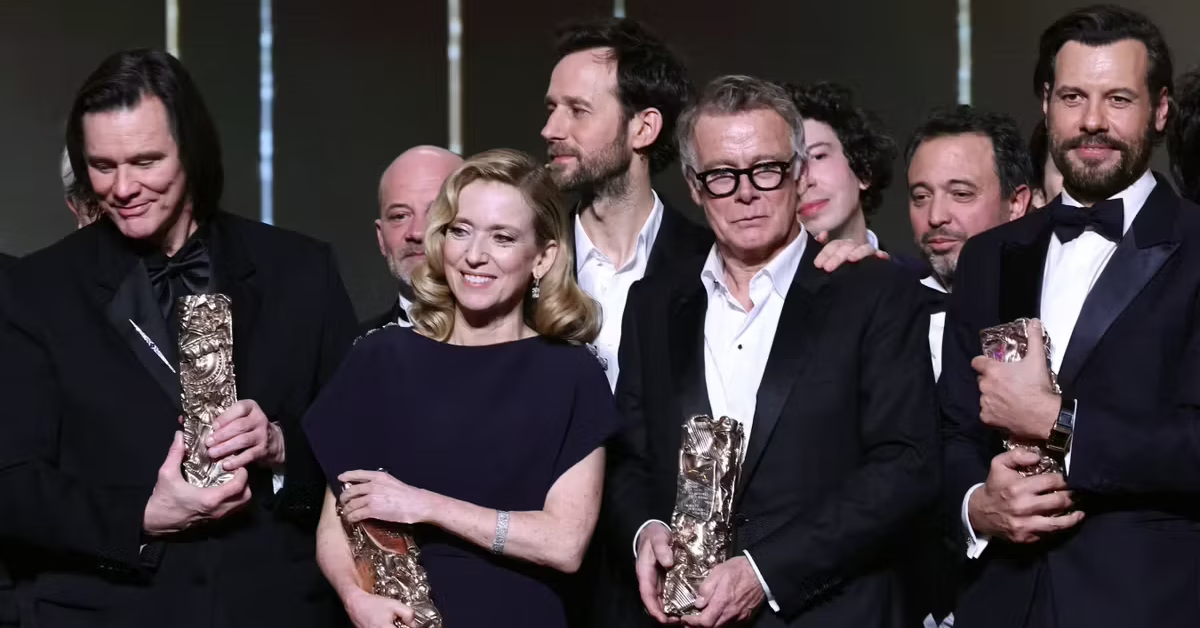
On Thursday night, beneath the gilded balconies of the Olympia in Paris, French cinema gathered for its most prestigious annual celebration: the 51st edition of the César Awards. Broadcast live and free-to-air on Canal+, the ceremony once again positioned itself as France’s equivalent of the Oscars—at once a glamorous showcase, a political stage, and a mirror reflecting the state of the nation’s film industry.
The 2026 edition will be remembered for the triumph of L’Attachement, the coronation of Laurent Lafitte and Léa Drucker as Best Actor and Actress, the multi-award sweep of Richard Linklater’s Nouvelle Vague, and an emotional César d’honneur (“Honorary César”) presented to Jim Carrey. It was also a ceremony marked by tributes, political statements, and a sense that French cinema—while deeply rooted in its traditions—is undergoing generational and aesthetic renewal.
Here are the defining moments of the 2026 César Awards.
What Are the César Awards?
Created in 1976 by the Académie des Arts et Techniques du Cinéma, the Césars are France’s highest film honors. Named after sculptor César Baldaccini, who designed the distinctive compressed metal trophy, the awards recognize excellence in French cinema across acting, directing, writing, and technical crafts.
Held annually—traditionally in late February—the ceremony celebrates films released in France during the previous calendar year. Winners are voted on by members of the Academy, which includes thousands of film professionals: actors, directors, producers, technicians, distributors, and writers.
Categories parallel those of the Academy Awards in the United States: Meilleur film (“Best Film”), Meilleure réalisation (“Best Director”), as well as numerous acting prizes, screenplay awards, and technical distinctions such as editing, cinematography, sound, costumes, and visual effects. There are also categories specific to the French ecosystem, including Meilleur premier film (“Best First Film”) and Meilleur espoir (“Most Promising Actor/Actress”), which spotlight emerging talent.
An additional highlight each year is the César d’honneur, awarded to an artist whose career has left a lasting mark on cinema.
A Host Duo Bringing Energy and Elegance
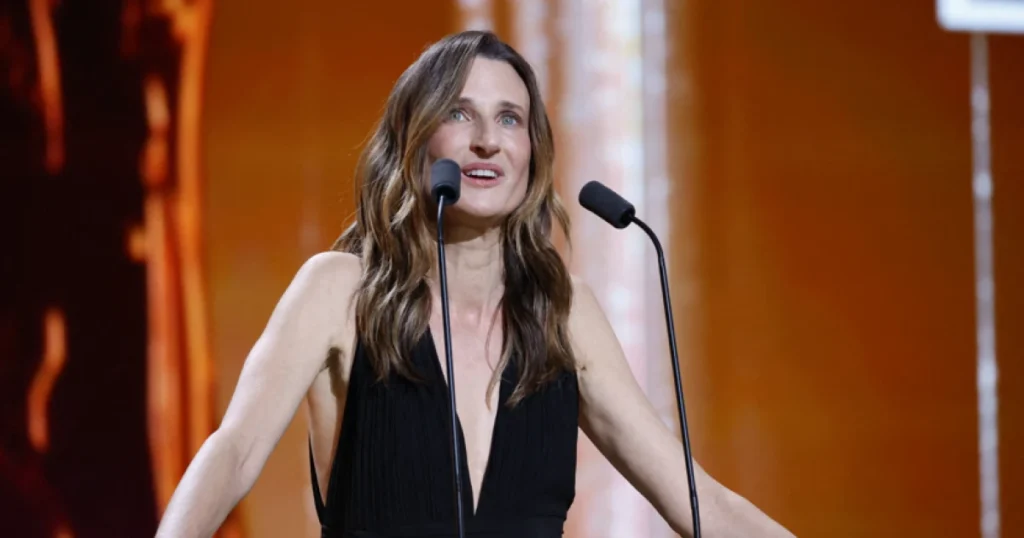
The 2026 ceremony was presided over by Camille Cottin, whom the Academy praised as embodying “the vitality of contemporary French cinema.” First widely recognized for her biting comic persona in the series Connasse, and later internationally known for Dix pour cent (“Call My Agent!”), Cottin has become one of France’s most exportable talents. This year, she appeared on the big screen in Les enfants vont bien, Rembrandt, and Le Pays d’Arto, reinforcing her range between sharp comedy and nuanced drama.
Serving as master of ceremonies was Benjamin Lavernhe, a member of the Comédie-Française. Nominated five times in previous years, Lavernhe opened the evening with self-deprecating humor, joking that after five unsuccessful nominations, the Academy “takes pity on you and asks you to host.” His tone—elegant yet mischievous—set the rhythm for a ceremony that turned out to be joyful, fast-paced, and generous.
The staging balanced tradition and modernity: orchestral interludes, cinematic montages, and an “in memoriam” segment honoring figures lost this year, including actress Emilie Dequenne and filmmaker Marcel Ophuls. The evening also featured moments of political resonance, confirming that the Césars remain not only an artistic celebration but a civic forum.
The Big Winner: L’Attachement
The night culminated with the announcement of Meilleur film (“Best Film”), awarded to L’Attachement, directed by Carine Tardieu.
The film, titled The Ties That Bind Us in English, tells the story of Sandra, an independent feminist bookstore owner in her fifties whose life shifts unexpectedly when she temporarily cares for her neighbors’ six-year-old son during a medical emergency. When tragedy strikes and the boy’s mother dies in childbirth, Sandra becomes gradually entwined with the grieving family. What begins as a gesture of neighborly solidarity evolves into a delicate exploration of love, responsibility, and chosen bonds.
Onstage, Tardieu thanked her collaborators and emphasized the collective spirit of filmmaking. “Tonight, we’re bringing the cup home together,” she said, visibly moved.
In addition to Best Film, L’Attachement also won Meilleure adaptation (“Best Adaptation”) for Tardieu, Raphaële Moussafir, and Agnès Feuvre, as well as Meilleure actrice dans un second rôle (“Best Supporting Actress”) for Vimala Pons. The film’s layered depiction of grief and solidarity resonated strongly with Academy voters, suggesting a continued appetite for intimate, character-driven storytelling.

Acting Honors: Léa Drucker and Laurent Lafitte
The César de la meilleure actrice (“Best Actress” award) went to Léa Drucker for her performance in Dossier 137, directed by Dominik Moll. Already honored in 2019 for Jusqu’à la garde, Drucker continues to gravitate toward socially grounded roles. In Dossier 137, she plays an investigator within the IGPN, France’s internal police watchdog agency, navigating institutional pressure and moral ambiguity in a sensitive judicial case.
In her acceptance speech, Drucker expressed admiration for Moll and reflected on truth in an era of image overload, praising cinema as a space where nuance can still breathe. Her restrained, morally complex performance anchors a film that examines justice, accountability, and doubt.
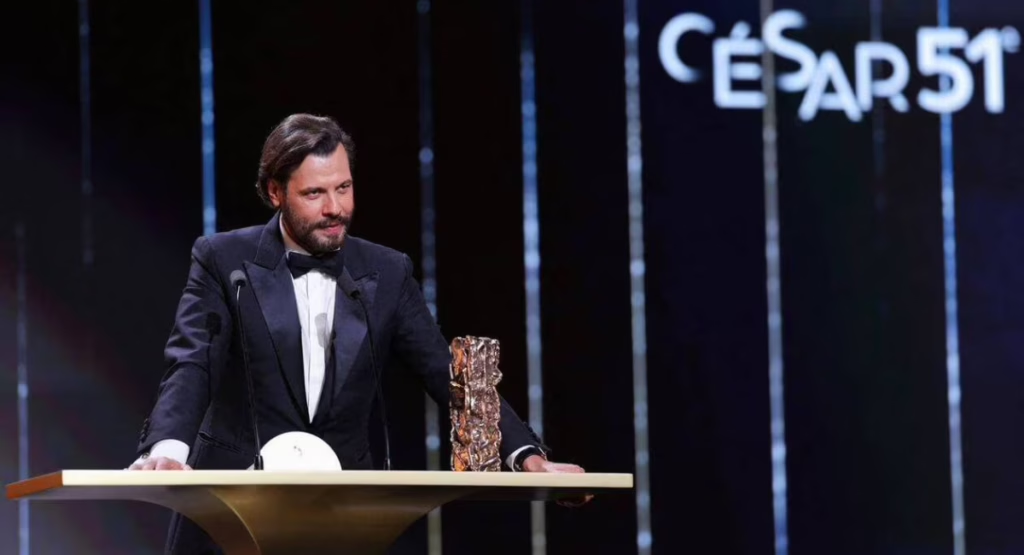
The César du meilleur acteur (“Best Actor” award) was awarded to Laurent Lafitte for La Femme la plus riche du monde (“The Richest Woman in the World”), directed by Thierry Klifa. Lafitte plays an ambitious social climber who insinuates himself into the life of a powerful heiress, portrayed by Isabelle Huppert.
Charismatic and calculating, his character blurs the line between affection and opportunism. Onstage, Lafitte dedicated his award to France, acknowledging the country’s cultural system for nurturing artistic careers.
Supporting acting honors went to Pierre Lottin for L’Étranger and Vimala Pons for L’Attachement, while breakthrough prizes recognized Théodore Pellerin (Nino) and Nadia Melliti (La Petite Dernière), underlining the Academy’s attention to emerging voices.
The “New Wave” Reimagined
Although it did not secure Best Film, Nouvelle Vague by Richard Linklater emerged as the most awarded production of the night, with 10 nominations that turned into four trophies. The film revisits the legendary shoot of À bout de souffle (“Breathless”) by Jean-Luc Godard, blending homage and meta-cinematic reflection.
Linklater won Meilleure réalisation (“Best Director”), while the film also earned awards for editing (Catherine Schwartz), cinematography (David Chambille), and costumes (Pascaline Chavanne).
That an American filmmaker would win Best Director at France’s top film awards underscores the porousness of contemporary cinema and the enduring global fascination with the French New Wave. The project bridges transatlantic cinephilia and reaffirms the mythic aura of 1960s Paris filmmaking while reframing it for a new generation.
An Emotional César d’honneur for Jim Carrey
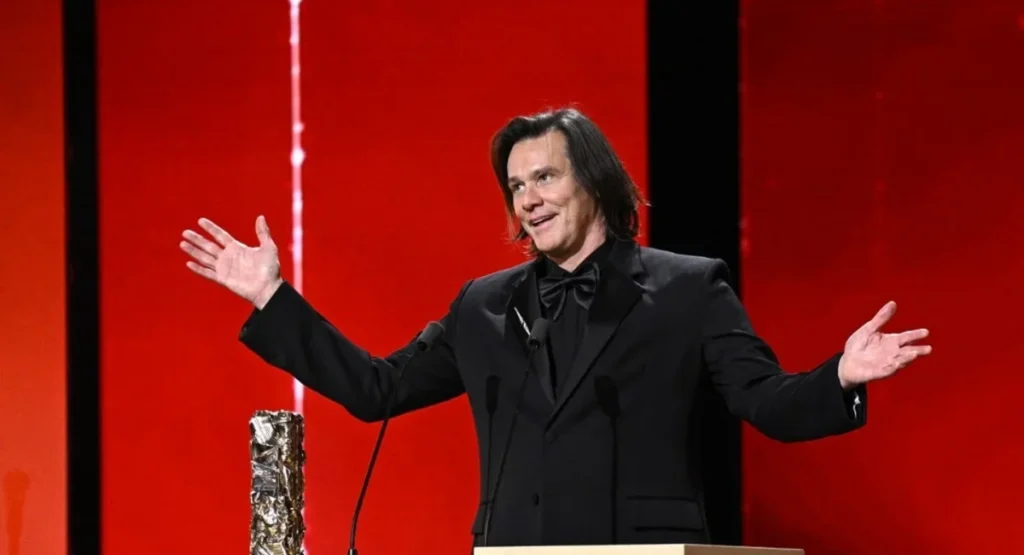
One of the evening’s most anticipated moments was the presentation of the César d’honneur to Jim Carrey. Following in the footsteps of Julia Roberts last year, Carrey was celebrated as a “rare and visionary comedian” and one of modern cinema’s most original voices.
From his breakout roles in Ace Ventura, The Mask, and Dumb and Dumber to his dramatic turns in The Truman Show and Eternal Sunshine of the Spotless Mind, Carrey has traversed genres with elastic brilliance.
Filmmaker Michel Gondry joined Camille Cottin onstage to honor his former collaborator, sharing humorous anecdotes from the set of Eternal Sunshine. Carrey delivered part of his speech in French, joking about his “almost mediocre” accent and recalling his distant French ancestry.
The tribute was affectionate and reverent, positioning Carrey within a lineage of international artists embraced by French cinephiles, and highlighting the Academy’s ongoing dialogue with global cinema.
Cinema as a Platform for Conscience
Beyond trophies, the 2026 Césars reaffirmed cinema’s political dimension. Actress Isabelle Adjani invited the men in the audience to stand in solidarity with women victims of violence, as well as with Iranian and Afghan women, transforming the auditorium into a collective gesture of support.
Later, actress Golshifteh Farahani paid tribute to filmmaker Jafar Panahi, whose film Un simple accident (“It Was Just an Accident”) had been nominated. She denounced repression in Iran and praised the resilience of its people, declaring that “a living heart never submits.”
Such moments underscored the ceremony’s dual function: not only to celebrate cinematic craft, but also to amplify voices engaged with global struggles.
A Panorama of Craft and New Talent
The 2026 ceremony recognized a broad range of genres and crafts. Le Chant des forêts (“Whispers in the Woods”) by Vincent Munier won both Meilleur film documentaire (“Best Documentary”) and Meilleur son (“Best Sound Design”), reflecting the Academy’s appreciation for immersive nonfiction filmmaking.
Arco, directed by Ugo Bienvenu, claimed Meilleur film d’animation (“Best Animated Film”) and Meilleure musique originale (“Best Original Score”) for Arnaud Toulon. The film’s visual inventiveness and musical texture stood out in a competitive year for animation.
International cinema was honored with the César du meilleur film étranger (“Best International Film”) awarded to Paul Thomas Anderson’s One Battle After Another.
Meanwhile, Nino by Pauline Loquès won Meilleur premier film (“Best First Film”), confirming the Academy’s commitment to fostering debut directors. Short films and animated shorts also received recognition, highlighting the vitality of France’s short-form production scene and the pipeline of future auteurs.
Between Established Names and Emerging Voices
By the time the winners assembled onstage for the traditional group photo, the 51st Césars had traced a portrait of French cinema in transition. Established stars like Léa Drucker and Laurent Lafitte shared the spotlight with newcomers such as Nadia Melliti and Théodore Pellerin. A French director of intimate dramas triumphed in the Best Film category, while an American auteur won Best Director for a movie about the French New Wave. An international comedy legend received a lifetime tribute.
If one word encapsulated the night, it may have been “attachment”—not only the title of the winning film, but a theme running through the ceremony itself: attachment to artistic craft, to collective memory, to political conscience, and to the evolving bonds between filmmakers and audiences.
In honoring both heritage and reinvention, the 2026 Césars affirmed that French cinema remains, above all, a living art—restless, reflective, and unafraid to stand ovation-ready at the crossroads of culture and conviction.
Valentine Marchou is a French journalist with a keen eye for culture, lifestyle, and society. After honing her skills in several French newsrooms, she now aims to tell stories that bridge French and English-speaking worlds through art, food, and everyday life.