
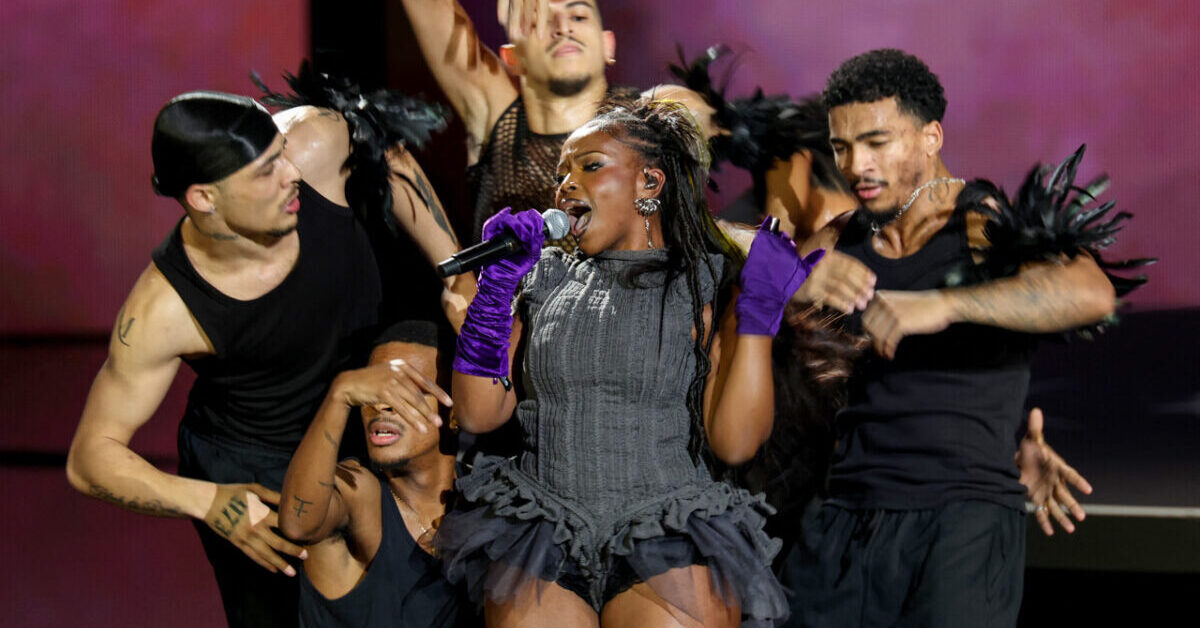
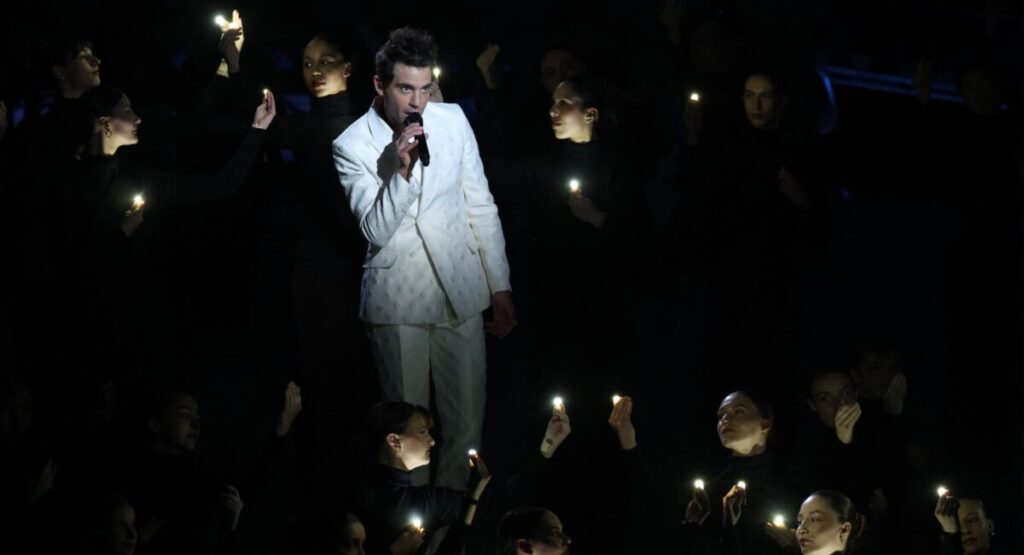
On a rainy Friday night just outside Paris, French music staged its annual self-portrait. The 41st edition of Victoires de la musique—France’s answer to the Grammy Awards—unfolded on February 13, 2026 at La Seine Musicale, broadcast live on France 2 and France Inter. Presided over by Mika and hosted by Cyril Féraud alongside Helena Noguerra, the ceremony delivered what may be remembered as a turning point year—the night a new generation of women, led by Theodora, firmly took over French pop culture.
What Are the Victoires de la Musique?
Created in 1985 by the French music industry and public broadcasting system, Victoires de la musique takes place once a year and honors the best musical artists working primarily in the French-speaking market. The awards are decided by a voting academy of industry professionals—producers, publishers, label executives, journalists, and artists—though some categories, such as chanson originale de l’année (best original song), also include public voting.
The awards aim not only to reward commercial success but also to protect cultural identity. France has long maintained policies promoting Francophone music, and the ceremony embodies that ethos. Winning a Victoire often signals artistic legitimacy as much as popularity. Careers have historically been defined by it—from Alain Bashung to Stromae—and artists frequently describe the trophy as recognition from peers rather than fans alone.
The categories reflect that philosophy. Alongside major honors like artiste masculin (best male artist) and artiste féminine (best female artist), the ceremony places huge importance on révélation (best new artist) awards, split into male, female, and live performance. Winning a révélation can instantly transform a niche artist into a national headliner, and these awards often predict the future of French pop more accurately than chart rankings.
A Feminine Wave Rewrites the Narrative
The defining theme of the 2026 edition of Victoires de la Musique was unmistakable: women dominated the conversation. Over 60 percent of nominations went to female artists, and the show’s emotional center revolved around a generation born after the streaming era reshaped the industry.
At the heart of that shift stood Theodora—nicknamed “Boss Lady” by fans—whose cross-genre sound blends hip-hop, R&B, electronic, and Afro-Caribbean rhythms. Born in Switzerland to a Congolese family, she represents a multicultural France increasingly visible in mainstream media. Her music circulates not only through radio but through TikTok edits, fashion culture, and memes, making her influence as social as it is musical.
Her album Mega BBL had already dominated streaming platforms before the ceremony. By the end of the night, she had confirmed her status as the defining artist of the year.
The Night Belonged to Theodora
Theodora won four trophies: révélation féminine (female breakthrough), révélation scène (live breakthrough), album de l’année (album of the year) and création audiovisuelle (best music video) for “Fashion Designa”. The sweep confirmed her as both the public and industry favorite of the French music scene.
Onstage she emphasized continuity rather than rupture, thanking previous artists who paved the way for her sound to be understood. In France, where pop legitimacy often takes years, her rapid ascent—which made her a festival headliner status at 22—signals a change in how cultural authority forms. Instead of radio and critics, the ecosystem now includes social media virality and visual identity as core artistic components.
Her victory also symbolized a wider transformation: the French mainstream increasingly embracing hybrid sounds once considered “urban niches.” The Victoires have historically lagged behind youth culture; in 2026, they appeared to catch up.

The Return of Veterans and Emotional Honors
While the evening celebrated youth, it also honored legacy. A deeply emotional moment came when Nana Mouskouri received the Victoire d’honneur. With a career spanning decades and hundreds of millions of records sold, she represents the transnational Francophone tradition of artists who have popularized French songs well beyond France.
Her speech emphasized universality: music as shared memory across generations. The room, filled with emerging rappers and electronic producers, stood for a performer whose career began before most nominees were born, and the contrast perfectly illustrated the ceremony’s dual identity representing both heritage and renewal.
Another symbolic reconciliation involved Indochine, long critical of the awards. After years of distance, the band returned to accept a special prize for a tour exceeding one million spectators. Their performance doubled as commentary on ticket prices in the modern concert economy—a rare moment of industry self-reflection.
The Major Awards: Pop Meets Reinvention
Beyond Theodora’s dominance, the night crowned several artists marking turning points in their careers.
Charlotte Cardin won artiste féminine de l’année (female artist of the year), consolidating her expansion into the French market after gaining popularity for her bilingual hit “Feel Good.” Her acceptance speech highlighted the cultural bridge between Québec and France—a reminder that Francophone music is global rather than national.
Disiz captured the artiste masculin de l’année (male artist of the year) award, capping a creative comeback driven by introspective songwriting and genre blending. Once associated primarily with early-2000s rap, he now occupies a space between hip-hop and chanson, reflecting how French rap artists increasingly age into singer-songwriter roles rather than fading away.
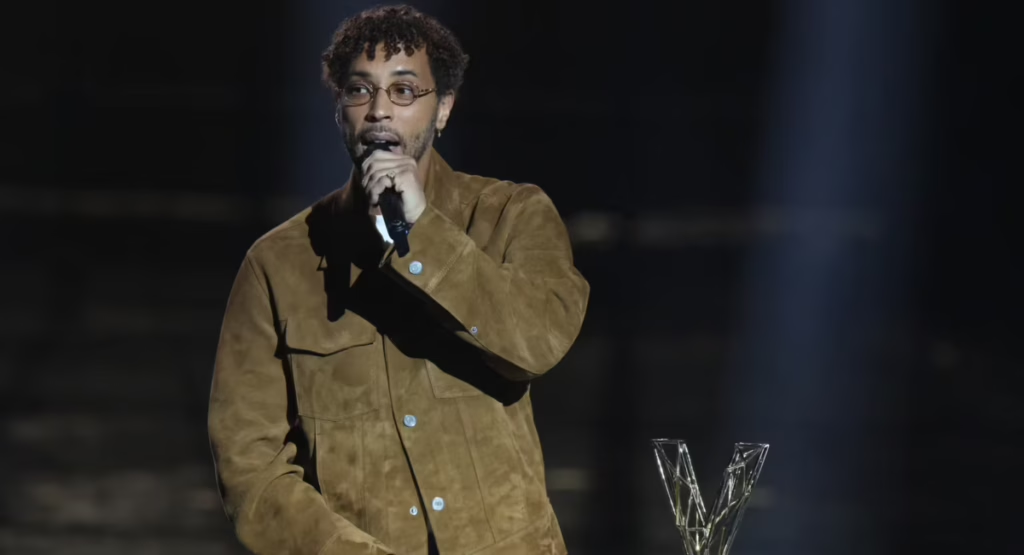
Sam Sauvage earned révélation masculine (best new male artist), representing guitar-driven pop’s survival amid electronic dominance. Meanwhile Helena won chanson originale de l’année (best original song) with “Mauvais garçon”, proving that reality-TV exposure can translate into long-term artistic credibility in France.
The electronic duo Justice received the concert de l’année (concert of the year) award, underscoring France’s global leadership in electronic live production.
More than a ceremony, the 2026 Victoires felt like a snapshot of a changing country—younger, hybrid, and outward-looking. The trophies may reward the past year, but this edition clearly pointed toward the next decade of French music.
Valentine Marchou is a French journalist with a keen eye for culture, lifestyle, and society. After honing her skills in several French newsrooms, she now aims to tell stories that bridge French and English-speaking worlds through art, food, and everyday life.


