
In 1826, on a quiet estate near Chalon-sur-Saône, an inventor coated a metal plate with bitumen, pointed it toward a courtyard window, and waited. Hours passed, then days. When Nicéphore Niépce finally fixed the image that had slowly burned itself into the surface, he could hardly have imagined that this fragile view from Le Gras (the name of Niépce’s family estate) would inaugurate one of the most transformative visual languages in human history. Two centuries later, France is preparing to celebrate that moment with an ambitious, yearlong cultural event, the Bicentenaire de la Photographie, running from September 2026 through September 2027. Designed as both a tribute and a reinvention, the program will mobilize museums, archives, artists, scholars, and the general public across the country and beyond, inviting international visitors to rediscover photography at its source.
What began as an experiment in chemistry and light became a tool of science, journalism, art, memory, and protest. Today, in an era saturated with smartphone images and artificial intelligence, France’s bicentennial asks a timely question: What does it mean to celebrate photography when images are everywhere? The answer lies not only in honoring the past but also in exploring how the medium will continue to evolve into the future.
The Birth of Photography in Burgundy
Photography’s story starts in rural Burgundy. Between 1826 and 1827, Nicéphore Niépce achieved the first permanently fixed photographic image using a process he called héliographie. His method relied on a pewter plate coated with light-sensitive bitumen of Judea. After an exposure that lasted many hours, the hardened areas remained while the rest dissolved, revealing a ghostly image of rooftops and sky. The result, now known as Point de vue du Gras, is widely considered the oldest surviving photograph.
Niépce’s achievement was neither instantaneous nor inevitable. It emerged from decades of scientific curiosity and experimentation with optics, engraving, and lithography. Soon after, he partnered with Louis-Jacques-Mandé Daguerre, whose improvements would accelerate the process dramatically. By 1839, the daguerréotype was introduced to the world, producing sharply detailed images on silvered plates, and sparking a global sensation.

France played a decisive role in spreading the medium. Rather than patenting the process internationally, the French government declared it a gift “free to the world,” allowing photography to proliferate at remarkable speed. Studios opened from New York to New Orleans, from London to Cairo. Within a generation, photography was documenting wars, cataloging scientific discoveries, recording family life, and reshaping art itself.
From the beginning, the medium carried a paradox. It promised truth while inevitably interpreting reality. That tension between objectivity and imagination still defines photography today, and it sits at the heart of the bicentennial’s intellectual framework.
A Year-Long National Celebration
To mark the 200th anniversary of Niépce’s breakthrough, France’s Ministry of Culture is organizing a sweeping, participatory celebration under the banner Bicentenaire de la Photographie. Rather than confining events to a single exhibition or city, the organizers envision a decentralized festival stretching across the entire country for 12 months.
A scientific and artistic committee, chaired by art historian Dominique de Font-Réaulx of the Louvre, has crafted the celebration’s guiding principles. Their manifesto frames photography as both a historical invention and a living practice that continually reinvents itself across artistic, social, political, and educational contexts. The goal is to engage not only specialists, but also everyday citizens.
Cultural institutions, regional museums, festivals, libraries, schools, and independent artists are invited to propose projects through a national appel à projets. Selected initiatives receive the official label of the bicentennial, signaling inclusion in the national program. Nearly 180 projects have already been chosen, with more to follow, ensuring a rich calendar of exhibitions, workshops, conferences, publications, and community events from Burgundy to Brittany.
Major Exhibitions and Institutional Highlights
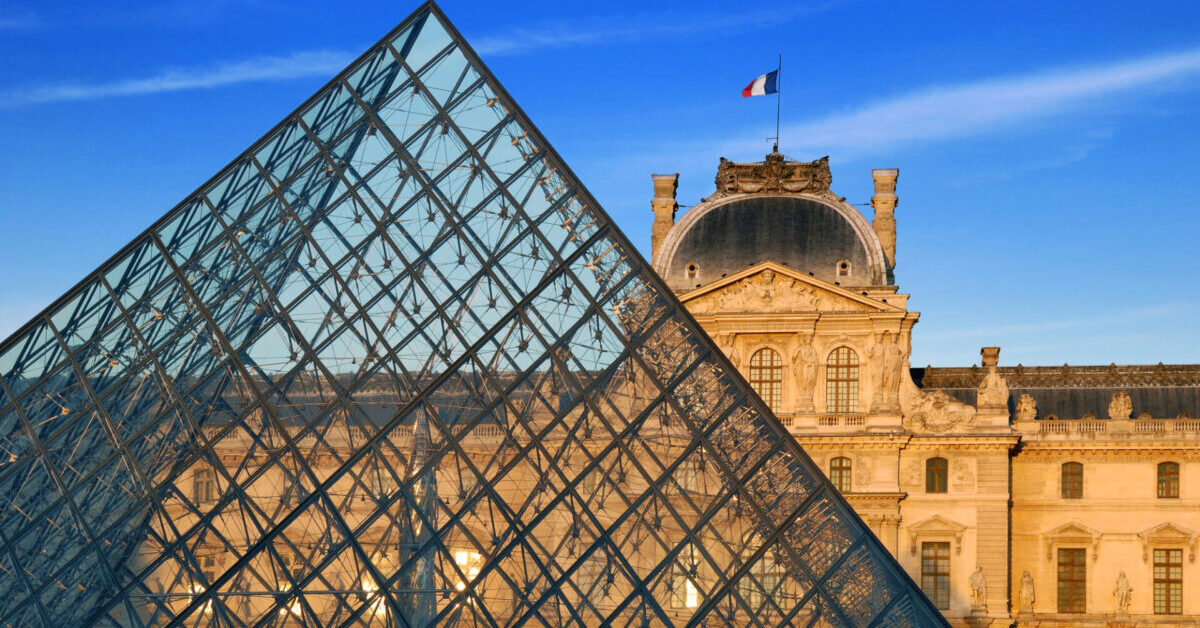
France’s leading museums are contributing ambitious shows that examine photography’s past and future from multiple angles. The Louvre, long associated with painting and sculpture, will present a large-scale exhibition exploring how the museum’s collections have inspired generations of photographers. By placing photographic works in dialogue with canonical masterpieces, the show underscores how the camera has reinterpreted art history itself.

At the Musée d’Orsay, contemporary artist Youssef Nabil will be invited to cast a fresh eye on the museum’s holdings, especially Orientalist painting, creating new photographic responses that blur time periods and aesthetics. The Centre Pompidou, working alongside the Grand Palais, will investigate how photography has reshaped our understanding of the world’s images, from documentary practices to conceptual art.
The Bibliothèque nationale de France plans an expansive exhibition tracing two centuries of the photographic nude, while the Musée national de l’histoire de l’immigration offers carte blanche to theater director Wajdi Mouawad. Other institutions will highlight monographic presentations devoted to figures such as Bernard Plossu, Isabelle Le Minh, and Alice Bommer, demonstrating the diversity of contemporary French photography.
In Chalon-sur-Saône, Niépce’s hometown, special programming will return visitors to the medium’s origins with exhibitions dedicated to the inventor and his early experiments. Meanwhile, discussions are underway about creating a major photography museum in Arles, building on the city’s reputation as the home of the renowned Rencontres d’Arles photography festival. If realized, the museum would connect with other institutions in a national network, strengthening France’s position as a global hub for photographic culture.
Education, Participation, and Public Memory
One of the most distinctive aspects of the bicentennial is its emphasis on participation. Photography has always belonged as much to amateurs as to professionals, and the organizers want the public to play an active role.
Educational workshops will introduce students and families to image-making techniques, from historic processes to digital tools. Mobile units will travel through rural and underserved areas, ensuring that communities far from major cities can engage with the celebration. These initiatives reflect a commitment to making photography accessible rather than exclusive.
Several projects invite citizens to contribute their own images. Participatory archives and collective exhibitions will gather personal photographs, family albums, and local histories, turning private memories into shared heritage. In doing so, the bicentennial highlights photography’s power to connect individual lives to broader narratives.

The Centre national des arts plastiques is also launching a major national commission titled Réinventer la photographie, bringing together 15 photographers to question and expand the medium’s possibilities. Their works will address everything from environmental change to digital manipulation, demonstrating that photography remains a space for experimentation and critical thought.
Photography in the Age of AI and Infinite Images
Celebrating photography in 2026 inevitably means confronting today’s image landscape. Billions of photos are taken each day, edited instantly, and circulated globally within seconds. Artificial intelligence now generates images that mimic photographs without a camera ever being used. In such a context, what distinguishes photography from everything else?
The bicentennial does not shy away from this debate. The committee’s manifesto notes that photography has always been shaped by a kind of utopian belief, the idea that it could collapse the distance between reality and its representation. Even when that promise proves illusory, the desire persists. Today, the proliferation of synthetic images challenges long-held assumptions about photographic truth, forcing viewers to reconsider what they trust.
By juxtaposing early chemical processes with contemporary technologies, the yearlong program encourages reflection on continuity and change. Niépce’s slow exposures may seem worlds apart from smartphone selfies, yet both rely on the same fundamental principle. Light leaves a trace. The tools evolve, but the impulse to capture the world endures.
For audiences accustomed to scrolling endlessly, encountering historical prints, glass negatives, and hand-colored photographs can feel surprisingly intimate. These objects remind us that photographs are not just data but physical artifacts with texture and history. The bicentennial invites visitors to slow down and look closely.
Why This Moment Matters now
The bicentennial offers far more than a sequence of museum exhibitions. It is an opportunity to reconsider how a French invention helped shape the way the modern world sees itself. From journalism to science, from family albums to contemporary art, photography has become one of the primary languages through which we understand reality.

Over the past two centuries, the medium has traveled endlessly across borders, influencing visual cultures everywhere. Early processes developed by Niépce and Daguerre quickly spread worldwide, laying the groundwork for documentary practices, fashion imagery, cinema stills, advertising, and artistic experimentation. What began as a local scientific breakthrough grew into a global tool for memory and storytelling.
Experiencing France during the Bicentenaire de la Photographie means returning to the source. Visiting Chalon-sur-Saône, where Niépce produced his first image at Le Gras, or cities such as Arles, Paris, Lyon, and Nantes, allows visitors to trace the origins of a medium that now feels universal. The landscape where photography was born becomes part of the story itself.
Two hundred years after Niépce patiently allowed light to etch an image onto a metal plate, photography continues to move between science and poetry, evidence and imagination. The Bicentenaire de la Photographie embraces that complexity, honoring the past while opening the door to fresh experiments and new voices. For anyone curious about how humans came to see the world through a lens, this anniversary offers a rare chance to witness the next chapter taking shape where it all began.
Valentine Marchou is a French journalist with a keen eye for culture, lifestyle, and society. After honing her skills in several French newsrooms, she now aims to tell stories that bridge French and English-speaking worlds through art, food, and everyday life.


