
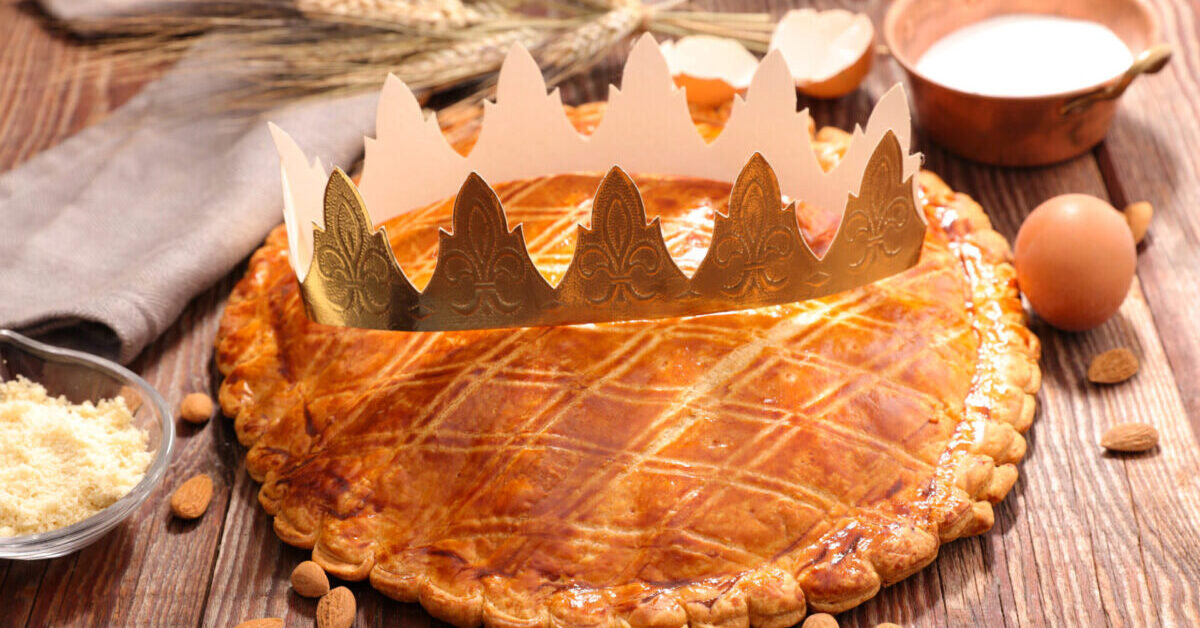
Every January, as France eases out of the glow of Christmas and steps into a new year, another eagerly awaited moment invites everyone back to the table: Epiphany, known as Épiphanie or the Fête des Rois in French. Though it falls on January 6, its spirit extends over several days, filling bakeries, homes, and cafés with golden pastries, porcelain charms, and the comforting scent of almond and brioche.
Epiphany offers a glimpse into an ancient celebration that continues to shape French social life—part culinary ritual, part historical inheritance, and part joyful game. But how did this date become so meaningful? Why do the French hide tiny figurines in cakes? And how has a Roman winter festival evolved into one of the most recognizable moments in the French calendar?
A Celebration Rooted in Light and Revelation
Epiphany, in its religious sense, commemorates the moment when the Magi—Melchior, Gaspar, and Balthazar—arrived in Bethlehem to honor the newborn Jesus. Guided by a star across the desert, they brought gifts of gold, frankincense, and myrrh, each symbolizing royal dignity, divinity, and the fragility of human life. Within Christianity, this episode represents a revelation, with these sages recognizing the child as the Messiah.

For centuries, this scene has been staged in French nativity displays or crèches, where the figurines of the Wise Men are placed at a distance during Advent and gradually moved closer to the crib. Only on January 6 do they finally reach the infant Jesus, completing the journey that inspired the holiday. But beyond its biblical dimension, the Epiphany also carries a symbolic connection to the cycle of the seasons.
Falling shortly after the winter solstice, it coincides with the slow return of daylight, a moment associated with renewal and hope. In this sense, Epiphany represents both a spiritual awakening and the promise of brighter days ahead.
January 6: A Date Born at the Crossroads of Cultures
The choice of January 6 is not arbitrary. Long before Christianity gave this day its current meaning, the Romans were marking the winter period with the exuberant festival of Saturnalia. Its celebrations, held around the solstice, were a period of merriment when social order was symbolically inverted. People feasted together, exchanged small gifts, and enjoyed the rare pleasure of collective downtime—slaves and masters included.
One of the playful customs of Saturnalia involved designating a “king of the feast.” The choice was left to chance: a single bean baked into a cake would determine who held this role, giving temporary power—more ceremonial than real—to the one who found it. When Christianity eventually expanded across the Roman world, it absorbed certain elements of these festivities, giving them new significance. The date of January 6 was chosen to mark the Magi’s arrival, occurring 12 days after Christmas.

Even today, the French maintain the idea of “12 days of Christmas,” although Epiphany, which is not a bank holiday, is more commonly celebrated on the first Sunday of January. This adjustment, introduced in the 1970s by the Catholic Church in France, makes it easier to gather families and friends for the long-awaited Galette des Rois, ensuring that the end-of-year celebrations echo into early January.
The Origins of the Galette des Rois
Nearly thirty million Galettes des Rois are enjoyed every year across France, making it one of the country’s most beloved seasonal foods. Yet behind the flaky pastry—or the jewel-like brioche—lies a lineage that stretches back to Saturnalia.
The Romans’ festive cake, baked with a dried bean inside, evolved through the Middle Ages into a Christian ritual meal. Over time, the bean, or fève, became an indispensable part of the celebration, but the pastry itself changed dramatically. In northern France, butter-rich puff pastry became the foundation of the galette, and almond cream, later refined into frangipane, turned it into an indulgent winter treat. This northern version now dominates the national market, representing the vast majority of Galette des Rois sales, and the anticipation of uncovering the fève makes each slice irresistible.
In southern France, however, the star of early January looks very different. Known as the gâteau des rois or couronne des rois, it is a brioche shaped into a ring, scented with orange blossom, and crowned with crystallized fruit. It evokes Mediterranean flavors and harkens back to a time when candied fruit was considered a luxury.
Both forms share the same symbolic heart: inside, hidden from view, lies the fève. But today that fève is no longer a humble bean. Over the centuries, it has become a miniature object of fascination—first figurines in porcelain, then increasingly elaborate collectibles. Entire markets exist for trading and collecting them, and enthusiasts, known as fabophiles, hunt for rare editions like miniature works of art.
The Traditions of the French ‘King Cake’
The Galette des Rois is never eaten casually. It is shared according to a precise—and often humorous—set of customs that turn the moment into something theatrical. The cake is cut into as many slices as there are people at the table, plus one extra portion called la part du pauvre, historically reserved for anyone in need who might appear at the door.
To preserve fairness, and suspense, the youngest person present is tasked with hiding under the table. Without seeing the cake, they announce who should receive each slice. Only when everyone has their piece can the first bite be taken, with a mix of anticipation and caution. Somewhere inside lies the hidden charm that will crown someone king or queen for the day.

The person who discovers the fève becomes the sovereign of the gathering, donning a paper crown—usually golden. Their reign is symbolic, filled with laughter rather than authority. Yet it comes with a friendly duty: the newly anointed ruler is expected to provide the next galette, ensuring that the cycle continues throughout January. In many French workplaces, this custom leads to a series of weekly, sometimes even daily galettes, making the early weeks of the year a marathon of puff pastry.
Regional Epiphany Traditions in France
While the galette itself is the centerpiece, the Epiphany takes on different cultural expressions across France. In Provence, the season is marked not only by the brioche crown but also by elaborate nativity scenes featuring local characters known as santons. Some villages even stage reenactments of the arrival of the Magi, complete with costumed processions and music.
Elsewhere, the celebration remains centered on the domestic sphere—families, colleagues, and friends gathering indoors, slicing into a pastry, and discovering, with a hint of suspense, who will wear the crown. Even French people abroad often recreate the moment with locally sourced ingredients, or by seeking out French bakeries specializing in these January delicacies. In some countries, particularly Spain, the arrival of the Magi is a full-scale public event, with large parades and gifts for children. Though the French version is more intimate, it shares the same spirit of generosity and wonder.

Galette des Rois Around the World
Thanks to the charm of the Galette des Rois and the irresistible game of the fève, Epiphany has grown far beyond its religious origins. Today, bakeries all over the world offer their own interpretations, sometimes faithful to the French models, sometimes daringly creative. French expatriates host January gatherings to share the ritual with friends who may never have heard of the Magi but quickly become fans of the pastry—and the playful suspense that comes with every slice.
In France itself, the Epiphany remains one of the great unifying moments of winter. It is culinary, historical, playful, and communal all at once. It bridges ancient Rome, medieval Christianity, regional French pâtisserie, and modern celebrations. And perhaps most importantly, it creates a pause in a season often marked by cold and routine, offering warmth, laughter, and a little taste of royalty, even if only for a day.
Valentine Marchou is a French journalist with a keen eye for culture, lifestyle, and society. After honing her skills in several French newsrooms, she now aims to tell stories that bridge French and English-speaking worlds through art, food, and everyday life.


