
For many Americans, moving to France begins as a dream. A slower pace of life, long lunches that stretch into the afternoon, healthcare that feels humane, and cities designed for living rather than rushing. But between that fantasy and reality lies something far less romantic: paperwork, deadlines, and a system that does not always explain itself clearly.
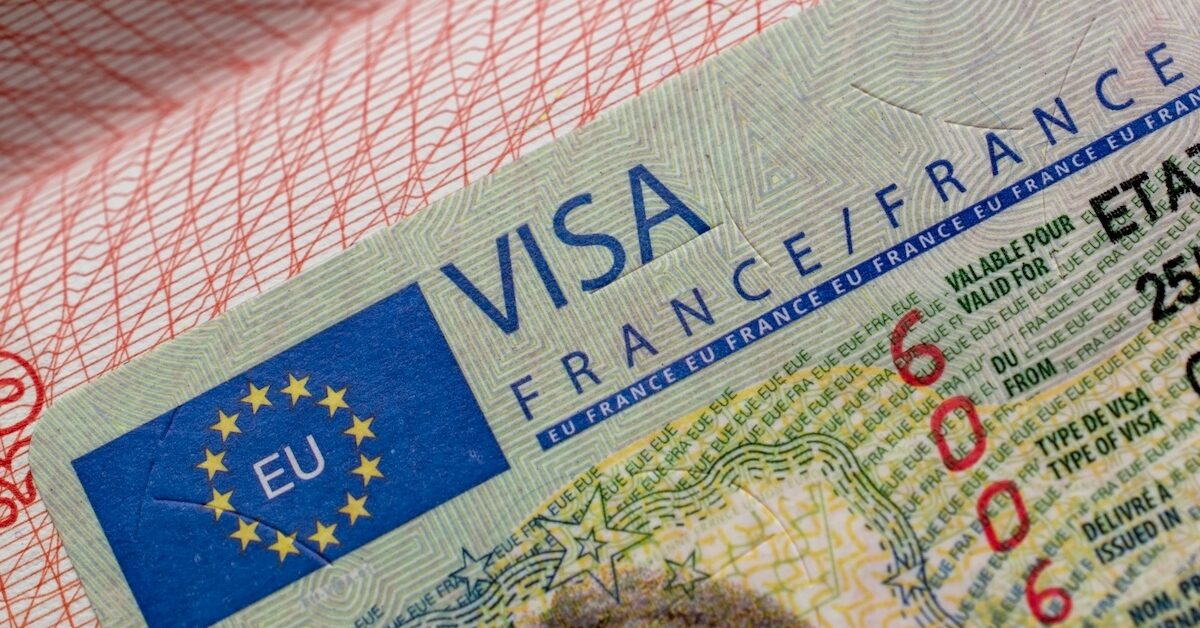
Unlike a short trip to Paris, relocating to France requires preparation long before you board a plane. Americans can stay in France for up to 90 days without a visa, but anything longer demands planning, structure, and the right paperwork from the start. The process begins in the United States, with a long-stay visa, and continues in France with residency permits, renewals, and, eventually, for some, permanent residency or citizenship.
The reassuring part is that thousands of Americans successfully make the move each year. The less reassuring part is that it rarely happens without a few complications along the way. As Fabien Pelissier, managing director of Fab French Insurance, puts it, “People think it’s just paperwork, but in reality, it’s about presenting a complete and coherent story that the administration understands and trusts.”
The Long-Stay Visa
If you plan to live in France for more than three months, a long-stay visa is non-negotiable. It is the legal gateway to everything that follows. The French system expects you to define your purpose clearly from the beginning, whether that is working, studying, joining family, or retiring in France.
There are many types of long-stay visas, but most Americans fall into a handful of categories. Some arrive with a job already secured, others as students enrolled in French institutions. A large number opt for the visitor visa, which allows them to live in France without working locally, often supported by savings, retirement income, or remote work. There are also entrepreneur visas and highly skilled “talent” visas designed for more specific professional profiles.
It is important to choose the visa that most accurately reflects your situation. As Pelissier explains, the administration is not just verifying documents, it is evaluating whether your overall situation makes sense. Why are you coming? How will you support yourself? Where will you live? When those answers are unclear, that is where applications begin to fall apart.
The Three Foundations Every French Visa Application Needs

No matter which visa you choose, your application will stand or fall on three essential elements: financial resources, health insurance, and proof of address.
Financially, France wants to see that you can support yourself independently. In many cases, this means demonstrating income equivalent to at least the French minimum wage, or approximately €1,450 net per month. If you do not have regular income, savings can be used instead, but they must be immediately accessible. According to Pelissier, liquidity is key. “It’s not about total wealth,” he explains. “It’s about what you can access right away. The administration wants to know that if needed, the funds are there without delay.”
Health insurance is equally critical. You must show coverage for at least your first year in France, with guarantees comparable to those provided by the French healthcare system. This is not an area where you can cut corners, and weak insurance coverage is a common reason applications run into trouble.
Finally, you need a confirmed address in France. This does not necessarily mean you must own property, but it does mean having a stable housing arrangement. Short-term rentals are often seen as insufficient, as they do not reflect long-term intent.
Together, these elements tell a story. And in the French system, how that story is presented matters just as much as the documents themselves.
Choosing a Visa Means Choosing a Lifestyle
One of the biggest misconceptions Americans have is that a visa is just a technical requirement. In reality, it shapes your entire experience in France. A visitor visa, for example, allows you to live in the country but not to work for a French employer. For retirees or financially independent individuals, this works well. For others, it can feel restrictive.
Work visas offer more stability but are harder to obtain, as they require sponsorship from a French employer and additional administrative steps. Student visas allow part-time work but are tied to enrollment in a recognized program. Entrepreneur visas open doors for independent professionals but come with their own set of requirements.
“There is no one-size-fits-all solution,” Pelissier says. “The right visa is the one that aligns perfectly with your situation. Trying to force a fit is where people run into problems.”
Garrett, a 41-year-old American now living in Lyon, knows this firsthand. He arrived on a non-working visa without a clear long-term plan, assuming he would figure things out once he arrived. “It worked eventually,” he says, “but I definitely underestimated how structured everything is. You can’t just improvise your way through it.”
Validating Your Visa and Obtaining a Residency Permit
Receiving your visa does not mean you are fully settled. In many ways, it is just the beginning. Once in France, one of the first steps is validating your visa online if it serves as a temporary residence permit. This must be done within the first three months and involves paying a fee and confirming your presence in the country. You will also be invited to complete a medical exam organized by the French authorities.
It sounds straightforward, but validating your visa is a step that many overlook. Delays or mistakes at this stage can create complications later, especially when it comes time to renew your status.
If you complete this process in time, the next step involves scheduling an appointment at the prefecture to begin the process of obtaining a residency permit.
The Carte de Séjour

If a visa is what gets you into France, the carte de séjour is what allows you to stay. This residency permit replaces your visa over time and becomes the central document of your legal life in France. It is typically issued for one year at first and must be renewed regularly.
There are many types of residence permits, depending on your situation, from employment and family ties to entrepreneurship or non-working status. Over time, temporary permits can evolve into multi-year permits, and eventually into long-term residency.
For Sarah, a 53-year-old from Chicago now living in Nice, that first experience navigating the system was far from smooth. “It was stressful,” she says. “We had to go to the prefecture, and it felt overwhelming at first. You’re not always sure if you have the right documents or if you’re even following the right steps.”
Still, like many expats, she found that once the first hurdle was cleared, the process became more manageable, if never entirely simple.
Visa Renewals: The Hidden Reality of Living in France
Visa renewals are central to the experience of living in France. Your first visa may last up to a year, but staying longer means entering a cycle of applications that requires careful timing and consistent documentation.
Renewals typically need to be submitted several months before your current permit expires. More importantly, they require proof that you are actively living in France. This can include bank statements, utility bills, a French phone number, and eventually, French tax returns.
“The first year is about access,” Pelissier explains. “After that, it’s about proving that your life is actually here.”
Garrett remembers how stressful those early renewals felt. “You’re always wondering if something is missing or if you misunderstood something,” he says. “But over time, you start to understand the rhythm of it.”
What Gets Visa Applications Rejected

Visa refusals and administrative complications are not uncommon, and they often stem from issues that are less obvious than people expect. According to Pelissier, the most frequent problem is not a lack of resources, but a lack of clarity.
“The administration needs to understand your project,” he explains. “If your file feels incomplete or inconsistent, that’s when doubts appear.”
In practice, that can take very concrete forms: applicants submitting bank statements that don’t clearly show stable income over time, providing savings without explaining their origin, or failing to meet minimum financial thresholds expected by the administration.
Housing is another common weak point—files may include a temporary Airbnb booking instead of a proper long-term lease, or an attestation of accommodation that lacks supporting documents. Missing basic paperwork such as a valid passport copy, proof of address, or a work contract can also lead to immediate rejection.
Clarity of intent is equally critical. Applications are often refused when the purpose of the stay feels vague or inconsistent—for example, applying for a visitor visa without clearly explaining how you plan to live in France long term, or presenting a project that doesn’t match your background or financial situation.
Even small inconsistencies—like conflicting dates, incomplete forms, or unclear travel plans—can raise doubts about the reliability of the application.
More serious issues, such as providing inaccurate information or documents that appear unreliable, can also trigger refusals, sometimes with long-term consequences.
Another common mistake is relying too heavily on advice from other expats. While community support can be helpful, each case is unique, and what worked for one person may not apply to another.
“There is a subjective element to the process,” our expert adds. “That’s something many Americans underestimate.”
From Temporary Status to Stability
Over time, the system does offer more stability. After several years of renewals, many expats become eligible for multi-year residence permits, which reduce the frequency of administrative procedures. Eventually, some qualify for a 10-year resident card, a major milestone that provides long-term security.
Reaching that stage requires more than just time. It involves demonstrating integration into French life, including language skills and a consistent administrative record. A French level of B1 is required for a 10-year carte de résident, along with proof that your life is firmly established in the country.
For Sarah, this next step is already on the horizon. “We’ve talked about applying for the 10-year card,” she says. “Just the idea of not having to renew every year feels like a huge relief.”
What Americans Learn Along the Way

If there is one consistent theme in expat experiences, it is the need to adjust expectations. The French administrative system operates differently, with its own pace, logic, and priorities.
“You have to be patient,” Sarah says. “And you have to accept that things won’t always be clear right away.”
It’s also necessary to approach the process seriously, prepare thoroughly, and aim to exceed the requirements rather than just meet them. Because in France, the strength of your file often determines the smoothness of your experience.
Moving to France is not just a lifestyle decision. It is a long-term administrative commitment that requires patience, organization, and resilience. But for those who make it through, the reward is something deeper than a successful visa application. It is the gradual shift from visiting a place, to making it your home.
You can find our complete, FREE guide to Moving to France here.
Angelika Pokovba studied abroad at La Sorbonne Nouvelle and worked for French magazines, becoming hopelessly Francophile in the process. When she’s not writing, she’s usually in Paris or the South of France visiting friends, browsing flea markets, perfecting her French, lingering over long lunches, and convincing herself she could absolutely move there tomorrow (and she still might).


