2025 is shaping up to be another stellar year at the Cannes Film Festival. As always, the Croisette will sparkle with a virtual milky way of stars: Bonjour, Daniel Auteuil! Emma Stone! Denzel Washington! Jodie Foster! Wes Anderson’s The Phoenician Scheme alone promises to decorate the red carpet with the likes of Benicio Del Toro, Michael Cera, Tom Hanks, Scarlet Johansson, Bryan Cranston, Mathieu Amalric, Riz Ahmed, Jeffrey Wright, Hope Davis, and Benedict Cumberbatch. Added thrills: a near certain appearance from U2 frontman Bono for Andrew Dominik’s documentary, Bono: Stories of Surrender; Tom Cruise publicizing the hell out of Mission: Impossible – The Final Reckoning; and Robert De Niro, on hand to receive this year’s Honorary Palme d’Or.
Including the late addition of Lynne Ramsay’s Die, My Love, there are seven films directed by women competing for Cannes’ top prize, the Palme d’Or, out of 22 total films in competition. This number matches the record set in 2023. The other six competition films directed by women this year include Julia Ducournau’s Alpha, Hayakawa Chie’s Renoir, Hafsia Herzi’s La Petite Dernière, Kelly Reichardt’s The Mastermind, Mascha Schilinski’s Sound of Falling, and Carla Simón’s Romería.
Presiding over the competition jury is Oscar and César-winning actress and French national treasure, Juliette Binoche, who made her Cannes debut 40 years ago in André Téchiné’s Rendez-Vous and won Best Actress at the 2010 festival for Abbas Kiarostami’s Certified Copy. While several women have held the position, in following Barbie director Greta Gerwig, Binoche marks only the second time one woman has succeeded another as Jury President. (Sophia Loren succeeded Olivia de Havilland in 1966.) Joining Binoche on the diverse multinational jury are actors Halle Berry, Jeremy Strong, and Alba Rohrwacher (La Chimera); French/Moroccan writer Leïla Slimani (The Perfect Nanny); and directors Payal Kapadia (All We Imagine as Light), Dieudo Hamadi (Downstream to Kinshasa), Hong Sangsoo (A Traveler’s Needs), and Carlos Reygadas (Post Tenebras Lux). French actor Laurent Lafitte will entertain audiences as the opening and closing night Master of Ceremonies.
Cannes at the Oscars
Cannes has always been known for introducing the public to swoon-worthy films from around the world, but ever since Korean director Bong Joon Ho’s 2019 film Parasite won both the Palme d’Or and Oscars for Best Picture and Best International Feature, something shifted. The festival has since earned a reputation as an Academy Awards predictor. Other recent Cannes picks that have won big include Thomas Vinterberg’s Another Round in 2020, Ryusuke Hamaguchi’s Drive My Car in 2021, and Justine Triet’s Anatomy of a Fall alongside Jonathan Glazer’s The Zone of Interest in 2023. In 2024, Coralie Fargeat’s The Substance and Jacques Audiard’s Emilia Pérez took home golden statues, while Sean Baker’s Anora won the Palme d’Or and went on to dominate the Oscars, taking Best Picture and four other awards. With a lineup featuring new films from such heavy hitters as Spike Lee, Kelly Reichardt, Ari Aster, Richard Linklater, Julie Ducournau, Joachim Trier, and Jean-Pierre and Luc Dardenne—as well as myriad works from exciting newcomers—movie fans are sure to be scrutinizing screens on the Croisette.

When is the Cannes Film Festival 2025?
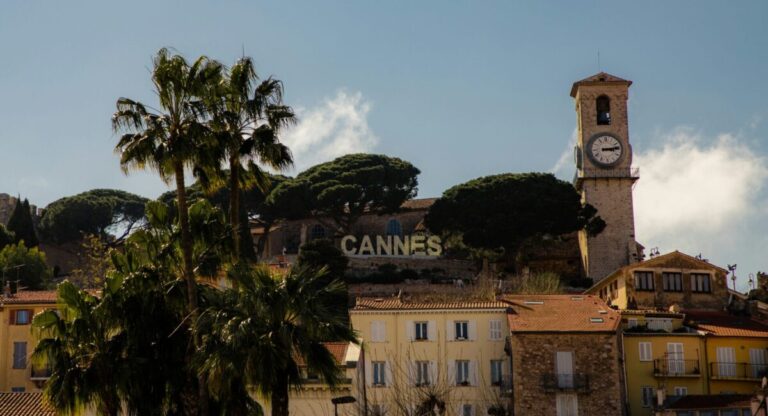
The 78th International Cannes Film Festival will take place from May 13-24, 2025 in Cannes, a small city on the French Riviera that transforms every spring from charming beach resort town to the most glamorous place on earth. The population swells from about 74,000 to 200,000, as esteemed filmmakers and actors swoop in to watch, promote, and celebrate their movies and those of their famous friends. On their tails, like bees to honey, a buzzing swarm of industry professionals, journalists (5000 of them!), cinephiles, and gawking fans descend, hoping to catch a glimpse of that most dazzling breed of celebrity—those who weave dreams into reality on the silver screen.
Where is the Cannes Film Festival?
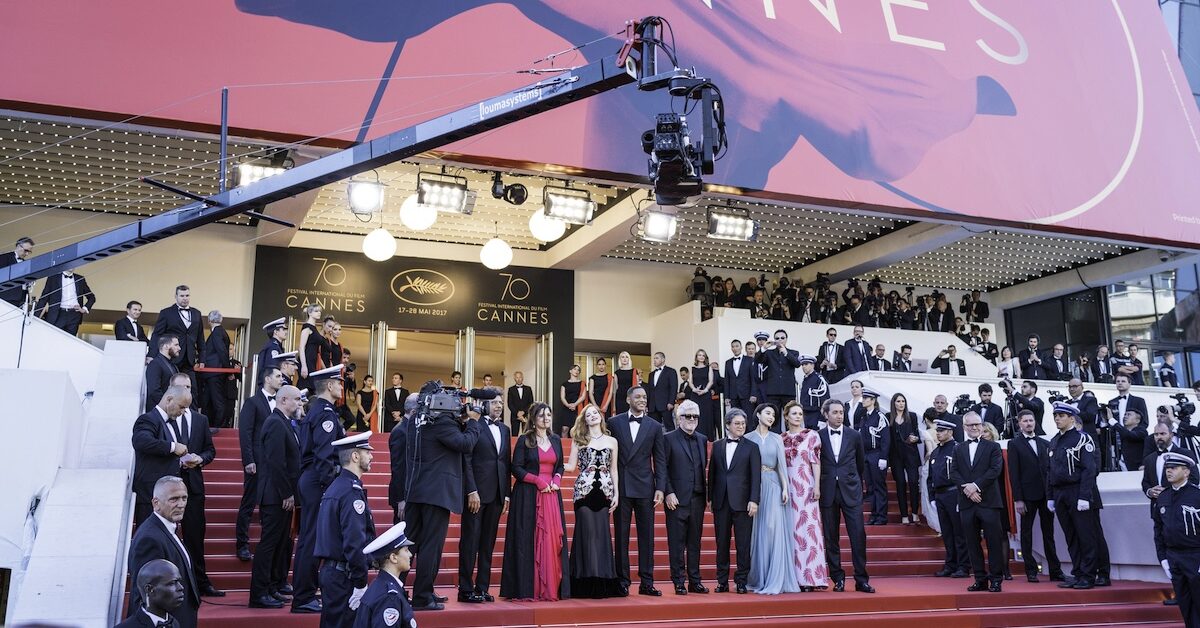
The primary venue for the festival, which was originally conceived in 1938 and officially opened in 1946, is the Palais des Festivals et des Congrès (Palace of Festivals and Conferences). This convention center sits on the famous seaside boardwalk, la Promenade de La Croisette, which is also home to the legendary red carpet and the Allée des Étoiles, Cannes’ equivalent of the Hollywood Walk of Fame, which boasts handprints of international stars as wide-ranging as Catherine Deneuve, Serge Gainsbourg, Wim Wenders, Angelina Jolie, Sylvester Stallone, and Sophia Loren. But the festival takes over the entire town, spilling out along the length of the Croisette, with wall-to-wall spectators filling Cannes’ many movie theaters, palatial hotels, and famed restaurants and night spots, as well as its perfect beaches and the Mediterranean Sea itself, where the well-heeled anchor their yachts to host A-list soirées.

How can one attend the Cannes Film Festival?
The festival is officially reserved for film industry professionals, and accreditation is required to attend. Film professionals and press can apply for different types of accreditation. There are also cinephile passes available for film students and cinema club members, and “3 Days in Cannes” passes for film lovers aged 18 to 28. The Cannes Marché du Film, or Film Market, where more than 15,000 industry professionals from 140 countries buy and sell films, is held in conjunction with the festival every year. Like the festival, accreditation and registration is required. Passes range from 169-3800€. There is also a non-competitive independent sidebar at the festival, the Directors’ Fortnight (Quinzaine des Cinéastes), which is the only section at Cannes that offers screenings to the public. Tickets can be purchased on their website or in person, at their ticket office.
How much are Cannes Film Festival tickets?
While tickets for the Festival de Cannes are available only to accredited badge holders, free screenings of beloved movie classics are offered to the public on Macé beach every night at 9:30pm as part of the Cinéma de la Plage program. Keep an eye out for this year’s program on the festival website.
What are the best days to attend the festival?
Most industry attendees don’t show up until the third or fourth day of the festival, so the first two days—Tuesday, May 13, and Wednesday, May 14—can be a great time to get settled and figure out the lay of the land. The first weekend is the busiest time, when attendees arrive en masse. This might be your chance to bump into Chiwetel Ejiofor or Isabelle Huppert on a random street corner. The buzz dims slightly during the second week, although most competition film directors and actors will stick around for the awards ceremony on Saturday, May 24, which will be broadcast live on France 2.

What to wear at the Cannes Film Festival
Cannes doesn’t mess around when it comes to fashion. The event is as renowned for its red carpet looks as it is for the films in competition. As one of the “Big Three” major European film festivals, along with the Venice International Film Festival (Biennale) in Italy and the Berlin International Film Festival (Berlinale) in Germany, Cannes is serious about its dress code. For premieres at the Grand Théâtre Lumière, at least, attendees are expected to wear evening attire. The rules state that men must wear a tuxedo or a black or navy-blue suit with a bow tie or dark-colored tie. While most women wear a long dress, a “little black dress” is acceptable, as well as “a cocktail dress, a dark-colored pantsuit, a dressy top with black pants.” Fancy shoes are a yes—defined as “elegant shoes and sandals with or without a heel”—sneakers a no. Nudity is explicitly prohibited at any festival venue. Totes, backpacks and other large bags are forbidden at the Lumière. For most other evening events, cocktail attire is appropriate, and daytime events are more casual.
Where to stay when attending the Cannes Film Festival
Besides waiting all day for a glimpse of the red carpet, your best bet for spotting Austin Butler, Dakota Johnson, and other film world icons in Cannes is booking a room at the fabulous Hôtel Martinez by Hyatt, Hôtel Barrière Le Majestic, or another of the dreamy hotels on La Croisette. But finding a room, especially at these hot spots, can be tricky. Uma Thurman reportedly once spent a night in a $30 a night hostel for lack of a better option, and Robert Redford once crashed on the beach. You can book an Airbnb, but again pickings will be slim during the festival. You might have better luck finding less expensive options in nearby towns like Le Cannet, Antibes, or Vallauris. You could also make like Kim Kardashian and charter a yacht.

Can anyone take a photo on the red carpet at Cannes?
Anyone can walk the red carpet, as long as they have a ticket to a premiere at the Grand Théâtre Lumière, a designer gown, and impressive bling. No ticket—no dice. So you can’t step onto the red carpet, but if you can find a spot with a view, you have every right to watch the celebs pose for the paparazzi. One caveat: Only accredited photographers are permitted to shoot photos on the red carpet. To make matters worse, in 2018, Artistic Director Thierry Frémaux banned what he called the “ridiculous and grotesque act” of “trivial” red-carpet selfies, in the name of elegance and discretion, and said they “tarnish the quality” of the red carpet. Try to take one and, apparently, you’ll have security on you in a flash. If you choose to defy regulations because you can’t resist sneaking a shot of Pedro Pascal or Emma Mackey, we won’t tell.
Is there free seating at the Cannes Film Festival?
While you need accreditation to attend festival screenings for films in competition, anyone can attend free screenings of classic films in the evenings, as part of the Cinéma de la Plage program.
Where to spot celebrities in Cannes
If you’re dying to catch sight of celebs, your best bet is to find a perch with a clear view near the red-carpet entrance at the Palais des Festivals. Fans get there early in the day to secure a spot, so be punctual and prepared. You’ll have competition. You can also find Hollywood insiders promenading along La Croisette at the glitziest hotels and hottest restaurants, like Fouquet’s and La Guérite. Jay-Z, Jude Law, and Prince Albert of Monaco have been spotted sipping cocktails and nibbling on yellowtail sashimi and caviar at the swanky hotspot bâoli, a buzzy restaurant with a popular rooftop bar and nightclub. Some star seekers become experts at “yacht tracking,” using the Marine Traffic website to find out where their favorite celebrity’s boat is docked. Bring binoculars, and you might just catch Léa Drucker sipping a martini on deck or Zoey Deutch in her Jean Seberg-blonde pixie cut staring pensively at the seagulls.

What films will be screening at the festival?
With the film world holding its collective breath, Cannes Film Festival director Thierry Frémaux and president Iris Knobloch revealed the lineup for the festival’s 78th edition on Thursday, April 10, at a press conference in Paris. As in the past five years, a French film will kick off the proceedings, this year leading with musical rom-com Leave One Day (Partir un Jour), Amélie Bonnin’s directorial debut based on her 2023 César-winning short film. At the announcement, Frémaux said this year’s selections “depict the world in which we live. It is a world full of violence and tension, but also full of love and humanity, of tolerance for others and of personal ethics.”
Buzzy films competing for the coveted Palme d’Or include Wes Anderson’s typically stylized romp, The Phoenician Scheme; South African director Oliver Hermanus’s World War I-set queer romance, The History of Sound, starring Paul Mescal (Gladiator II) and Josh O’Connor (Challengers); ever-shocking Titane director Julie Ducournau’s Alpha, about a 1980s-era tween rumored to be fighting a mysterious disease; beloved indie director Kelly Reichhardt’s 70s-era heist film The Mastermind, starring Michelle Williams and Hong Chau; Sentimental Value, the latest from Joachim Trier, who dazzled Cannes—and the world—with The Worst Person in the World in 2021, also starring that film’s breakout star and best actress recipient Renate Reinsve; Eddington, a contemporary western from master of mind-bending horror Ari Aster (Hereditary, Beau is Afraid), starring Joaquin Phoenix, Pedro Pascal, and Emma Stone; iconic American director Richard Linklater’s Nouvelle Vague, about the making of Jean-Luc Godard’s canonized first feature, Breathless (shot entirely in French); and beloved Scottish director Lynne Ramsay’s (You Were Never Really Here) highly anticipated late addition Die, My Love, which stars Jennifer Lawrence as a woman battling post-partem psychosis, and Robert Pattinson as her husband.

The Un Certain Regard section, which focuses on new talents and innovative works by young directors, this year includes directorial debuts by three celebs we’re used to seeing in front of the camera: Babygirl star Harris Dickinson’s London-based Urchin; Scarlett Johansson’s Eleanor the Great, starring June Squibb and Chiwetel Ejiofor; and Kristin Stewart’s The Chronology of Water, based on esteemed writer Lidia Yuknavitch’s stunning 2011 memoir.
Rounding out the French films in competition are Jeunes Mères by Belgian Cannes regulars (and two-time Palme d’Or winners for Rosetta in 1999 and l’Enfant in 2005) Jean-Pierre and Luc Dardenne; Dominik Moll’s crime drama Dossier 137; and French actress and director Hafsia Herzi’s La Petite Dernière. Veteran director Cédric Klapisch will premiere his 19th century coming-of-age drama Colours of Time out of competition, along with Thierry Klifa’s (Rachel’s Game) Isabelle Huppert-starring film The Richest Woman in the World; Martin Bourboulon’s 13 Days, 13 Nights, set in Kabul during the 2021 U.S. withdrawal from Afghanistan; and Rebecca Zlotowski’s murder mystery Vie Privée, starring Jodie Foster, Daniel Auteuil, and Virginie Efira. Premiering in Un Certain Regard are Stéphane Demoustier’s L’inconnu de la Grande Arche, about a 1982 architecture competition in Paris; Anna Cazenave Cambet’s divorce drama, Love Me Tender; and Hubert Charuel’s Meteors, set in France and Honduras. French Special Screenings include Maïlys Vallade & Liane-Cho Han’s Amélie et la Métaphysique des Tubes; Ugo Vienvenu’s debut film Arco; Sylvain Chomet’s The Magnificent Life of Marcel Pagnol; French actress Joséphine Japy’s directorial debut Qui Brille au Combat; and French actress Romane Bohringer’s Tell Her I Love Her. Yann Gozlan’s Dalloway premieres in Midnight Screenings. French actor and comedian Alex Lutz’s Connemara will screen in the Premieres section, along with Ma Frère by Lise Akoka and Romane Gueret, following their 2022 Un Certain Regard win for the stunning film The Worst Ones.

Who is nominated at the Cannes Film Festival 2024?
All feature films in competition are eligible to win the esteemed grand prize, the Palme d’Or; the second-place Grand Prix, the Jury Prize; and awards for Best Director, Best Actor, Best Actress, and Best Screenplay. The Un Certain Regard section gives out a host of prizes awarded by a jury, headed this year by British director and cinematographer Molly Manning Walker, whose 2023 film How to Have Sex premiered at Cannes. The crown jewel is the Prix Un Certain Regard, which includes a 30,000€ reward. Italian director Alice Rohrwacher, whose films The Wonders, Happy as Lazzaro, and La Chimera all competed in Cannes, will preside over the jury for the Caméra d’Or prize given to a debut film selected from the official selection, Critics’ Week, or Directors’ Fortnight sections.
But the question remains: Which films seem primed to leap out and grab the jury’s attention—and hearts? Which might break out, win the grand prize, and go on to Oscars glory? This moment feels like a changing of the guard. Spike Lee is one of the sole elder statesman on the docket, bringing his legendary electricity and political fire to his latest joint, Highest to Lowest, a reinterpretation of Akira Kurasawa’s crime thriller High and Low, in his first collaboration with Denzel Washington since Inside Man in 2006. The film is screening out of competition.
In competition, we do encounter a few names that are familiar to La Croisette: French director Dominik Moll, with another undoubtedly smart, hard-hitting thriller. Wes Anderson, with another stylized romp that will likely delight his fans—and irritate his detractors. Iranian director Jafar Panahi, who has screened six films at Cannes and won an array of awards (but never the Palme) is premiering It Was Just an Accident, a mystery we know little about beyond the logline, “What begins as a minor accident sets in motion a series of escalating consequences.” Jean-Pierre and Luc Dardenne have been blowing minds with their socially charged, verité-style dramas at Cannes since their 1996 third film La Promesse premiered at the Directors’ Fortnight. They belong to an elite group of nine esteemed (and exclusively male) directors who have won the Palme d’Or twice. Based on this early trailer, their 2025 selection Young Mothers seems to offer their signature mix of social commentary, strife, and hard-earned hope.
Undoubtedly these films will be strong. They may well leave us mesmerized and/or pulverized. They may become our new favorite movies. They all have a good shot at the big prize. But look at the juries. Look at the last couple of years at Cannes and the films that are currently capturing the jury’s—and the public’s—imaginations, the films that wake us up and make us dream, the ones that go on to enthrall the world—and the Oscars. The unprecedented strangeness, violence, and social commentary of Parasite. The brutal—and hilarious—social satire of Triangle of Sadness. The shocking, yet captivating body horror of Titane (and The Substance, which did not win the Palme, but did nab an 11-minute standing ovation and the prize for Best Screenplay). The moral and narrative ambiguity and power of Anatomy of a Fall. The whimsy and poetry and unexpected emotional rawness of Anora, the story of a stripper who falls for the babyfaced son of a Russian oligarch and finally dares to dream of a life beyond cheap liquor and lap dances.
Recent juries have been taking risks, going big, making audiences gasp in surprise, then celebrate a move toward films that are fresh, creatively riskier, revolutionary even. The juries are also taking movies by women more seriously—with astounding results. So, what’s it going to be? Which films will we be talking about come May 24? Which, if any, will we still be celebrating on Oscar night?

Diving into the competition lineup, Lynne Ramsay’s Die, My Love immediately jumps out. Watching the trailer almost makes you salivate—and it’s more than just Robert Pattison’s hotness. Just saying the names Ari Aster, Kelly Reichardt, and Joachim Trier together sets a cinephile’s heart pumping. Some might say the same of Julia Ducournau. These filmmakers are risktakers, true storytellers who couldn’t care less about rules or expectations, and a new movie from any of them is an event. We want to hear what they have to say. So, add Alpha, Eddington, The Mastermind, and Sentimental Value to the list of potential standouts. Personally, I’d pay to watch Paul Mescal and Josh O’Connor clip their toenails for two hours. In Oliver Hermanus’ The History of Sound, they fall in love. Mysterious buzz is gathering around Sound of Falling, a drama directed by German filmmaker Mascha Schilinksi about the interconnected lives of four girls from different time periods who all spend time as children on the same farm.
It’s also hard to ignore Un Certain Regard, known for showcasing innovative work from new directors, where actors Harris Dickinson, Scarlett Johansson, and Kristen Stewart are all screening their directorial debuts. Other intriguing debuts include Pillion by Harry Lighton, an A24 release about the kinky sexual relationship between two seemingly mismatched men, played by Henry Melling and Alexander Skarsgård; Akinola Davies Jr’s My Father’s Shadow, the semi-autobiographical story of two young brothers visiting Lagos with their estranged father; and Charlie Polinger’s creepy The Plague, about a shy boy navigating the social hierarchy at an elite all-boy summer camp.
There’s another film worth mentioning. The universally adored Austin-based filmmaker Richard Linklater might be well-known, but he’s always been a bit of an outsider. Linklater burst onto the scene with his iconic 1990 film Slacker and never stopped making smart, entertaining movies, both arthouse (the Before Sunrise trilogy, Boyhood) and commercial (School of Rock, Hit Man). His films Fast Food Nation and A Scanner Darkly premiered at Cannes, and now he is competing with his French-language movie about the making of Jean-Luc Godard’s universally adored first feature Breathless. Now this sounds like a film to make French film groupies dance for joy. But could it take the Palme d’Or?
The Full 2025 Cannes Lineup
OPENER
Partir un Jour — Amélie Bonnin (first film)
COMPETITION
Alpha — Julia Ducournau
Die, My Love – Lynne Ramsay
Dossier 137 — Dominik Moll
The Eagles of the Republic — Tarik Saleh
Eddington — Ari Aster
Fuori — Mario Martone
The History of Sound — Oliver Hermanus
La Petite Derniere — Hafsia Herzi
The Mastermind — Kelly Reichardt
Nouvelle Vague — Richard Linklater
The Phoenician Scheme — Wes Anderson
Renoir — Chie Hayakawa
Résurrection — Bi Gan
Romeria — Carla Simone
The Secret Agent — Kleber Mendonça Filho
Sentimental Value — Joachim Trier
It Was Just an Accident — Jafar Panahi
Sirat — Oliver Laxe
Sound of Falling — Mascha Schilinksi
Two Prosecutors — Sergei Loznitsa
Woman and Child — Saeed Roustaee
Young Mothers — Jean-Pierre and Luc Dardenne
UN CERTAIN REGARD
Aisha Can’t Fly Away — Morad Mostafa (first film)
The Chronology of Water — Kristin Stewart (first film)
Eleanor the Great — Scarlett Johansson (first film)
Heads or Tails? — Alessio Rigo de Righi, Matteo Zoppis
Homebound — Neeraj Ghaywan
Karavan — Zuzana Kirchnerová (first film)
L’inconnu de la Grande Arche — Stéphane Demoustier
The Last One for the Road — Francesco Sossai
Love Me Tender —Anna Cazenave Cambet
Meteors — Hubert Charuel
My Father’s Shadow — Akinola Davies Jr (first film)
The Mysterious Gaze of the Flamingo — Diego Céspedes (first film)
Once Upon a Time in Gaza — Tarzan Nasser and Arab Nasser
O Riso e a Faca (I Only Rest in the Storm) — Pedro Pinho
A Pale View of the Hills — Kei Ishikawa
Pillion — Harry Lighton (first film)
The Plague — Charlie Polinger (first film)
Promised Sky — Erige Sehiri
Un Poeta —Simón Mesa Soto
Urchin — Harris Dickinson (first film)
OUT OF COMPETITION
Colours of Time — Cedric Klapisch
Highest 2 Lowest — Spike Lee
Mission: Impossible — The Final Reckoning — Christopher McQuarrie
Partir un Jour — Amélie Bonnin
The Richest Woman in the World — Thierry Klifa
13 Days, 13 Nights — Martin Bourboulon
Vie Privée — Rebecca Zlotowski
SPECIAL SCREENINGS
Amélie et la Métaphysique des Tubes — Maïlys Vallade & Liane-Cho Han (first film)
Arco — Ugo Vienvenu (first film)
Bono: Stories of Surrender — Andrew Dominik
The Magnificent Life of Marcel Pagnol — Sylvain Chomet
L’Homme qui a Vu l’Ours qui a vu l’Homme — Pierre Richard (part of a tribute to Pierre Richard)
Mama — Or Sinai (first film)
Qui Brille au Combat — Joséphine Japy (first film)
The Six Billion Dollar Man — Eugene Jarecki
Tell Her I Love Her — Romane Bohringer
MIDNIGHT SCREENINGS
Dalloway — Yann Gozlan
Exit 8 — Kawamura Genki
Honey Don’t — Ethan Coen
Le Roi Soleil — Vincent Maël Carona
Songs of the Neon Night — Juno Mak
CANNES PREMIERE
Amrum — Fatih Akin
Ástin Sem Eftir Er — Hlynur Pálmason
Connemara — Alex Lutz
The Disappearance of Josef Mengele — Kirill Serebrennikov
Love on Trial — Koji Fukada
Ma Frère — Lise Akoka and Romane Gueret
Magalhães — Lav Diaz
Orwell: 2+2 = 5 — Raoul Peck
Splitsville — Michael Angelo Covino
DIRECTORS’ FORTNIGHT
Enzo — Laurent Cantet and Robin Campillo (Opening Night)
Amour Apocalypse — Anne Émond
Brand New Landscape — Yuiga Danzuka
Classe moyenne — Anthony Cordier
Dangerous Animals — Sean Byrne
The Foxes Round — Valéry Carnoy
The Girl in the Snow — Louise Hémon
The Girls We Want — Prïncia Car
Girl on Edge — Jinghao Zhou
Indomptables — Thomas Ngijol
Kokuho — Lee Sang-il
Lucky Lu — Lloyd Lee Choi
Militantropos — Yelizaveta Smith, Alina Gorlova, and Simon Mozgovyi
Miroirs No. 3 — Christian Petzold
La mort n’existe pas — Félix Dufour-Laperrière
The President’s Cake — Hasan Hadi
Que ma volonté soit faite — Julia Kowalski
Sorry, Baby — Eva Victor (Closing Night)

2025 CRITICS’ WEEK LINEUP
The lineup for the 64th edition of Cannes Critics’ Week, a sidebar organized by France’s Film Critics Union that runs alongside the festival from May 14-22, was revealed on April 14. Dominated by French and Belgian films, eleven first and second features will screen in the showcase, six of which are directed by women. The event will kick off with Laura Wandel’s drama Adam’s Interest, starring high profile French actors Léa Drucker and Anamaria Vartolomei, and close with animated feature Dandelion’s Odyssey by Japanese filmmaker Momoko Seto. Another film getting attention is Left-Handed Girl, an urban melodrama and the first solo feature from Taiwanese director Shih-Ching Tsou, co-written with man of the moment, Palme d’Or and Oscar-winning Anora director Sean Baker, who also produced the film. With a spotlight on emerging French filmmakers, the event will introduce the world to such debut features as queer dramedy Love Letters directed by Alice Douard and comedy Baise en ville by Martin Jauvat.
COMPETITION
A Useful Ghost — Ratchapoom Boonbunchachoke
Kika — Alexe Poukine
Sleepless City — Guillermo Galoe
Nino — Pauline Loquès
Reedland — Sven Bresser
Imago — Déni Oumar Pitsaev
Left-Handed Girl — Shih-Ching Tsou
SPECIAL SCREENINGS
Opening Film: Adam’s Sake — Laura Wandel
Baise-en-Ville — Martin Jauvat
Love Letters — Alice Douard
Dandelion’s Odyssey— Momoko Seto
Andrea Meyer has written creative treatments for commercial directors, a sex & the movies column for IFC, and a horror screenplay for MGM. Her first novel, Room for Love (St. Martin’s Press) is a romantic comedy based on an article she wrote for the New York Post, for which she pretended to look for a roommate as a ploy to meet men. A long-time film and entertainment journalist and former indieWIRE editor, Andrea has interviewed more actors and directors than she can remember. Her articles and essays have appeared in such publications as Elle, Glamour, Variety, Time Out NY, and the Boston Globe.