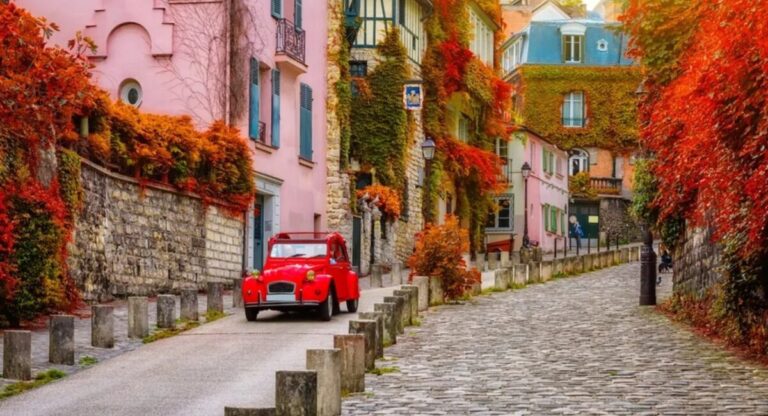
Montparnasse isn’t the Paris of glossy postcards or tourist guidebooks. It’s the Paris of writers of yesteryear, hunched over café tables, of jazz clubs and sketchpads, of boulevards that once pulsed with the avant-garde. Today, it’s where skyscrapers overlook quiet cemeteries, and where old bohemian haunts still hum with the ghosts of artists past.
The neighborhood earned its fame in the early 20th century, when Hemingway, Picasso, and Simone de Beauvoir claimed its cafés as their second homes. Their conversations and arguments spilled into the night, shaping the art and philosophy that would ripple far beyond Paris. That legacy remains visible, from brasseries preserved in Art Deco splendor to museums tucked into former ateliers.
But Montparnasse is more than a memory–it’s a place where daily Parisian life continues. Commuters rush through the gare, families picnic on the Jardin Atlantique, and theatergoers gather for evening performances. To wander its streets is to step into both the myth and the modern, finding the city’s pulse somewhere between the past and what’s still unfolding.
Montparnasse Through History

Montparnasse got its name from students in the 17th century, a reference to Mount Parnassus, the home of the nine muses in Greek mythology. The “Mount” in question was the hill near today’s Boulevard du Montparnasse, where they gathered to recite poetry. By the mid-19th century, Baron Haussmann’s urban redesign incorporated the district fully into Paris.
The area began to flourish in the late 19th and early 20th centuries, drawing artists and writers in search of affordable studios and vibrant company. By the 1910s, Montparnasse had overtaken Montmartre as the epicenter of artistic life. After World War I, the so-called “Années folles” (Roaring Twenties) transformed its cafés—namely La Coupole (opened in 1927), Le Dôme (1898), La Rotonde (1911), and La Closerie des Lilas (1847)—into legendary meeting grounds. Picasso, Modigliani, Chagall, and Léger sketched here; Hemingway, Fitzgerald, Joyce, and Miller wrote their masterpieces; and philosophers like Sartre and de Beauvoir turned brasseries into classrooms of existentialism.
Montparnasse was also a site of resistance and reinvention. During World War II, its underground tunnels and cellars sheltered members of La Résistance. After the war, the neighborhood adapted again, with new theaters, cinemas, and cultural institutions. The construction of the Tour Montparnasse in 1973, Paris’s only skyscraper, marked a controversial modern chapter, symbolizing both progress and rupture with the district’s bohemian past.
11 Things to See and Do in Montparnasse

1. Tour Montparnasse (Tour Maine-Montparnasse)
The obvious and absolutely “must-do once in your life in Paris” activity: climb the 56th-floor observation deck and rooftop terrace of the Tour Montparnasse for sweeping views of Paris, including the Eiffel Tower and even Orly Airport on a clear day.
2. Église Notre-Dame du Travail
A hidden architectural gem with an extraordinary iron-skeletal interior structure, the Église Notre-Dame du Travail was built in 1901. The church defies expectations from its modest exterior.
3. Montparnasse Cemetery
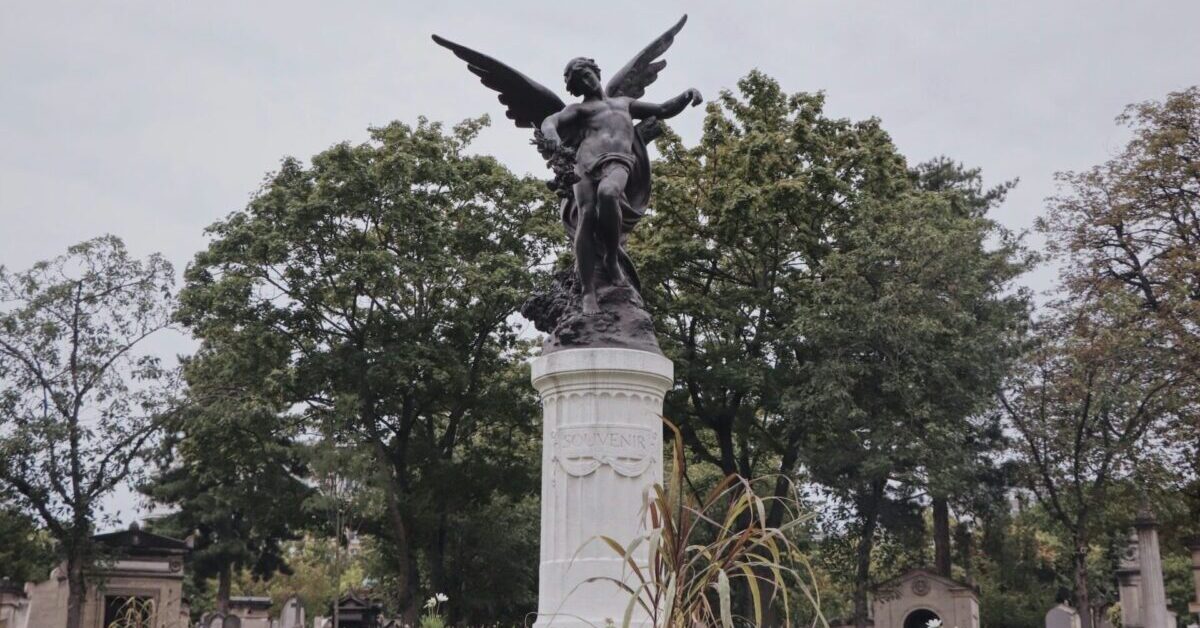
Second only to Père Lachaise in size, the Montparnasse Cemetery is the final resting place of luminaries like Samuel Beckett, Marie Curie, and Serge Gainsbourg (whose grave is scattered with metro tickets, a reference to his famous song “Le Poinçonneur des Lilas”). It’s peaceful, reflective, and full of history. And just remember that the Parisians love cemeteries, so they’re always quite impressive.
4. Musée Bourdelle
The former studio of Antoine Bourdelle, the Musée Bourdelle showcases the French artist’s sculptures and sketches. (And it’s incredibly swoon-worthy.) The museum preserves Bourdelle’s vast workshop spaces, where monumental plaster casts, bronzes, and sketches reveal the evolution of his art. Light-filled galleries spill into tranquil sculpture gardens dotted with his works, creating a setting that feels both grand and intimate.
5. Institut Giacometti
The Institut Giacometti is home to a fine collection of Alberto Giacometti’s works. Housed in a beautifully restored Art Deco townhouse, it features carefully reconstructed versions of his tiny Montparnasse studio, surrounded by a rotating display of his sculptures, drawings, and paintings. Unlike a large museum, the Institut feels personal and immersive, allowing you to step directly into the artist’s creative world and better understand the influences that shaped one of the 20th century’s most iconic sculptors.
6. Théâtre de la Gaîté-Montparnasse
A historic theatre founded in 1868, the Théâtre de la Gaîté-Montparnasse offers a mix of mainstream plays and avant-garde productions, perfect for an evening of French culture.
7. Fondation Cartier pour l’art Contemporain
The Fondation Cartier pour l’art contemporain, just a short walk from Montparnasse, is one of Paris’s most dynamic spaces for contemporary art. Designed by Jean Nouvel, its striking glass-and-steel building feels as much a part of the exhibition as the works it houses. Inside, the foundation hosts bold, cutting-edge shows that span visual art, performance, photography, and film, often spotlighting global voices alongside established names. Its leafy garden, planted with rare trees, adds a serene counterpoint to the avant-garde energy within.
8. Jardin Atlantique
A beautifully designed rooftop garden atop Gare Montparnasse, the Jardin Atlantique is urban, serene, and great for a stroll or a moment of rest surrounded by trees and birdsong.
9. Galerie du Montparnasse
The Galerie du Montparnasse holds a special place in Parisian art history. Opened in 1946, it was among the very first European spaces to showcase American Abstract Expressionists, introducing French audiences to the works of Jackson Pollock, Willem de Kooning, and other pioneers of the movement. Today, the gallery continues this spirit of experimentation with rotating temporary exhibitions that highlight contemporary artists across disciplines.
10. Museum of the Liberation of Paris
Located at Place Denfert-Rochereau, the Musée du Général Leclerc – Musée Jean Moulin is a compelling museum which takes you through the Liberation of Paris via the lives of Jean Moulin and General Leclerc, including a visit to an underground resistance command shelter.
11. The Catacombs
Montparnasse borders the entrance to the vast underground Catacombs, an eerie and fascinating tour through the silent history beneath Paris.
Cafés & Restaurants in Montparnasse

Historic Cafés in Montparnasse
La Coupole — an Art Deco landmark frequented by Jean-Paul Sartre, Simone de Beauvoir, Picasso, and many more.
La Rotonde — where Picasso and Modigliani met. Still brimming with artistic history.
La Closerie des Lilas — open since 1847, Picasso, Hemingway, Joyce, and Gertrude Stein once gathered here.
Montparnasse Restaurants
Pilgrim – A refined addition adjacent to Montparnasse in the 15ème, the modern Michelin-starred restaurant Pilgrim has quickly gained a reputation for excellence. Expect elevated French cuisine in a polished yet inviting setting. It is perfect for a special occasion or a culinary splurge.
Food Hall & Dining at Les Ateliers Gaîté – Since its opening in 2022, Les Ateliers Gaîté has transformed the area with its expansive three-level retail and gastronomic zone. This new mall includes a vibrant food hall, offering diverse and contemporary dining options under one roof, ideal if you crave variety and convenience.
Bouillon Chartier Montparnasse – The Bouillon Chartier Montparnasse has seen a revival in recent years, captivating locals and visitors alike with its Art Nouveau dining hall, lively atmosphere, and classic French fare served at an accessible price. It’s a solid, authentic Parisian experience with modern appeal.
Le Café Bohème Edgar Quinet – Located by the Edgar Quinet metro, this café is a breath of nostalgia and modern charm, with its warmly colored terrace, delightful country touches, and a menu that fuses contemporary culinary flair with everyday Parisian style.
Terres de Café – A standout in Paris’s “third-wave” coffee scene. They roast their beans in-house and rotate offerings frequently—barista-friendly, high-quality coffee with a local, sophisticated spirit.
Bars in Montparnasse
Le Tournesol – A friendly, neighborhood bar just off Rue de Gaité. Its terrace on the tranquil Impasse de la Gaité is perfect for people-watching over coffee, or something stronger. Happy hour and light bites are available, and it’s a favorite for relaxed evenings.
Le Falstaff – A lively local choice if you’re in the mood for craft beer. Casual and welcoming, it’s where locals unwind after work.
Rosebud – Stepping into Rosebud feels like slipping into a timeless jazz-club retreat. With its dim lighting, leather banquettes, and dark wood paneling, it maintains an elegant, old-school Parisian bar vibe.
Why Visit Montparnasse?

Montparnasse is a fascinating crossroads of artistic legacy, Resistance history, serene green spaces, striking architecture, sweeping skyline views, and the timeless charm of Parisian café culture. It feels both essential and wonderfully local, a corner of Paris where tourists are few and far between.
Angelika Pokovba is a writer and longtime Francophile originally from NYC, now based in Mexico. She’s into food, wine, skincare, and all things French—especially summers in the South and pharmacy finds she stocks up on way too early