

In France, New Year’s Eve unfolds as a night of exuberance, warmth, and shared anticipation—a celebration often experienced among friends far more than family. While Christmas is anchored in domestic intimacy, la Saint-Sylvestre radiates a social energy fueled by long dinners, glittering tables, and hours of dancing. The evening typically begins with a festive meal that stretches late into the night, punctuated by bursts of laughter, generous pours of champagne, and the unspoken competition of who brought the best foie gras or seafood platter.
As the countdown approaches, people gather in living rooms, on balconies, or in city squares, ready to shout, “Bonne année!” at the first stroke of midnight. From private apartments to the Champs-Élysées, the atmosphere is one of jubilation and collective joy that often lasts until sunrise.
The Origins of the French New Year
Despite appearing thoroughly modern, New Year’s Eve in France draws from layers of history stretching back to Ancient Rome. The very choice of January 1st was an imperial decision: Julius Caesar fixed the start of the year to coincide with the month dedicated to Janus, the two-faced god of beginnings, endings, and renewal. Yet in France, the calendar wandered for centuries. The Celtic-influenced medieval tradition marked the new year in April, around Easter. It was only in 1564, under King Charles IX, that January 1st became the official start of the year for the entire kingdom.
The association with Saint Sylvester comes later. December 31st is the feast day of the fourth-century pope who played a role in Christianity’s recognition under Constantine. Although most modern revelers know nothing of his life, his name survived, giving France la Saint-Sylvestre. New Year’s Eve as a night of feasting, however, gained new meaning during World War I, when French soldiers received sparkling wine and small food parcels to open at midnight—a gesture meant to lift morale. When peace returned, the habit of celebrating the passage into a new year at exactly midnight followed them home.
‘Se mettre sur son 31‘

There is one expression that is inseparable from New Year’s Eve in France: se mettre sur son 31. Similar to the English expression, “dress to the nines,” it refers to dressing in one’s finest clothes, making an effort to appear elegant, festive, and impeccably prepared for the celebration. The link with the number 31 is somewhat mysterious, but one of the most convincing origins is linguistic. In the Middle Ages, the word trentain referred to a luxurious fabric woven with exceptional finesse—thirty times one hundred threads—reserved for wealthy households.
Over time, ordinary people, unfamiliar with this refined cloth, would have distorted trentain into “trente-et-un,” giving rise to the modern phrase. The reference to this precious fabric gradually evolved into a common expression meaning to dress up for an important event. Today, New Year’s Eve remains one of the nights when the French most enthusiastically “get on their 31.”
And while some lean into classic elegance, others prefer a more playful and unconventional way to welcome the New Year. Costume parties are common, especially in big cities, where you might cross paths with flappers, movie characters, or disco-inspired groups roaming between bars and dance floors. Music, humor, and playful extravagance give the night an extra festive spark.
A French New Year’s Feast
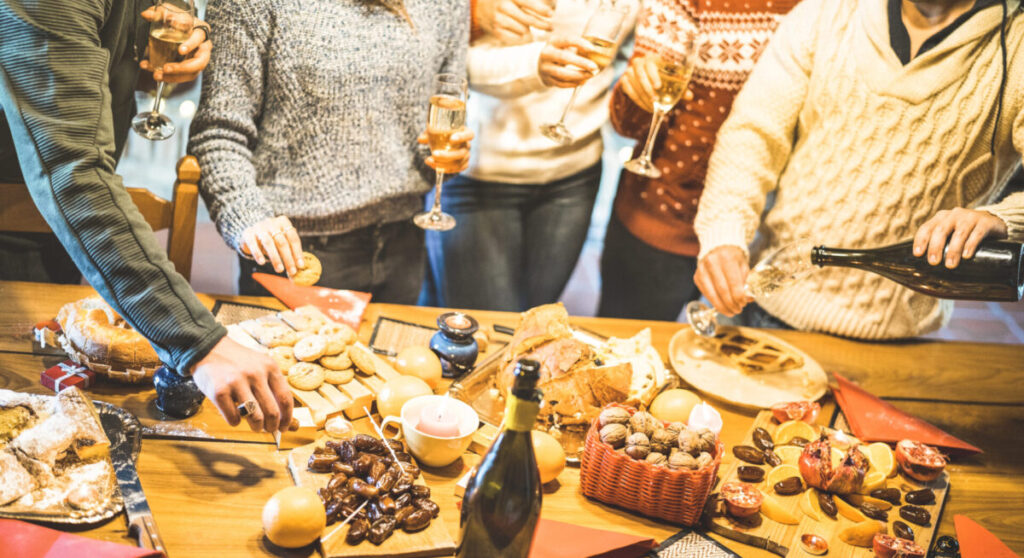
Across France, the evening meal on December 31st sets the tone for the night. While no fixed menu exists, the French naturally gravitate toward foods that signal abundance and celebration: oysters, escargots, smoked salmon, foie gras, and elaborate seafood platters that tower with lobsters, langoustines, and shrimp.
Raclette, with its molten comfort, has become a beloved choice thanks to its cozy communal presentation. Chocolates and sweet delicacies linger long after dessert, while lentils—linked to prosperity because of their coin-like shape—wait for the next day. Champagne flows throughout, its bubbles marking both the transition to midnight and the joyful chaos that follows.
The French President’s New Year Wishes
Another deeply rooted New Year’s custom in France comes from the highest office in the country. Every December 31st at exactly 8 pm, the President of the Republic addresses the nation in a televised speech broadcast from the Élysée Palace. It is a moment suspended between ceremony and tradition, one most French people have grown up with. The President reflects on the past year—its challenges, its successes, and its collective griefs or triumphs—before turning toward the year ahead with hopes, priorities, and calls for unity. Though some watch out of genuine interest and others simply leave the TV on in the background as they prepare their festive meal, this annual ritual remains remarkably intact and widely followed.
Champagne, Mistletoe & French Superstitions
As midnight approaches, homes and public squares hum with anticipation. The final seconds of the year are shouted collectively before the room erupts in embraces, cheek-kisses, and champagne toasts. Even the way glasses are raised carries superstition: meeting someone’s gaze while clinking stems is considered essential, a remnant of medieval anxieties about poisoning that have simply become part of French etiquette.
Though rare today, some households still hang mistletoe—a relic of ancient Celtic beliefs. Druids saw the plant’s eternal greenery as a sign of protection, fertility, and luck. Kissing beneath it at midnight once symbolized these wishes; today the gesture has softened into the more common exchange of la bise, delivered with warmth and goodwill.
Cities That Sparkle and the Echoes of Old Beliefs

Major French cities glow with excitement as midnight nears. Paris draws crowds to the Champs-Élysées, where a light show illuminates the Arc de Triomphe at the turning of the year. Marseille, Lyon, Toulouse, and others sometimes host large-scale fireworks, though stricter regulations have made private ones rarer than in the past. Still, the ancient impulse to make noise—to chase away lingering spirits of the old year—lives on in sparklers, music, shouts and laughter.
Imported Customs and Modern Quirks
France has adopted several playful rituals from its European neighbors, seamlessly integrating them into the evening. Some people eat twelve grapes at midnight, a Spanish practice promising luck for each of the coming months—provided the first grape isn’t swallowed too early. Others slip into red undergarments borrowed from Italian New Year folklore, meant to bring both love and prosperity, with the amusing requirement of discarding the garment the next morning. Along the coasts, adventurous celebrants begin the year with a freezing plunge into the sea, convinced that cold water cleanses the spirit and fortifies health.
New Year’s Day in France
After the excesses of the night before, January 1st settles into a gentler rhythm. Families gather again for a simpler meal and exchange wishes that continue throughout the month—sometimes until January 31st. For generations, the French visited friends, relatives and even colleagues to offer their New Year greetings, a practice that gradually shifted to mailed cards and, later, digital messages.
January also marks the ritual of étrennes, small tokens given to building caretakers, postal workers, firefighters, or sanitation crews, often in the form of calendars exchanged for a donation. In families, grandparents offer money to children, echoing an old wish for “happiness, health, and plenty of coins in your wallet.”
Resolutions, Reflections, and the Desire for Renewal
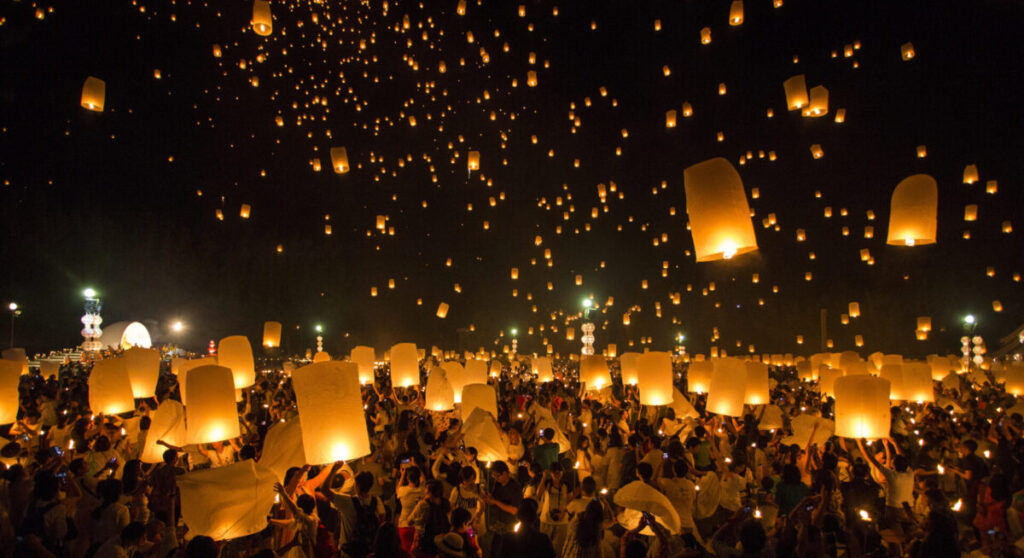
Like many around the world, the French begin the year with fresh intentions. Some promise to exercise more, quit smoking, or learn something new; others focus on rest, balance or creativity. Most resolutions fade quickly, but the annual ritual endures, fueled by a quiet hope that the coming months can be shaped by will and imagination. Even small symbolic acts—writing wishes on paper and burning them, creating vision boards, or saving the cork from the midnight champagne—carry private meaning for those seeking to anchor their hopes.
New Year’s Eve in France is a blend of ancient symbolism, modern exuberance, and small superstitions that tie past and present together. Whether one kisses beneath a sprig of mistletoe, swallows grapes in rapid succession, plunges into icy waters, or simply shares oysters with friends before watching fireworks burst above the Arc de Triomphe, every gesture becomes part of a national ritual of renewal. Each December 31st, France steps once again into a new year wrapped in pleasure, history, and collective hope.
Valentine Marchou is a French journalist with a keen eye for culture, lifestyle, and society. After honing her skills in several French newsrooms, she now aims to tell stories that bridge French and English-speaking worlds through art, food, and everyday life.


