The New York African Film Festival at Lincoln Center returns May 6-12. This year’s theme is, “As the Stars Sow the Earth,” emphasizing films that explore the continent’s natural resources and “leaders and artists who imagine alternative relationships to the Earth.”
The festival typically showcases many French-language films made in Africa, this year including the World Premiere of The Soul of Africa, director Gabriel Souleyka’s documentary about African Spirituality, and the North American Premiere of Rhumba Royale, a drama about a photographer and a waitress who meet in the titular nightclub. Two restorations include the documentaries Caméra arabe (1987) and Caméra d’Afrique (1983), both by Férid Boughedir, who explores the histories of Arab and African cinema, respectively.
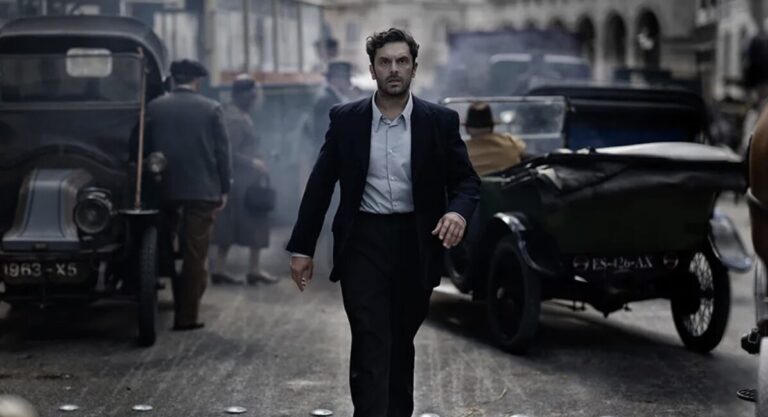
The opening night selection, Promise Sky, is a fantastic drama directed by Erige Sehiri that depicts the experiences of three women from the Ivory Coast living in Tunis and caring for a young child. The film captures their struggles as they manage their families and relationships, legal issues, and a useless landlord, all the while building their community as refugees. It is an endearing film that captures the resilience of these women in their adopted country.
The festival closes with a shorts program that features several French-language films including Bailey’s Blues, about a jazz bassist; Ibuka, Justice, an animated film about the Rwandan genocide; and Keïta La, about the Malian photographer Seydou Keïta.
This year’s centerpiece screening is The Eyes of Ghana, director Ben Proudfoot’s feature documentary on Chris Hesse, a cinematographer who is looking to recover an archive of cinema history. Also of note is the short film, Dust to Dreams, directed by Idris Elba, screening in “Shorts Program 2: Go Back and Get it.”
After the Lincoln Center screenings, the festival continues with additional films at the Maysles’ Documentary Center in Harlem and BAM Cinematek.
Here is a rundown of some of the French language features and shorts playing in this year’s main program.
Afrotōpia, dir. David Mboussou
128 minutes
May 9, 2:45 pm, Elinor Bunin Munroe Film Center
Director/cowriter David Mboussou’s compelling drama has Ezekiel (Tiss Warren Mombo), a budding Gabonese filmmaker, coerced by his manipulative father, Maurice (Marcel Sandia), to give up his dream of being an artist and go work for the family logging business. Still, Ezekiel holds onto hope that he will get a grant from “Natural Geographic” that will allow him to quit working for his father and go shoot his film project.
After Ezekiel arrives in the Congo Basin village of Guimossi to monitor workers, he meets Mavikana (Gaddielle Nfono Minsta Épouse Mayi), an activist who wants to preserve the Bigusala sacred forest that Maurice plans to exploit and cut down. Home to the Guissiassako people, the village is being deforested, and the area’s rivers have been polluted by waste from Maurice’s company, making the villagers ill. Ezekiel wants to do the right thing, but he is trapped by his controlling father. Then Ezekiel meets Dyambugutsinga (Jean-Claude M’Paka), the village chief who helps him learn more about Maurice’s relationship with his father, Mweli (Yoan Mboussou), a musician who abandoned his family when Maurice was young. With this knowledge, Ezekiel may be able to help his father heal his past trauma and protect the Bigusala sacred forest.
Afrotōpia is a bit broad in its plotting, but it addresses the sins of the father and how Ezekiel and Maurice each engage with tradition and modernization. The film also includes a handful of fascinating ceremonial scenes that depict the sacred and cultural practice of Bwiti, an “initiation rite that teaches humans the art of harmoniously connecting with community, nature, and ancestors,” and involves the iboga plant, a hallucinogen that “opens doors to consciousness.” A “trip” Ezekiel takes allows him greater understanding of his grandfather, who was the son of a French colonist. As Mboussou ties all the plot strands together, layers of meaning emerge.
The film utilizes the green forest space well, emphasizing the beauty of the villages and the dangers of deforestation. Mboussou also uses the color yellow prominently as a symbol of hope and harmony amid corruption.
Both a family drama and a film with a strong ecological message, Afrotōpia marks an auspicious feature directorial debut by Mboussou, who was born in Libreville and educated in Paris.
Filmmaker David Mboussou will participate in a Q&A following the screening.
So Long a Letter, dir. Angèle Diabang
105 minutes
May 8, 8:30 pm, Elinor Bunin Munroe Film Center
Adapted from Une si longue lettre, the popular 1979 feminist novel by Mariama Bâ, this galvanizing drama from Senegal has Ramatoulaye (Amélie Mbaye) grappling with the news that her husband of 25 years, Modou (Serge Abessolo), has taken a second wife. Though her mother, Farmata (a scene stealing Khady Fall) had prophesized the marriage using cowrie shells, Ramatoulaye still feels betrayed. Moreover, Modou’s new wife is a high school student, Binetou (Aissata Esperanca Sy)—and his daughter Daba’s (Ndéye Dionkola Ndiaye) best friend. A subplot has Binetou’s social climbing mother (Coumba Coulibaly) pushing for the marriage, and several scenes reflect the tensions that develop between Ramatoulaye and her co-wife’s mother.
As Ramatoulaye continues to raise her seven kids alone after Modou abandons the family for months, she decides this is beyond reproach and no longer wants to follow the traditional rules of society. She asks the local Imam to help her secure a divorce, a request that does not go over well. Other mini dramas ensue, including an unplanned pregnancy and a death that generates a huge inheritance debate.
So Long a Letter may be melodramatic at times, but it is squarely on the side of Ramatoulaye. Amélie Mbaye conveys her character’s virtues and strength well—especially when she fights for what she feels she rightly deserves and insists that she will not remarry. As Ramotoulaye gains agency, this feminist film never feels preachy.
Beautifully lensed, Angèle Diabang’s film shows that a man “cannot love two women in the same way,” and explores how women like Ramatoulaye, tired of being disappointed and humiliated, will inevitably stand up and speak out. The novel may be nearly 50 years old, but the messages in this film still resonate.
Filmmaker Angèle Diabang will participate in a Q&A following the screening.
En residence surveillée, dir. Paulin Soumanou Vieyra
106 minutes
May 11 at 8:15 pm, Elinor Bunin Munroe Film Center
The New York African Film Festival will present the U.S. premiere of a 4K restoration of director Paulin Soumanou Vieyra’s shrewd 1981 feature, En residence surveillée (“Under House Arrest”), set in a fictional African country.
The film opens with a series of incidents—one involves the “suicide” of an advisor to the President that may in fact have been an assassination—that show how corrupt the politics and the media are in this country. The drama slowly builds as the President (Douta Seck) grows concerned about the publication of a book, Political Structures of Traditional Power, by Zé Akoulo, that promotes returning to the roots of African democracy while also benefitting from Western influence.
En residence surveillée has many critical episodes, from a montage that shows the class disparity of three families having dinner, to a sequence where the President meets with a member of the clergy, a member of the military, and a traditional African to flaunt his diplomacy while accomplishing nothing. There are also critiques of colonialism, and commentary on the anger of the country’s citizens, who are well aware of the President’s control over the media and his reluctance to address their daily concerns.
Full of cynicism but featuring a lively soundtrack of African music, En residence surveillée is a timely and worthwhile film.
En residence surveillée will be proceeded by the short Vieyra, The Innovative Pioneer, by Stéphane Soumanou Vieyra, the filmmaker’s grandson. The glossy, elegiac short creates “an improbable virtual encounter between Paulin and his grandson in a visit to a museum retracing his story.” The film features a voiceover by Vieyra’s late wife Myriam Warner Vieyra, who expresses her grief and how her sense memories—e.g., the smell of coffee, or rain, remind her of her husband. Meanwhile, Stéphane wanders through a gallery, looking at photographs of his grandfather as a child, and as a filmmaker. A video bank displays images from his films, and Stéphane stands face-to-face with a bust of Paulin. The short is a loving homage to a pioneer of African cinema, who, a title card relates, was an influence in many discussions of African film history. His legacy and documents are now being preserved at Indiana University’s Black Film Center & Archive.
Stéphane Soumanou Vieyra will participate in a post-screening Q&A.
Clichés, directed by Cecilia Zoppelletto

Shorts Program 2: Go Back and Get It
15 minutes
May 10 at 8:45 pm & May 12 at 2:00 pm, Elinor Bunin Munroe Film Center
Clichés is a nifty slow-burn short. The wealthy Pamela (Nda Mobutu) and her husband, Joe (Romain Ndomba), are getting ready for guests in their home in Kinshasa. The scene is interrupted by a series of still photographs and voiceovers where Pam is asked to do a favor for Colette (Maguy Kalomba) and deliver some items to her son Michel (Joyce Kadima) in New York City. Cutting back to Pamela, she is seen enjoying an “upgraded” (spiked) orange juice and showing off her new spider jewelry to her husband while waiting for Colette, her husband Aris (Fabruce Mukala), and their son Michel to arrive.
While there is some initial tension between Colette and Michel in the car, there is an easygoing camaraderie between the couples when the adults meet. (Michel’s arrival is delayed as he is managing some packages for this mother.) As the two couples chat, three more still photo montages reveal what transpired in New York between Michel and Pamela. The artfully composed images and dialogue indicate that the dynamic of the friendly gathering may quickly become fraught.
Director Cecilia Zoppelletto ratchets up the tension with this clever and effective narrative gimmick, and Nda Mobutu in her screen debut is terrific as Pamela, and well matched by Romain Ndomba as her husband. This is a canny film that could easily be developed into a feature.
Clichés is represented by ZopMedia; no U.S. release has been set.
Keïta La, dir. Caterine McKinley, Mamadou Tapily, Marc Lesser

Shorts Program 3: The Art of Protection
10 minutes
May 12, 8:00 pm, Elinor Bunin Munroe Film Center
This marvelous short, created for the current exhibit Seydou Keïta: A Tactile Lens at the Brooklyn Museum, provides an excellent introduction to the Malian photographer’s work. Dozens of fabulous images are on display in this short film, giving fans and the unfamiliar alike a sense of his artistry.
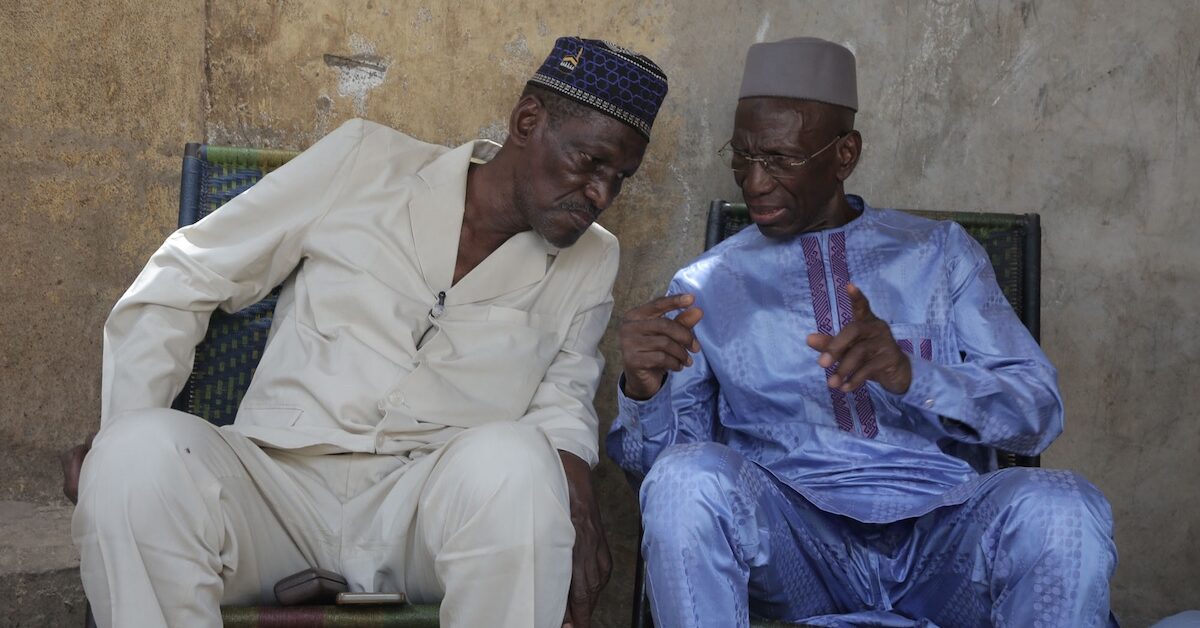
This affectionate documentary shows the impact and influence Keïta’s images had on his family, fellow Malians, and the world. His brother, Abdoulaye Keïta, describes Seydou’s success and generosity, and his talented carpentry background prior to his photography career.
Keïta La presents contemporary scenes of the titular family compound and Seydou’s studio in Bamako-Coura. One of his subjects, Souncko Fofana, recounts that most folks who posed for him did not yet know what photography was, and that he went to great lengths to ensure that his subjects were posed and dressed to great effect.
Keïta La also lets the images speak volumes here, deftly illustrating why Seydou Keïta and his work are still so important and inspiring today.
Gary M. Kramer is a freelance film critic whose work appears in Slant, Cineaste, and Senses of Cinema, among other publications. He is the coeditor of Directory of World Cinema: Argentina, Volumes 1 and 2, and a contributor to Directory of World Cinema: France. He is the moderator of Cinema Salon, a weekly film discussion group, and teaches “Short Attention Span Cinema” at the Bryn Mawr Film Institute.