Le Marais is where you end up after you’ve done Paris the expected way—after the monuments, the museums, the version of the city you’ve already seen in films, in photographs, and across Instagram. It finally feels like this is Paris, and in a way, it is: polished storefronts, crowded streets, places that seem almost too familiar.
Beneath the surface, Le Marais holds onto its history. Aristocratic hôtels particuliers, long-standing Jewish and LGBTQ+ communities, and an art scene that has gradually influenced the neighborhood into becoming a hub for both contemporary and vintage fashion.
A day in Le Marais isn’t really about seeing everything. It’s about letting the neighborhood unfold and realizing somewhere along the way that you’ve settled into it without meaning to.
A Brief History of Le Marais
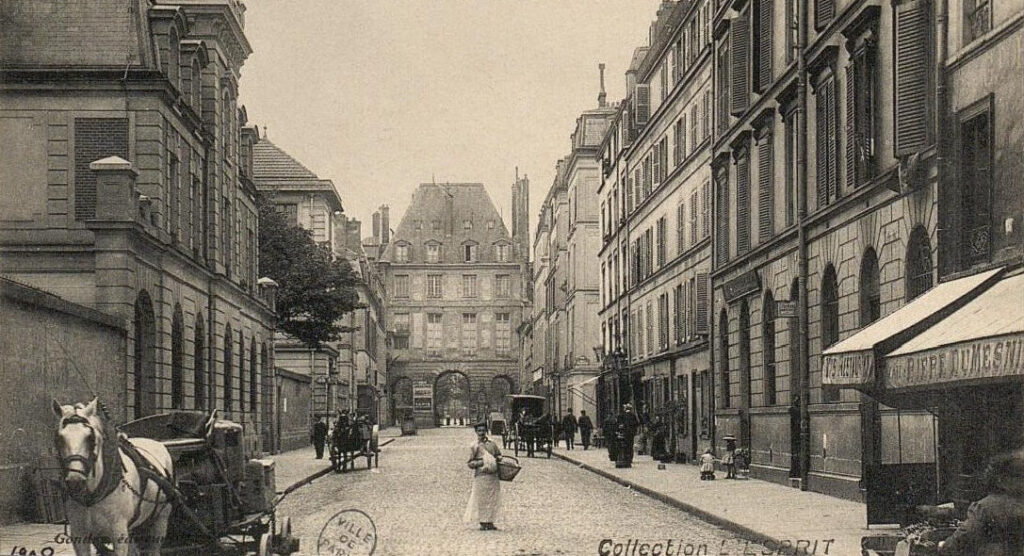
Le Marais wasn’t always as cool as it is now. What now feels like one of Paris’s most curated neighborhoods began as marshland–the name itself coming from marais, meaning “swamp”–before becoming a center of aristocratic life in the 17th century. The grand hôtels particuliers that still define the area were built during this period, designed less to impress from the street and more to unfold inward, through courtyards and private gardens.
That sense of inwardness never really left. As the aristocracy moved west in the 18th century, the neighborhood shifted again, becoming home to artisans, immigrant communities, and one of Paris’s most significant Jewish populations, particularly around Rue des Rosiers, also known as the Pletzl. One of the most unique remnants is the historic Synagogue des Tournelles, with its striking metal structure created by Gustave Eiffel’s workshop. Nearby, the Mémorial de la Shoah anchors this history in memory and testimony, preserving the history of Jewish life in France.
Over time, Le Marais also became the historic center of LGBTQ+ life in Paris, especially around Rue des Archives and Rue Sainte-Croix de la Bretonnerie. It was a place where queer communities gathered and carved out spaces of belonging within the city. Landmarks like Les Mots à la Bouche, one of France’s most iconic LGBTQ+ bookstores, along with the neighborhood’s gay bars, cafés, and nightlife, helped define Le Marais as both a cultural and political home for queer Paris. That imprint remains, even as gentrification and tourism continue to push much of the queer community toward the edges of the city.
More recently, galleries, boutiques, and independent spaces have layered something contemporary onto what was already there. Unlike other parts of the city, Le Marais hasn’t fully separated from its past. It feels cumulative, less like a neighborhood that has reinvented itself and more like one that has absorbed each phase and kept going.

Things To Do in Le Marais
Le Marais sits in the 3rd and 4th arrondissements, right in the center of Paris. There’s shopping, of course, and places to eat that range from traditional to contemporary, but none of it really asks for a plan. You move between galleries, pause in small gardens, drift into vintage shops or markets, and let time stretch a little longer than expected.
Museums & Landmarks
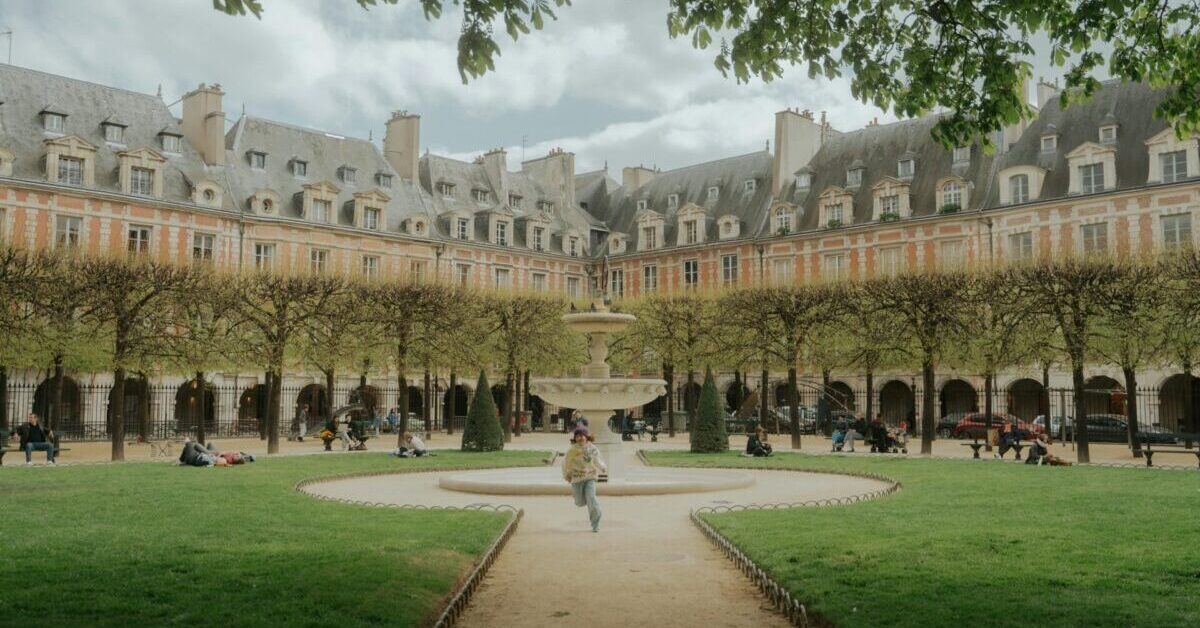
Place des Vosges is usually the first and most famous stop in Le Marais. It’s one of the most photographed squares in Paris, and its symmetry, arcades, and quiet center all point back to the neighborhood’s aristocratic past.
Not far from there, museums like Musée Carnavalet (which is free to the public) and Musée Picasso feel less like standalone institutions and more like extensions of the neighborhood itself. Both are set inside former hôtels particuliers, and you notice the architecture as much as what’s on display, in the striking courtyards and staircases, and the way rooms open into each other. You’re not leaving Le Marais when you go inside, but going deeper into it.
Beyond the larger institutions, there’s a quieter set of museums. Musée Cognacq-Jay is one of them, set inside an 18th-century hôtel particulier and easy to miss if you’re not looking for it. It feels more like stepping into a private collection than a formal museum, with rooms that still carry a sense of how they were once lived in.
A few streets over, Maison de Victor Hugo sits directly along Place des Vosges. It’s an apartment preserved in fragments, giving a sense of the writer’s life without over-explaining it.
Then there’s Musée de la Chasse et de la Nature (“Museum of Hunting and Nature”), which feels slightly unexpected in this part of the city. Eclectic, almost surreal at times, it blends art, objects, and natural history.
Insider Tip: Try to find Square Saint-Gilles du Grand Veneur, a secret garden in the heart of the city. Bring some lunch, and enjoy the rose garden while watching locals go about their days.

Galleries and Art
The galleries in Le Marais don’t cluster on one single strip, but are scattered about the neighborhood. Along Rue de Turenne and into the smaller surrounding streets, contemporary spaces appear between older storefronts, often understated from the outside.
Places like Galerie Perrotin (possibly one of the most important galleries in the world) and Thaddaeus Ropac Marais bring in larger, international programming, but they’re balanced by smaller spaces like Galerie Sultana and Galerie Anne Barrault, where the scale feels more immediate. Meanwhile, spots like Galerie Charlot lean slightly more experimental, focused on digital and new media work.
Village Saint-Paul
There are parts of Le Marais that don’t reveal themselves from the street at all. Village Saint-Paul is one of them—a network of interconnected courtyards set just off the main flow, easy to pass without noticing.
Once inside, the pace shifts almost immediately. The noise drops, the streets give way to stone passageways, and the neighborhood feels more contained. Antique shops, small galleries, and workshops line the courtyards, but nothing is arranged to be obvious. You move through it slowly, turning corners without really knowing what’s next.

Hôtels Particuliers, Revisited
The hôtels particuliers, private mansions built in the 17th century for the Parisian aristocracy, were designed to open inward. From the street, they can feel restrained. Heavy doors, minimal indication of what’s behind them. Step through, though, and everything shifts, opening into grand courtyards, winding staircases and picturesque gardens worthy of royalty. Some, like Hôtel de Sully, even offer tours and free courtyard and garden visits to the public.
What’s interesting is how many of these buildings are still in use, just differently, as hotels or museums. Institut Suédois is one of the clearest examples. Set inside a former mansion, it holds exhibitions, a courtyard, and a small café serving coffee and pastries in the garden. It’s one of those places you stop by for a quick drink and might linger awhile enjoying the garden and the neighborhood atmosphere.
Jewish Institutions & Establishments
The Jewish presence in Le Marais is still deeply visible through a small but significant constellation of institutions that continue to shape the neighborhood’s landscape. Many of these spots also follow traditional observance rhythms, closing on Saturdays for Shabbat and reopening on Sundays, when the neighborhood shifts into one of its most active and communal modes. It’s also a reason why Le Marais is so busy on Sundays, when other neighborhoods are winding down from the weekend.
Local institutions like L’As du Fallafel, an incredible (and budget-friendly) falafel shop, normally have a line down the street for their cult-favorite wraps. Traditional Jewish bakeries like Sacha Finkelsztajn – La Boutique Jaune and Florence Kahn, with its classic Ashkenazi delicatessen staples, feel unchanged in spirit despite the shifting neighborhood around them. For more modern options, Miznon is a contemporary Jewish and Middle Eastern restaurant worth checking out.

Shopping in Le Marais
Le Marais is a favorite district for shopping, and for good reason. There are the smaller, almost instinctive stops. Tabio for socks that feel more considered than they need to be, or Mariage Frères, with its rows of tea and dark wood interior. Chichi Castelnango focuses on lingerie and intimates. L’Habilleur is one of the coolest clothing stores in town. Sabre Paris offers a colorful, slightly nostalgic French cutlery line on the walls, all with a soft, vintage feel, and you’ve got the option to monogram pieces and mix sets to find something customized to you.
Vintage is where Le Marais really shines. Stores like Tallon Vintage and Kanelle Vintage are more curated, with pieces that are very much hand-selected. The ROOM Vintage Shop and Clara Vintages are also quite cool, mixing eras and high-end designers without overthinking it. And you’re sure to come across some incredible finds at EREM Vintage and Revoir Vintage. Then there are the places like Fourche Noire and Petite Chineuse, which are great for when you’re not looking for anything and just having fun (but don’t want to break the bank if something catches your eye).
In Le Marais, the best approach is simple: go in if it looks interesting. Some of the most memorable places are the smaller, family-run shops or independent stores that feel personal, having been shaped over time. The neighborhood is constantly evolving, with more recognizable brands moving in, which can work in its favor. But the local, mom-and-pop spots are what give it texture. When you find one, it’s worth staying a little longer.

LGBTQ+ Nightlife
Institutions like COX and Raidd Bar, with its famed shower show, are longtime fixtures of the Marais nightlife scene. Nearby, Rue Sainte-Croix de la Bretonnerie remains one of the symbolic centers of LGBTQ+ life in the city, particularly during Pride and summer evenings, and especially during Fête de la Musique, when everyone fills the streets to celebrate.
The neighborhood’s queer nightlife has always existed across different moods and generations. Places like Le Dépôt became legendary for their after-hours energy and underground reputation. More community-oriented spaces also remain central to the area’s identity, with places like La Mutinerie continuing a more alternative, feminist, and activist-driven tradition within Paris’s queer scene.
Haut Marais
Further north, the Marais loosens. What’s often called the Haut Marais isn’t marked in any official way—you notice it gradually, somewhere around Rue de Bretagne, when the streets feel wider, the storefronts less polished, and the rhythm less fixed.
Marché des Enfants Rouges is the oldest covered market in Paris, dating back to the early 17th century. Today, it functions less like a traditional market and more like a communal gathering place, with produce stands, flower vendors, and an eclectic mix of food counters. It anchors this part of the neighborhood, where you’d stop for a bite and a drink and then spill out onto the nearby streets to indulge in some shopping.
Just around the corner from the market, Rue Charlot and the surrounding streets unfold into a mix of cafés, boutiques, and design-forward shops. Spots like Cortado caffeinate the neighborhood, while nearby Rue de Saintonge is home to the recently opened outpost of Officine Universelle Buly 1803, the French apothecary known for its perfumes and self-care products. For something more intimate and unexpected, there’sZielinski & Rozen Paris, with some of the most unique scents in the city. Along Rue de Bretagne and beyond, stores like Merci set a design-conscious tone for the neighborhood.

Restaurants in Le Marais
- Les Philosophes — A super classic Parisian bistrot, reliable and always full without trying too hard. Quiche, onion soup, and steak frites are the way to go here.
- Le Petit Marché — Traditional, slightly quieter place serving raclette in the winter.
- Chez Janou — Provençal restaurant known for its unlimited chocolate mousse. Reserve ahead.
- Breizh Café — Traditional sweet and savory crêpes from Brittany.
- Le Colimaçon — Old-school, rustic French restaurant with coveted second-floor balcony seating. Expect classic, delicious French dishes and desserts.
- Parcelles — One of the most interesting modern French restaurants in town, with an ever-changing menu. Reserve ahead.
- Dumbo Marais — Simple smash burgers in Paris with a consistent line out the door.
- Mao Dumpling Bar — Small Chinese dumpling shop that does not take reservations.
- Datil — Newer, slightly under-the-radar high-end restaurant (mentioned in the Michelin guide) for a special experience. Reserve ahead.
- Rojo — Low-lit, ultra-Instagrammable wine bar and restaurant great for an evening with friends.
- Le Mary Celeste — Hipster-favorite cool seafood and natural wine bar that encourages you to extend your night.
- Pontochoux — Quiet and cool Japanese restaurant with outdoor seating, serving hearty and flavorful bowls.
- Crêperie Gigi — Casual, no-frills, easy crêpe shop.

Bars, Cafés & Bakeries in Le Marais
- Le Barav — Lively wine bar with over 250 wines per glass that often spills into the street.
- Little Red Door — Discreet speakeasy-style cocktail bar, consistently ranked one of the best in the world. Reserve ahead.
- Candelaria — One of the most famous taqueria and cocktail bars in Paris, which has taken home quite a few culinary and mixology awards. Reserve ahead or try to pop in on a weekday evening.
- Bisou — No menu cocktail bar with a small terrace perfect for a first date.
- Le Baiser Salé — Intimate late-night jazz bar with indoor and outdoor seating.
- Boot Café — Small coffee shop serving excellent drinks and a small selection of pastries.
- Du Pain et des Idées — One of Paris’s best bakeries du jour with a traditional selection of breads as well as some seasonal specialties.
- Sevenly Heart — A new coffee shop in the neighborhood with a picture-perfect aesthetic and ample room for seating.
- Méert — Small shop and cafe originally from Lille, known for their delicious vanilla stroop waffles.

Where to Stay in Le Marais
Hôtel Le Presbytère
Set inside a listed historic monument, Hotel Le Presbytère, originally the presbytery of Saint-Merry Church, shares its walls with the Gothic structure next door, and you feel that immediately. The hotel’s original architectural elements are still intact, giving the rooms a slightly irregular, lived-in quality. The hotel is quite romantic, with a lovely staff, excellent location, and a fair price to beat it all.
Hôtel Saint-Louis Marais
Hôtel Saint-Louis Marais is a classic Parisian hotel in the way you expect: exposed beams, stone walls, traditional details that don’t feel overworked. It reads more like a small private home than a hotel, especially with breakfast served in the vaulted cellar below.
Cour des Vosges
Set directly on Place des Vosges, Cour des Vosges makes you feel like you’re inhabiting one of the square’s private residences. The interiors are restrained and quietly luxurious, allowing the grandeur of the historic setting to take center stage. Hidden behind arcades and removed from the pace of the surrounding city, it’s the kind of place best reserved for a honeymoon, a celebration, or anyone willing to splurge for one of the most coveted addresses in the Marais.
Airbnbs in Le Marais
Many of the Airbnbs in this highly sought-after neighborhood are priced similarly to boutique hotels. There are plenty of options set inside classic Parisian buildings—Haussmannian apartments with large windows, small balconies, and great views. A modern penthouse within a traditional building can go for around $245 per night, with open light and views over the rooftops. A more typical Parisian apartment sits closer to $285, while a smaller studio, compact and very much in that “Paris cozy” category, can be found for around $160. Staying in an apartment gives you access to a kitchen and a bit more flexibility. But in a neighborhood like Le Marais, boutique hotels are strong competition. Often, they offer a more seamless experience, and sometimes better value for what you get.

How to Get to Le Marais
The most direct entry to Le Marais is Saint-Paul Metro Station (Line 1), which places you straight into the heart of the neighborhood, close to Rue des Rosiers and some of the quartier’s busiest streets. Hôtel de Ville Metro Station (Lines 1 and 11) brings you in from a wider, more architectural side, with an easy path toward the Seine and the southern edge of the Marais. If you want a quieter entry, Filles du Calvaire Metro Station (Line 8) drops you into the northern part, closer to the Haut Marais, where the pace feels slightly slower. Alternatively, Arts et Métiers Metro Station (Lines 3 and 11) places you just outside the main flow, letting you walk in gradually through smaller streets and less defined edges of the neighborhood.
Angelika Pokovba is a writer and longtime Francophile originally from NYC, now based in Mexico. She’s into food, wine, skincare, and all things French—especially summers in the South and pharmacy finds she stocks up on way too early.