
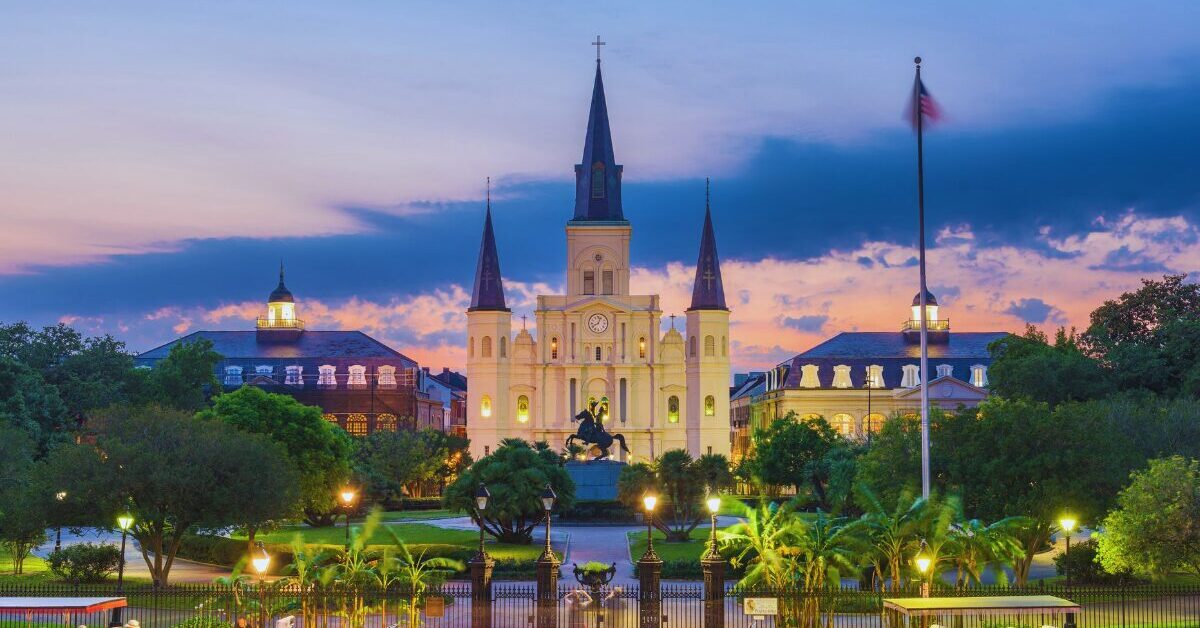
The United States is often celebrated as a cultural mosaic shaped by waves of languages and traditions brought from around the world. While English is the country’s official language (though only designated as such in 2025), pockets of linguistic heritage continue to thrive across the nation. One of the most distinctive lies in southern Louisiana, a vibrant Francophone enclave where French language and culture remain part of everyday life. More than three centuries after French settlers established communities along the Mississippi River, Louisiana is still home to the largest Francophone population in the United States. Despite cultural assimilation and decades of suppression during the 20th century, when children were discouraged or even punished for speaking French in school, the language never fully disappeared. Today, the language is experiencing renewed vitality, as music, education, cuisine, festivals, and digital media help a new generation reconnect with the traditions that continue to shape Louisiana’s identity.
Historical Roots of French in Louisiana

French has shaped Louisiana since the early 18th century, and even the state’s name reflects those origins. The territory was named La Louisiane in 1682 by French explorer René-Robert Cavelier de La Salle, in honor of King Louis XIV, who claimed for France the vast Mississippi River basin. When French settlers later founded New Orleans in 1718, the region quickly became a center of French culture in North America. From the beginning, Louisiana developed as a crossroads of peoples and traditions. French settlers lived alongside Native American communities and migrants from the Caribbean and Canada, creating a society in which French became the language of trade, government, and daily life. Markets, churches, and family homes across the region echoed with French speech long before the territory officially became part of the United States through the Louisiana Purchase of 1803.
Over time, however, French in Louisiana evolved into several distinct linguistic traditions shaped by geography and history. One of them is Louisiana Creole French, which developed in urban areas such as New Orleans within communities influenced by French, Caribbean, African, Spanish, and Native American cultures. In the rural southern part of the state, another branch of the language took shape with the arrival of Acadian refugees, expelled from Canada during the Great Expulsion of 1755. Many eventually settled in the wetlands and prairies of southern Louisiana, where their descendants became known as Cajuns. Over generations, they developed their own dialect, Cajun French, shaped by regional vocabulary, local accents, and the rhythms of life along the bayous.
For much of the 19th century, French remained widely spoken across southern Louisiana and served as the everyday language in many communities. Its decline came later, during the early 20th century, as English gradually gained prominence in government, commerce, and education. The turning point came in 1921, when Louisiana adopted a new state constitution that effectively established English as the language of public schooling. Within a generation, the use of French began to decline sharply in everyday life. By the mid-20th century, the language that had once dominated the region was increasingly heard only among older generations. Yet despite these changes, French never disappeared entirely.
Cajun and Creole, The Two Louisianas

People often assume that Cajun and Creole refer to the same culture, yet Louisiana’s Francophone heritage reflects distinct histories that developed side by side. Creole culture emerged in colonial Louisiana among communities shaped by French settlers alongside African, Caribbean, Spanish, and Native American influences, particularly in New Orleans. Within this multicultural environment, Louisiana Creole French developed as a distinct language shaped by centuries of cultural exchange. Its vocabulary and grammar reflect influences from French as well as African and Caribbean dialects, and everyday expressions often differ from standard French. A greeting may sound like “Couman ça yé?” meaning “How are you?” and someone eating might say “Mo ka manjé.”
Cajun culture developed along a different path in the rural bayous and prairies of southern Louisiana. Descended from Acadian refugees expelled from Canada in the 18th century, Cajun communities built lives around fishing, farming, and close family networks. Over generations, their dialect evolved into Cajun French, shaped by regional accents and rural life. Its expressions often differ slightly from both standard French and Louisiana Creole. A Cajun greeting might be “Comment ça va, cher?” and someone eating may say “Je suis après manger,” a uniquely Cajun construction meaning “I’m eating right now.”
Food and music remain central to both cultures. Creole cuisine, rooted in the cosmopolitan kitchens of New Orleans, blends French techniques with Caribbean and African influences in dishes such as shrimp étouffée, jambalaya, and tomato-based gumbo. Cajun cuisine reflects rural traditions, with crawfish boils, boudin sausage, and roux-based gumbo at the center of gatherings. Their musical traditions mirror this heritage: zydeco, popularized by Clifton Chenier, grew from Creole communities, while Cajun music, driven by accordion and fiddle, fills dance halls across the Acadiana region during lively gatherings known as fais-do-do.
Despite their different origins, Cajun and Creole traditions have long overlapped. Migration, intermarriage, and shared celebrations gradually softened the boundaries between them, forming the broader Francophone culture that defines southern Louisiana today. Words such as lagniappe, meaning a small extra gift, are used across both communities and have even entered the local English vocabulary. In recent years, this cultural landscape has continued to evolve as new French-speaking residents arrive from France and other Francophone countries, bringing new accents and expressions that blend naturally with local traditions and contribute to the living story of Louisiana French.
Revival of French in Louisiana

The revival of French in Louisiana began in 1968 with the creation of the Council for the Development of French in Louisiana, widely known as CODOFIL. Established by the state government, the organization launched a coordinated effort to restore French language education and reconnect Louisiana with the broader Francophone world. Nowadays, the state remains home to the largest Francophone community in the United States, with linguists estimating that between 120,000 and 150,000 residents still speak French or Cajun French, particularly across the Acadiana region of southern Louisiana.
Education now stands at the heart of this linguistic renewal. Interest often begins early through programs such as the École Bilingue de la Nouvelle-Orléans, a French immersion preschool and elementary school that introduces children to the language from their earliest years. Across Louisiana, French immersion programs in public schools allow students to study subjects such as mathematics, science, and history entirely in French. Currently, more than 30,000 students study French in Louisiana schools, including approximately 5,000 to 6,500 enrolled in immersion programs, and participation has increased dramatically over the past two decades.
Universities also contribute to preserving Louisiana’s linguistic heritage. At the University of Louisiana at Lafayette, researchers at the Center for Louisiana Studies document regional dialects, oral histories, and musical traditions that form the cultural foundations of Cajun and Creole communities. This local educational ecosystem is reinforced by international partnerships and cultural institutions. Through teacher exchange programs and educational collaborations, educators from France, Belgium, Quebec, and other Francophone regions regularly teach in Louisiana classrooms.
The Consulate General of France in New Orleans plays an active role in supporting these initiatives, facilitating cultural exchanges, and helping connect Louisiana schools with partners across the Francophone world. Community institutions also contribute to Louisiana’s French revival. Alliance Française centers in New Orleans and Lafayette offer language courses, lectures, and cultural programming that bring together longtime residents and newcomers interested in the region’s Francophone heritage. These combined efforts gained international recognition in 2018, when Louisiana joined the Organisation internationale de la Francophonie (OIF) as an observer member, reaffirming the state’s historic ties to the global French-speaking community.
The Digital Revolution of Louisiana French

A new chapter in the revival of Louisiana French is unfolding not only in classrooms or community halls but online. Social media platforms, language apps, and digital learning tools are bringing Cajun French and Louisiana Creole to new audiences, allowing the language to travel far beyond the bayous where it once seemed confined. For younger Louisianans, learning the language increasingly happens through screens. Online platforms such as Memrise and Mango Languages now host community-created Cajun French lessons, while widely used tools like Duolingo often serve as an entry point for learners before they explore regional dialects. Dedicated resources have also emerged to support this growing interest, including the LearnCajun app, which introduces vocabulary and pronunciation through interactive lessons, and online tools such as the Cajun French translator on AnythingTranslate, which allows users to experiment with phrases unique to the dialect. Digital archives and dictionaries have made Louisiana’s linguistic heritage easier to access than ever before. The Dictionary of Louisiana French and the linguistic archives of the University of Louisiana at Lafayette allow users to search thousands of regional expressions, many of which once existed mainly through oral tradition. Additional platforms, including Learn Louisiana French, Webonary’s Louisiana Creole dictionary, and websites such as Cajun-French.com, provide lessons, grammar explanations, and translations that help learners understand the differences between Cajun French, Louisiana Creole, and standard French.
Content creators have become some of the most influential voices in this digital revival. On TikTok, Instagram, and YouTube, short videos teach Cajun French expressions, explain regional linguistic differences, or document everyday life in Louisiana while switching naturally between English and French. Among the most recognizable figures is Jourdan Thibodeaux, a Cajun musician and cultural advocate whose “Louisiana French du jour” videos celebrate the language and traditions of the bayou. With hundreds of thousands of followers across social media platforms, Thibodeaux has become one of the most visible defenders of Louisiana French online. His efforts have gained international recognition: in 2023, he was invited to the Élysée Palace in Paris, where he met French President Emmanuel Macron as part of discussions highlighting the vitality of Francophone cultures beyond Europe.
French in America: A Living Language Here to Stay
French in Louisiana is no longer simply a relic of the past. It is a language carried forward by teachers, musicians, families, and cultural institutions determined to keep it alive. From classrooms to festivals, from bayou dance halls to digital platforms, the language continues to evolve. Local efforts to preserve Cajun and Creole traditions, combined with the arrival of Francophone newcomers, are giving French in Louisiana a new momentum. As Louisianians like to say, “On lâche pas la patate.” They are not letting go.
Mariam, originally from Paris, now calls the Bay Area home. A seasoned traveler and writer, she’s always on the lookout for exciting new restaurants, hidden bars, and offbeat experiences. She has a passion for writing about travel, food, people, and all things unexpected. If you’d like to share your tips and events about Paris and France, please feel free to send them her way at [email protected].