
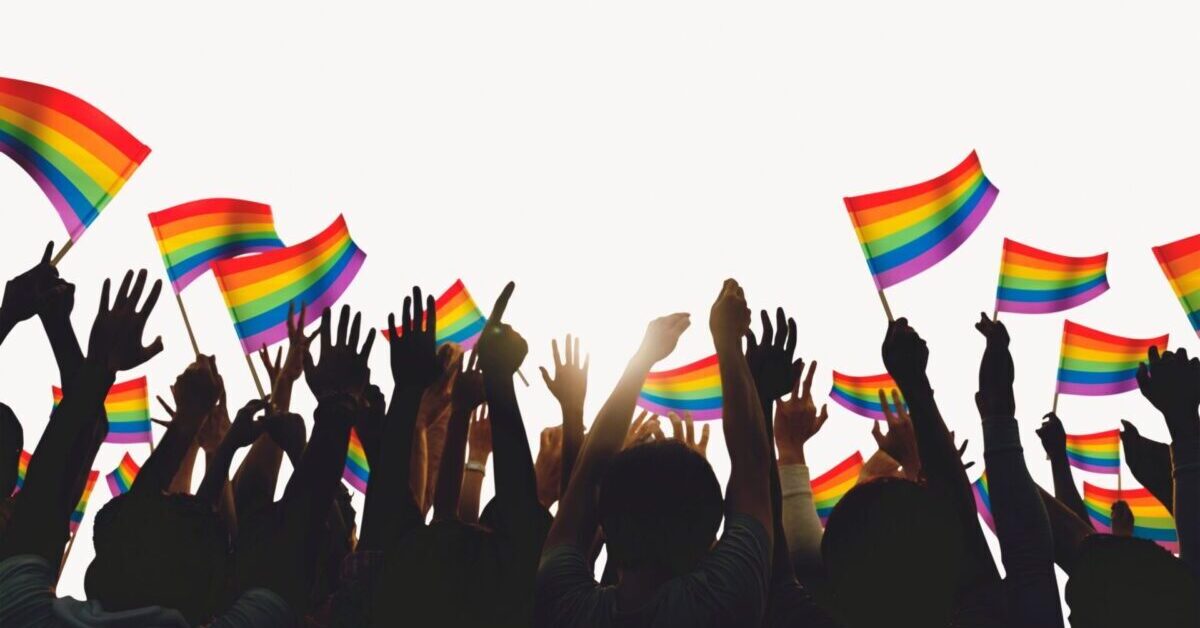
Every June, rainbow flags return to the streets of France. From Paris to Marseille, from major cities to small rural towns, Pride Month brings together hundreds of thousands of people through marches, cultural events, concerts, exhibitions, debates, and community gatherings. Yet behind the music, colorful outfits, and festive atmosphere lies a deeper story.
In France, Pride has never been solely about celebration. It remains rooted in decades of activism, political struggle, and demands for equality. While LGBTQ+ rights have advanced significantly over the past 15 years, many members of the community say the fight is far from over.
As France celebrates Pride Month 2026, the question remains: has Pride become a celebration of victories won, or is it still a protest against persistent discrimination?
From Stonewall to Paris: The Origins of French Pride
Like Pride celebrations around the world, French Pride traces its roots back to the Stonewall uprising in New York City in June 1969. After a police raid on the Stonewall Inn, members of the LGBTQ+ community resisted, sparking several days of protests that became a defining moment in the modern gay rights movement.
The spirit of Stonewall eventually crossed the Atlantic.
In France, LGBTQ+ activism emerged in the aftermath of the social movements of May 1968. Early organizations such as the Front Homosexuel d’Action Révolutionnaire (Homosexual Front for Revolutionary Action) and the Comité d’Urgence Anti Répression Homosexuelle (Emergency Committee Against Homosexual Repression) fought against criminalization, police harassment, social stigma, and the medical classification of homosexuality as a mental illness.
At the time, life looked very different for LGBTQ+ people in France. Discrimination was widespread in workplaces, housing, schools, and families. Public visibility was limited, and many people lived their identities in secrecy.
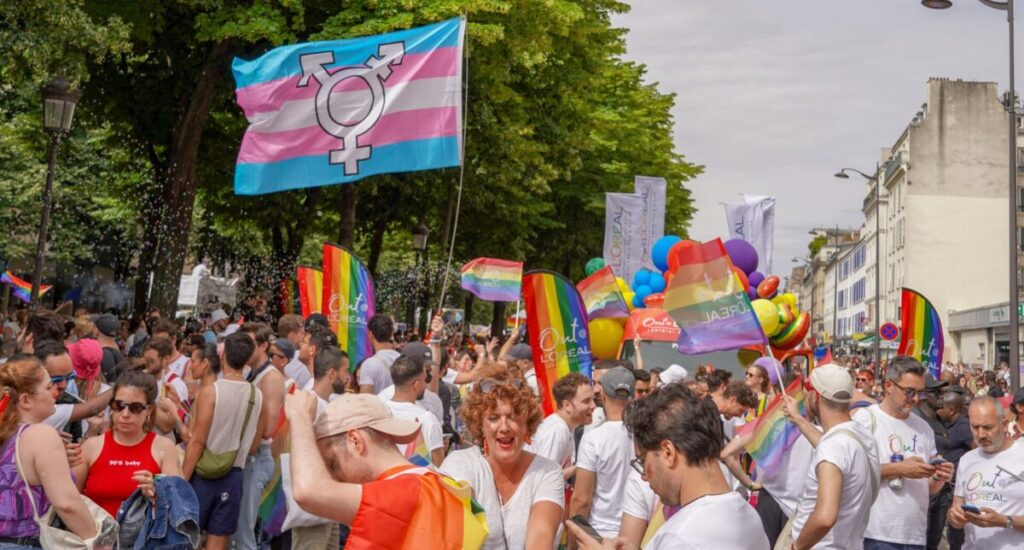
A major turning point came in April 1981 when thousands of people participated in one of the first large public LGBTQ+ marches in Paris. It marked a new era of visibility and collective action.
During the AIDS crisis of the 1980s and 1990s, Pride events became spaces of remembrance, anger, and survival. Organizations such as Act Up pushed governments to respond to the epidemic while demanding dignity and healthcare for affected communities.
Over time, “Gay Pride” evolved into the broader and more inclusive “Marche des Fiertés,” reflecting the growing visibility of lesbian, bisexual, transgender, queer, non-binary, and other identities.
A Decade of Historic Progress
The past fifteen years have brought some of the most significant legal advances in French LGBTQ+ history.
The landmark moment came in 2013 with the legalization of same sex marriage and adoption through the “Mariage pour Tous” law. France became the 14th country in the world to legalize marriage equality, and more than 70,000 same sex couples married during the law’s first decade.
The reform transformed family rights for thousands of French citizens, but it also revealed deep divisions within society. Massive demonstrations organized by opponents of marriage equality showed that acceptance was far from universal.
Since then, additional milestones have followed.
In 2021, France expanded access to assisted reproduction, known as Procréation Médicalement Assistée or PMA, to female couples and single women. In 2022, the country officially banned so-called conversion therapies, criminalizing practices that claim to change a person’s sexual orientation or gender identity.
Transgender rights have also evolved. Since 2016, individuals no longer need to undergo sterilization or surgery to legally change their gender marker. Greater visibility in media and public life has helped bring transgender issues into mainstream discussion.
Yet legal progress has not eliminated social challenges.
“The visibility of LGBTQ+ people has definitely increased,” says Emilie, a 24-year-old lesbian woman. “But what has really changed is that people are less afraid to show who they are. It’s not only governments that move things forward. It’s people within the community, and the allies who support them.”
Pride in 2026: A Month of Events Across France
This year’s Pride Month reflects both the growth and diversification of LGBTQ+ life in France.
Paris remains the center of the country’s Pride celebrations. Throughout June, the capital hosts exhibitions, film screenings, conferences, performances, concerts, and community events across multiple districts. The city’s official Pride Month programming highlights LGBTQ+ visibility, inclusion, and international solidarity.
The largest event will once again be the Paris Pride March on June 27, organized by Inter LGBT. Hundreds of thousands of participants are expected to gather for a march that combines political messages with music, performances, and public speeches.
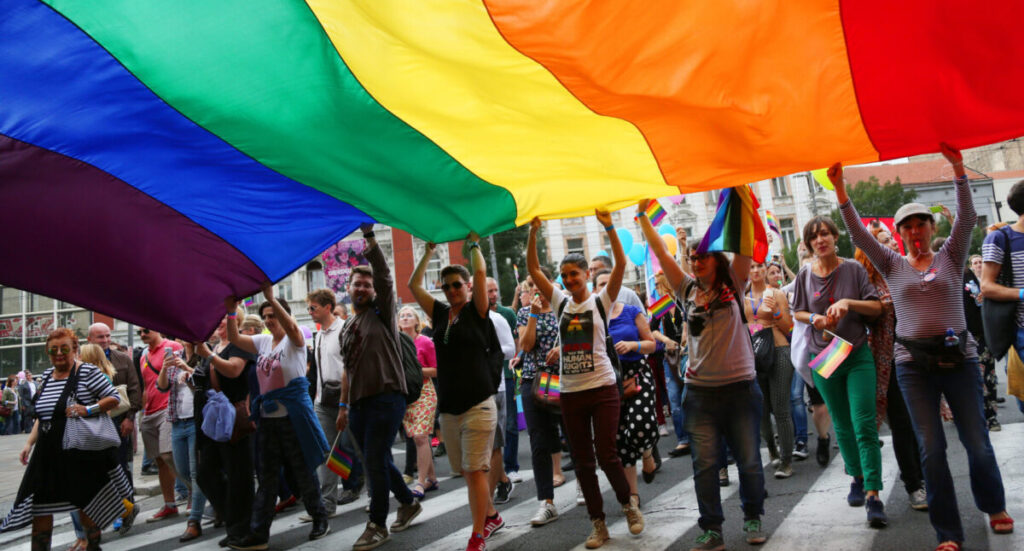
In Lille, the “Mois des Fiertés” began in mid-May and includes cultural events, awareness campaigns, community discussions, and activist gatherings. The city’s Pride march was accompanied by an accessible community village and sign language interpretation. Lille has also seen the emergence of a separate “radical Pride,” reflecting ongoing debates within the movement about activism, capitalism, and corporate involvement.
Lyon‘s Pride, scheduled for June 27, is expected to attract tens of thousands of participants. Organizers have emphasized transgender rights, anti discrimination efforts, and maintaining Pride’s activist roots alongside its festive atmosphere.
Meanwhile, Marseille continues to develop its own distinct Pride culture. Local organizations have announced community events focused not only on LGBTQ+ rights but also on broader social issues such as inclusion, housing, urban life, and economic inequality.
Importantly, Pride is no longer limited to major cities. Smaller towns across France now organize their own marches and events, reflecting a growing desire for visibility outside Paris.
More Visible Than Ever, Yet New Challenges Remain
Despite legal victories and growing visibility, many LGBTQ+ people believe significant challenges remain.
For Emilie, social acceptance continues to lag behind legal progress.
“What is still missing is equality in everyday life,” she says. “People should not feel judged because they love someone of the same sex, because they want to change gender, or because they don’t identify with a gender at all.”
She also points to stereotypes affecting lesbian women.
“There is still a lot of sexualization of lesbian couples in France. That remains a major issue.”
Arnaud, a 22-year-old gay man, believes Pride remains necessary because equality has not yet been fully achieved.
“Pride shows that we exist and that we have the right to be who we are without hiding,” he says. “The day Pride is no longer necessary will be the day equality has truly been reached.”
He also highlights the challenges faced by non-binary people.
“Many still have to constantly justify their identity. There is still a lot of misunderstanding and opposition.”
According to recent reports from advocacy groups, acts of homophobia and transphobia remain a concern in France despite greater public awareness. Activists have also expressed concern about anti transgender rhetoric that has gained visibility in several countries in recent years.
According to Pauline, a 34-year-old non-binary individual currently questioning their gender identity, transgender people have increasingly become targets of public debate.
“I feel that transgender people are particularly singled out today, although it affects the entire LGBTQ+ community,” they say.
They recall hearing comments such as: “You just want attention. We don’t have a straight Pride.”
“Those kinds of remarks show that many people still don’t understand the history behind Pride or why these marches exist in the first place,” Pauline says.
Between Party and Protest
One of the most significant debates surrounding Pride today concerns its purpose.
Has Pride become too commercial? Has activism been overshadowed by corporate sponsorships and marketing campaigns?
Many participants appreciate the growing visibility and mainstream support. Others worry that Pride’s political origins are sometimes forgotten.
Pauline is among those who believe the activist dimension deserves greater attention.
“Sometimes it feels like people come mainly to have fun and celebrate,” they say. “The festive aspect is important, but it wasn’t the original purpose of Pride.”
At the same time, they acknowledge the emotional power of the event.
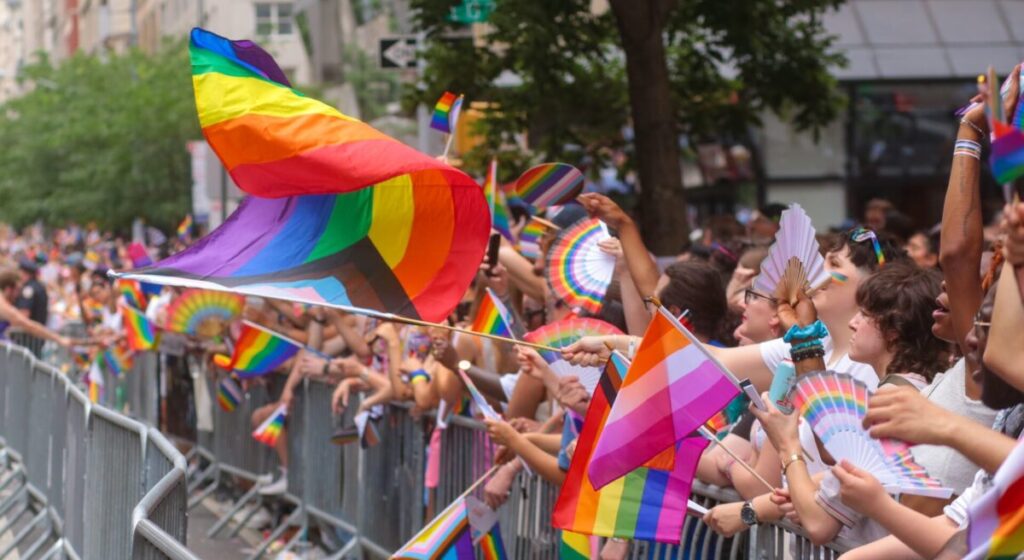
“My first Pride was unforgettable. Seeing that crowd made me realize I wasn’t alone. It gave me strength and hope.”
For many participants, this dual identity is exactly what makes Pride unique. It is both a celebration and a demonstration. A space where people can dance, laugh, and express themselves while also advocating for change.
Emilie shares a similar perspective.
“I would love for Pride to become only a celebration one day,” she says. “But for that to happen, equality would need to exist all year long, not only during one month.”
The Future of Pride in France
More than four decades after the first major LGBTQ+ march in Paris, Pride Month continues to evolve.
French society has changed dramatically. Same sex couples can marry. LGBTQ+ people are more visible than ever in media, politics, sports, and public life. Younger generations often grow up with a level of representation that would have been unimaginable just a few decades ago.
Yet the conversations happening during Pride Month 2026 reveal a more nuanced reality.
For many, Pride remains a reminder that rights can never be taken for granted. Progress has been real, but acceptance remains uneven. Visibility has increased, but discrimination has not disappeared.
As rainbow flags fill French streets once again this June, Pride continues to occupy a unique space between celebration and protest, between joy and resistance, and between the victories already won and the battles that remain ahead.
Valentine Marchou is a French journalist with a keen eye for culture, lifestyle, and society. After honing her skills in several French newsrooms, she now aims to tell stories that bridge French and English-speaking worlds through art, food, and everyday life.