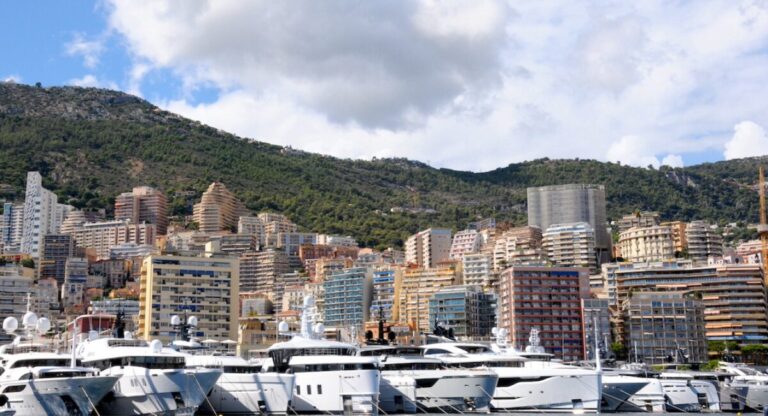
Monaco may not technically be part of France, but culturally, geographically, and gastronomically, it exists completely within the world of the French Riviera. The tiny principality (with a surface area of 0.81 square miles) speaks French, eats French, and moves to the rhythm of the Côte d’Azur, making it impossible not to include in the conversation.
Barely larger than Central Park, the country operates almost like one glamorous village: royalty in residence, yachts docked beneath apartment buildings, Formula 1 cars racing through everyday streets, and locals who somehow still seem to know one another (even though there are only roughly 40,000 of them). It is polished, extravagant, and surprisingly intimate all at once.
Many Monégasques insist it is actually one of the best places to base yourself while exploring the French Riviera, and they may be right. Perfectly positioned between bustling Nice and the Italian border, Monaco offers easy access to the rest of the coast while maintaining its own unmistakable atmosphere. But before heading off to nearby beaches and hilltop villages, it is worth slowing down and experiencing Monaco itself. Between cliffside gardens, Belle Époque charm, ocean views, historic cafés, and impossibly cute streets, you quickly realize there is far more to do here than simply admire the superyachts.
Things to do in Monaco

Wander Through Monaco-Ville
The oldest part of Monaco, often referred to simply as “The Rock,” still feels surprisingly atmospheric despite the constant stream of tourists wishing to take a picture with a Lamborghini. Narrow stone streets wind past tiny shops, pastel apartments with shuttered windows, quiet courtyards, and hidden viewpoints overlooking the Mediterranean. Compared to the polished sophistication of Monte-Carlo below, Monaco-Ville feels more akin to the other towns that dot the Riviera.
Here, you’ll find the Prince’s Palace of Monaco, where the daily Changing of the Guard still takes place at exactly 11:55 am. Visitors can tour portions of the palace during the summer months, including restored Renaissance frescoes and royal state apartments, with tickets generally starting around €10 to €15, depending on the season and combined museum access options. Nearby, the striking Roman-Byzantine Monaco Cathedral remains one of the principality’s most important landmarks, housing the tombs of Princess Grace and Prince Rainier III.
The area is also home to some of Monaco’s best (and most moderately priced) museums. The Museum of Prehistoric Anthropology (€5) offers a fascinating look into early human history along the Riviera, while art lovers can venture toward Villa Paloma (€6, free entry every Sunday), part of Monaco’s contemporary art museum network. The Museum of Stamps and Coins (€3), originally built around Prince Rainier III’s personal collection, is one of the world’s leading institutions for numismatics and philately, featuring rare stamps, coins, historic medals, and original minting tools that offer a surprisingly fascinating glimpse into Monaco’s royal history, economy, and relationship to collecting culture.

Visit the Oceanographic Museum
Everyone who has been to Monaco will tell you that the Oceanographic Museum is worth its own mention. Perched dramatically above the sea, the legendary Oceanographic Museum of Monaco remains one of the principality’s most iconic landmarks. Founded by Prince Albert I, the museum combines aquariums, marine science exhibitions, and immersive digital installations inside a spectacular cliffside building for €22,50 entry for adults and €11 for students. It’s quite a good investment as you can spend a large part of your day here and even dine at the Le Terrasse museum cafe.
Even people who claim they are “not museum people” usually end up loving this place. Between the shark tanks, rooftop views, and Belle Époque interiors, it feels cinematic in the best possible way.
Get Lost in the Gardens
One of Monaco’s biggest surprises is how green it actually is. Built vertically into cliffs and hillsides, the principality hides gardens almost everywhere. The Jardin Exotique de Monaco offers some of the best panoramic views in the region, with dramatic overlooks where the Alps appear to fall directly into the Mediterranean. On site, there is also a grotto and a botanical center, and your entry cost depends on whether you want to visit all three sites or just one. Entry to the garden alone is €12. Nearby, the lesser-known Botanical Centre is free to visit, and houses one of the world’s largest collections of succulents and cacti. At a time when much of the world is focused on ethnobotanical gardening and preservation of native species, there is something strangely charming about finding yourself surrounded by plants that exist nowhere nearby, yet still feel entirely representative of Monaco’s old-world ethos and devotion to Riviera fantasy.
The Jardins Saint-Martin offer some of the most scenic walking paths in Monaco, with Mediterranean views, shaded areas, and a small playground popular with families. Meanwhile, the Princess Grace Rose Garden is spectacular when in bloom, spanning more than 300 varieties of roses alongside monumental sculptures by artists including Fernando Botero and Alexander Calder lining the “Chemin des Sculptures.”
For travelers with children, Parc Princesse Antoinette is a great option, complete with olive groves, sea views, mini-golf, a small farm, and casual cafés perfect for slowing down between sightseeing.

Spend an Afternoon at the Market
Despite its luxury reputation, Monaco can still feel refreshingly local in places like Marché de la Condamine, the city’s historic covered market. Recently renovated, the market remains one of the best places to actually experience everyday Monégasque life.
Inside, you’ll find everything from socca and barbajuan, Monaco’s beloved fritters filled with Swiss chard and ricotta, to fresh seafood, pasta, pizza, and espresso counters overflowing with locals.
Outside, Rue Princesse Caroline is perfect for wandering slowly between cafés and boutiques.

Experience Monte-Carlo at Least Once
Yes, it is swanky. Yes, it is over the top. And yes, you should absolutely lean into it at least once. The area surrounding Casino de Monte-Carlo still feels like the Monaco people imagine before arriving: luxury cars circling the casino, impeccably dressed visitors, champagne terraces, and Belle Époque architecture glowing at sunset. Even if gambling is not your thing, simply walking through the square feels like stepping onto a film set. Nearby, the Salle Garnier opera house and the newly renovated Hôtel Métropole Monte-Carlo continue to anchor Monaco’s old-school glamour, and it is just as incredible as it sounds.

Explore Port Hercule
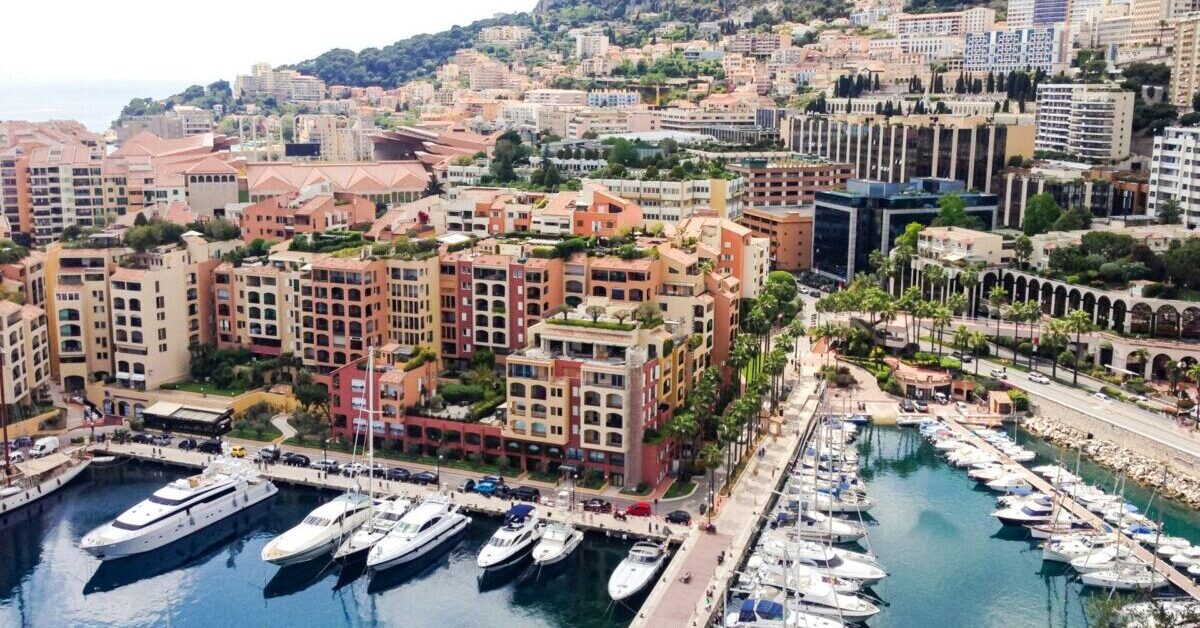
Port Hercule is the cornerstone of Monaco and one of the best places to understand the principality beyond the casinos and luxury façades. Throughout the year, the harbor transforms constantly, hosting everything from the Monaco Yacht Show and international jumping competitions to seasonal fairs and Monaco’s beloved Christmas village. Even outside major events, the marina itself feels special, lined with cafés, terraces, superyachts, and locals jogging along the waterfront beneath the cliffsides.
During summer, the Stade Nautique Rainier III becomes one of the city’s most popular gathering spots, with its heated seawater swimming pool overlooking the port. Nearby, the Prince’s Car Collection offers a more unexpected cultural stop, showcasing historic, ceremonial, and vintage vehicles collected by the princely family over the decades.

Walk the Formula 1 Circuit
One of the strangest things about Monaco is that the Formula 1 circuit is not tucked away inside a stadium or built outside the city; it is simply the city itself. The same streets locals use every day suddenly transform into one of the world’s most legendary race tracks, which also probably explains why Monaco has exactly zero potholes.
You can casually walk large portions of the circuit between cafés, marinas, luxury boutiques, and apartment buildings, passing famous hairpin turns, tunnels, and iconic corners along the way. The full route stretches about 2.75 miles, winding past the harbor and up toward Casino Square. While the walk itself is relatively easy, there is so much to take in that it can easily become a half-day activity. And if you happen to visit during the Monaco Grand Prix, the entire principality transforms into one enormous racing spectacle.

Spend Time by the Water
You are on the Côte d’Azur, after all. The newly redeveloped Larvotto Beach (a free public beach) and the eco-district of Mareterra have become some of Monaco’s most pleasant areas for simply walking, swimming, or lingering by the sea.
Mareterra, which opened recently, expanded Monaco directly into the Mediterranean through an ambitious sustainability-focused waterfront project designed by architects including Renzo Piano and Tadao Ando. The area now hosts promenades, gardens, restaurants, sea views, and public spaces.
And that may be the principality’s biggest surprise overall. Beyond the yachts, casinos, and headlines, Monaco can actually feel oddly peaceful, a tiny Mediterranean country where people still swim before work, buy vegetables at the market, and greet each other on the street beneath some of the most expensive real estate in the world.
Where to Eat & Drink in Monaco
For somewhere so tiny, Monaco’s dining scene is remarkably serious. The principality currently holds one of the highest concentrations of Michelin stars in the world, ranging from ultra-formal tasting menus to elegant seafood restaurants overlooking the water. But honestly, some of the best meals are often the simplest: oysters by the port, a chilled glass of rosé, focaccia from a bakery, or lunch overlooking the sea at Larvotto Beach.
Monaco also has a growing focus on sustainability and local craftsmanship. Distillerie de Monaco, for example, repurposes the principality’s bitter orange harvest into spirits and liqueurs, preventing enormous amounts of food waste in the process.

Les Ambassadeurs by Christophe Cussac
Located inside the newly renovated Hôtel Métropole Monte-Carlo, Les Ambassadeurs by Christophe Cussac, a two-Michelin-starred restaurant, represents Monaco’s most refined side. Chef Christophe Cussac’s menus lean profoundly Mediterranean, balancing Riviera elegance with exceptional local ingredients and meticulous technique. The dining room itself feels classic Monte-Carlo: intimate and polished without becoming overly theatrical. It is definitely a splurge, but one of the principality’s standout fine dining experiences.
Caffé Milano
Overlooking Port Hercule, Caffé Milano is one of those quintessential Monaco institutions where you come as much for the atmosphere as the food. The terrace is almost always buzzing with a mix of locals, yacht crews, businessmen, and impeccably dressed visitors lingering over espresso or late lunches of house-made pasta.
Zeffirino
Monaco’s deep Italian influence comes fully alive at Zeffirino, an elegant Ligurian restaurant tucked near the Hôtel de Paris. Known for its handmade pastas, pesto, and seafood-forward dishes, the restaurant attracts a loyal local crowd that appreciates classic Riviera dining done properly. Dinner here feels timeless and refined without being overly stiff.
Blue Bay Marcel Ravin
One of Monaco’s most acclaimed restaurants, Blue Bay blends Caribbean influences with Mediterranean ingredients through chef Marcel Ravin’s highly personal approach to cooking. The restaurant recently received the “Passion Dessert” distinction and continues to be one of Monaco’s most exciting dining destinations, particularly for travelers interested in ingredient-driven tasting menus with a more modern point of view. Located inside the Monte-Carlo Bay Hotel & Resort, the setting also feels slightly calmer and more coastal (with incredible beachfront views) than the intensity of central Monte-Carlo.
Elsa
Monaco has increasingly leaned into sustainability within its dining scene, and Elsa remains one of the clearest examples of that shift. The restaurant focuses heavily on seasonal Mediterranean ingredients and environmentally conscious sourcing (they get their produce at the market, like the rest of town) while still maintaining the level of elegance expected within Monaco’s luxury hospitality world. So yes, you can still order imperial caviar and blinis alongside your market vegetables. However, they also offer a combo-style lunch menu for €59 and €79, so you can try their incredible cuisine without breaking the bank.
Le Petit Bar
Le Petit Bar offers a completely different side of Monaco away from the superyachts and designer storefronts. Small, intimate, and slightly old-school, it is the kind of place where long lunches stretch into aperitifs, and locals greet one another by name. The Mediterranean menu is simple, comforting, and best enjoyed slowly after wandering through the old town. Think: Niçoise salad, barbajuan, panisse, and pasta all’Amatriciana.

Blue Gin
Set directly above the sea at the Monte-Carlo Bay Hotel, Blue Gin is one of the best places in Monaco for sunset cocktails. The atmosphere feels a little more relaxed than many of the principality’s grand hotel bars, with DJs, ocean breezes, and panoramic waterfront views creating the feeling of a Riviera lounge suspended over the Mediterranean.
La Môme Monte-Carlo
La Môme captures the flashy Côte d’Azur energy people often imagine when they think of Monaco. The restaurant transitions seamlessly from elegant dinner spot to lively late-night scene, filled with champagne bottles, seafood towers, and a glitzy crowd dressed for the occasion. It is fun, theatrical, and part of the Monaco experience.
Le Rouge et le Blanc
For something more understated, Le Rouge et le Blanc is a cozy wine bar loved for its local vibes and excellent selection of French wines. Located away from the grand terraces and casinos, it offers a quieter side of Monaco with a chalkboard menu of charcuterie boards and small plates.
Marlow
Part of Monaco’s newly opened Mareterra eco-district, Marlow brings a more contemporary British energy to the principality’s dining scene. The waterfront setting, modern interiors, and slightly more laidback make it especially appealing for long lunches, afternoon tea, or brunch after walking through Mareterra’s promenades and gardens. The interiors are incredible, and the food is familiar in an elevated way, making it quite the stop for an afternoon with the girls.
99 Sushi Bar
Also located in Mareterra, 99 Sushi Bar reflects Monaco’s increasingly international dining landscape, as the restaurant already has locations in cities like London and Dubai. While Monaco is deeply tied to French and Italian cuisine, the principality’s global crowd has created demand for polished restaurants spanning far beyond the Riviera. Here, Japanese fine dining arrives with sea views, sleek interiors, and Monaco-level elegance.
What’s Happening in Monaco This Summer
Monaco’s social calendar is one of the main reasons travelers return year after year. Alongside the major annual events, new openings continue reshaping Monaco’s dining and lifestyle scene, bringing a slightly younger and more contemporary energy to the Riviera destination.

Events in Monaco in 2026
- Monaco E-Prix (May 16–17, 2026) — Monaco’s iconic streets transform into a high-speed electric racing circuit for the return of Formula E.
- Monaco Grand Prix (June 4–7, 2026) — The 83rd edition of the legendary Formula 1 race takes over the principality in what remains one of the most exciting sporting events in the world.
- Monte-Carlo Television Festival (June 12–16, 2026) — A major international gathering bringing together actors, studios, streaming platforms, and global television talent.
- Grimaldi Forum Summer Exhibition (July 1–September 6, 2026) — “Monaco and the Automobile, from 1893 to the Present Day” explores the principality’s deep relationship with cars through more than 50 historic vehicles displayed across 4,000 square meters.
- Monte-Carlo Summer Festival (July 3–August 15, 2026) — Monaco’s flagship music festival featuring international artists performing in iconic venues including the Salle des Étoiles and the Opéra Garnier.
- Monte-Carlo Philharmonic Orchestra Prince’s Palace Concerts (Summer 2026) — Open-air classical performances held in the historic courtyard of the Prince’s Palace beneath the Riviera open sky.
- Monaco Yacht Show (September 23–26, 2026) — Port Hercule hosts the 35th edition of the world-renowned luxury yachting event under the patronage of Prince Albert II.

How to Get to Monaco
Part of Monaco’s appeal is how surprisingly easy it is to reach despite feeling like its own tiny world. The closest airport is Nice Côte d’Azur Airport, located about 40 minutes away by car, depending on traffic, making Monaco one of the easiest Riviera destinations to access internationally. From Nice, most travelers either take the train, drive, or arrive by helicopter if fully embracing the Monaco fantasy. The train is by far the easiest and most scenic option, hugging the coastline with sweeping sea views before arriving directly into Monaco’s central station, carved into the rock below the city. Taxis and Ubers are available, though traffic along the Côte d’Azur in summer can be heavy.
Once inside Monaco itself, you quickly realize how walkable the principality actually is. The country has neighborhoods connected by public elevators, staircases, and surprisingly efficient pathways built into the cliffsides. Chances are, you will (and should) spend far more time walking than driving.
Angelika Pokovba is a writer and longtime Francophile originally from NYC, now based in Mexico. She’s into food, wine, skincare, and all things French—especially summers in the South and pharmacy finds she stocks up on way too early.