For Americans drawn to French culture, cheese is often the most fascinating and intimidating gateway. France produces more cheese than almost any other country, and its relationship to it goes far beyond the occasional snack.
Cheese is woven into everyday meals, social moments and regional identity. From comforting, familiar wheels to bold, challenging aromas, French cheeses reflect a deep connection between place, taste, and tradition.
Cheese in France: Origins, Habits and Icons
Cheese has been made on French soil for thousands of years. As early as Antiquity, Gallic tribes were already producing cheeses inspired by techniques circulating between Asia, the Middle East, and the Mediterranean world. Over time, geography shaped flavor. Mountain regions favored wheels aged for long periods which could survive winter. Coastal and pastoral areas leaned toward softer, fresher cheeses made close to the source of the milk. This diversity explains why France today counts more than 1,500 different cheeses, each linked to a landscape and a method refined over generations.
Cheese is not an occasional indulgence in France. It is a daily food for many households. On average, each French person eats around 26.5 kilograms of cheese per year, making France one of the world’s largest consumers. More than a third of the population eats cheese every single day. In 2023 alone, retail cheese sales reached approximately 860,000 tons, representing over 10 billion euros in value. At the table, cheese most often appears after the main course, served before dessert, but it also stars at casual gatherings, picnics and apéritifs.

Certain names have become global ambassadors. Camembert, Brie, Comté and Roquefort are instantly recognizable far beyond France. Many of these cheeses carry an AOP label, short for Appellation d’Origine Protégée (Protected Designation of Origin). This European designation means the cheese must be produced in a clearly defined region and follow strict specifications, covering everything from the origin of the milk to aging methods. It ensures that the flavor reflects a specific place and set of skills that cannot be replicated elsewhere. For American consumers, the AOP label acts as a trusted guide, signaling both authenticity and consistently high quality.
Understanding French Cheese Families
To make sense of French cheese, classification matters more than brand names. Cheeses are grouped by texture and method, which helps predict flavor and aroma.
Soft cheeses with bloomy rinds are often the most approachable for Americans. Brie de Meaux and Camembert de Normandie fall into this category. Beneath their white rind lies a creamy interior with buttery, slightly earthy notes. These cheeses feel comforting and familiar, especially when paired with crusty baguette, fresh apples, or a light red wine like Pinot Noir.
Soft cheeses with washed rinds are where curiosity meets fear. Époisses, Munster, and Livarot are famous for their pungent aromas and orange-tinted rinds. Despite their smell, the paste is usually smooth and rich, with savory depth rather than sharpness. These cheeses shine alongside aromatic white wines from Alsace, or even a simple amber beer, to balance their intensity.
Pressed, uncooked cheeses offer a bridge between mild and complex flavors. Cantal, Saint Nectaire, and Tomme de Savoie are firm yet supple, with nutty and milky flavors. They are widely loved in France and easy for Americans to enjoy. Medium bodied red wines such as Beaujolais or Chinon complement them beautifully.

Pressed, cooked cheeses are often the safest entry point for hesitant eaters. Comté, Beaufort, and Emmental are dense, aged wheels with layered flavors of toasted hazelnut and butter. These cheeses feel refined without being aggressive. They pair naturally with white wines from Burgundy or the Jura, and are excellent both on a cheese plate or melted into dishes like Gratin Dauphinois (a potato dish with cream and cheese) or a Croque Monsieur.
Blue cheeses divide opinion more than any other family. Roquefort, Bleu d’Auvergne, and Fourme d’Ambert display blue veining and bold character. Their salty, tangy bite can be surprising, yet when paired with sweet wines like Sauternes or Port, they become balanced and elegant. Many people who think they dislike blue cheese change their mind once they’ve experienced this contrast of flavors.
Goat cheeses complete the picture. From fresh and spreadable to aged and crumbly, cheeses like Crottin de Chavignol, Valençay, and Sainte Maure offer bright, citrusy, and herbal flavors. They are lighter, refreshing, and particularly appealing when paired with Sauvignon Blanc or Sancerre.
Regions Matter More Than Recipes
French cheese cannot be separated from the land it comes from. Climate, soil, and landscape all leave a clear imprint on flavor and texture, shaping cheeses that taste like their surroundings. In Normandy, abundant grass and humid weather produce rich cow’s milk cheeses such as Camembert with creamy, expressive profiles. Around Paris, proximity to the capital encouraged the rise of soft, refined cheeses such as Brie de Meaux that matured quickly and became staples of everyday meals. Moving east, Burgundy’s villages developed bold, aromatic cheeses such as Morbier with washed rinds that reflect the region’s robust culinary preferences.

In central France, the volcanic soils of Auvergne support grazing lands that give birth to sturdy cheeses with earthy depth, including Cantal, while higher altitudes in the Alps and Jura favor large cooked wheels designed for long aging and complex flavors, such as Comté. Along France’s eastern border, Alsace cheeses such as Munster are known for their strong but balanced flavors. In the south, Roquefort stands apart, crafted from sheep’s milk and aged in natural caves that define its singular character. Lighter, fresher expressions emerge along the Loire River through goat cheeses like Crottin de Chavignol, while Corsica adds its own voice with delicate cheeses, such as Brocciu, made from sheep or goat milk.
How the French Build a Cheese Plate
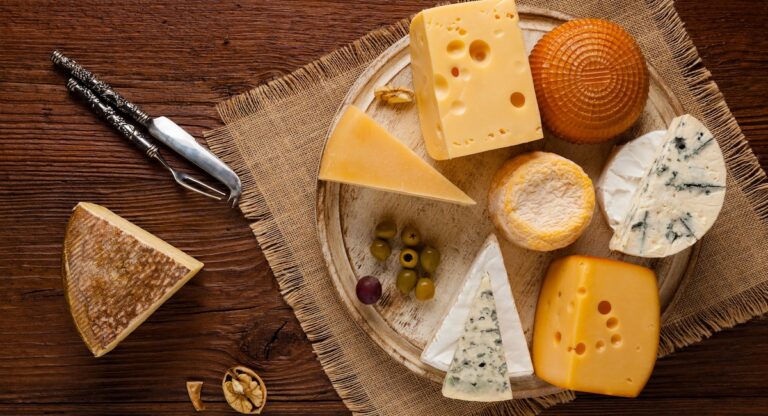
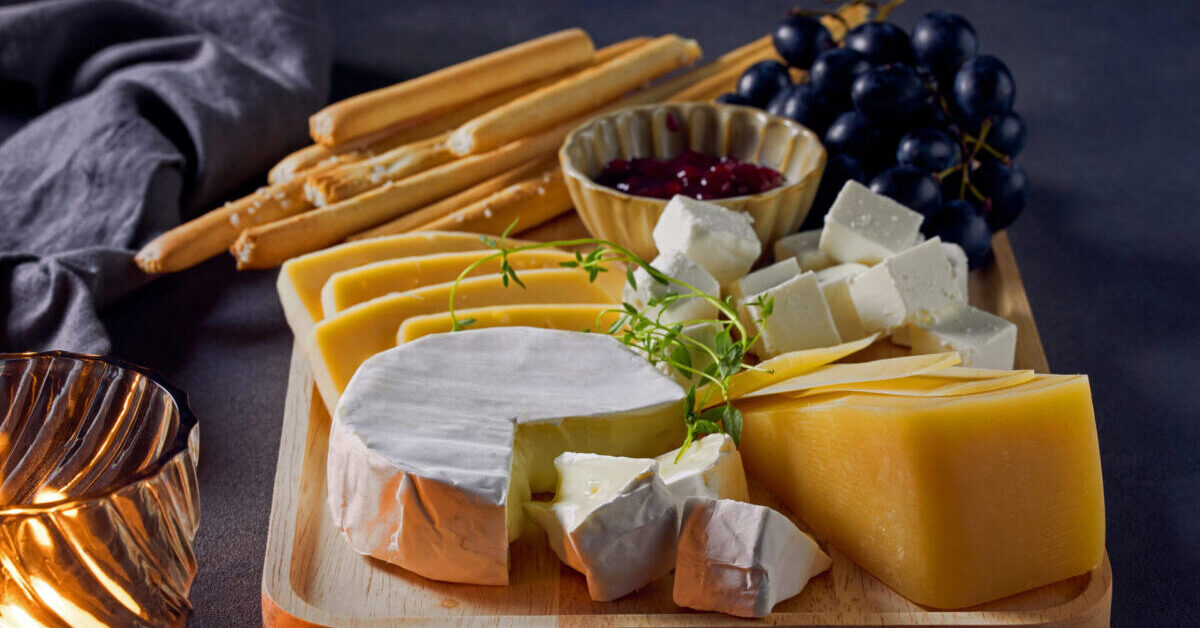
A French cheese plate is guided by balance rather than excess. The idea is not to overwhelm the table, but to offer a thoughtful selection that invites discovery. Three to five cheeses are usually enough to create variety while keeping the experience focused. Visual harmony plays a role as well, and odd numbers tend to feel more natural and appealing. What matters most is contrast. Mixing textures and intensities is preferred to repeating similar styles, so a firm Alpine cheese might sit next to a soft, creamy one, followed by a blue with more assertive character. Changing milk types, from cow to goat to sheep, adds another layer of interest.
There is also an order to how cheeses are enjoyed in France. On a French cheese plate, tasting usually begins with the lightest and mildest flavors, and gradually moves toward the strongest. This progression helps preserve the palate, allowing each cheese to be appreciated without one overpowering the next. The plate is shared, and knives circulate with it, but it is important to have several knives available so flavors do not mix from one cheese to another.

Timing matters as much as selection. Cheese is taken out of the refrigerator ahead of time and served at room temperature, which allows aromas and textures to fully open up. Portions remain modest, encouraging conversation and comparison rather than indulgence. Bread is always on the table, neutral in flavor and meant solely to accompany the cheese. Small additions, such as fruit preserves or jams placed on the side, can enhance certain cheeses by adding sweetness or contrast without taking center stage. In France, the cheese course is never rushed. It is a moment to slow down, share, and savor.
Bringing French Cheese Back to the US
For Americans eager to extend the experience beyond travel, understanding import rules is essential. Hard and semi-soft cheeses such as Comté, Beaufort, and Cantal are allowed in checked luggage. Pasteurized soft cheeses like certain Bries and Camemberts generally pass customs without issue. Soft cheeses made from unpasteurized milk are strictly prohibited unless they have been aged for more than 60 days.
The safest approach is to choose well-aged cheeses, verify pasteurization, and buy vacuum-sealed portions. Learning to ask a French cheesemonger for half wheels, quarters, or slices makes transport easier and mirrors local habits. With a little knowledge, French cheese can cross borders and continue its journey from market stall to American table, where curiosity often turns into lasting appreciation.
Valentine Marchou is a French journalist with a keen eye for culture, lifestyle, and society. After honing her skills in several French newsrooms, she now aims to tell stories that bridge French and English-speaking worlds through art, food, and everyday life.