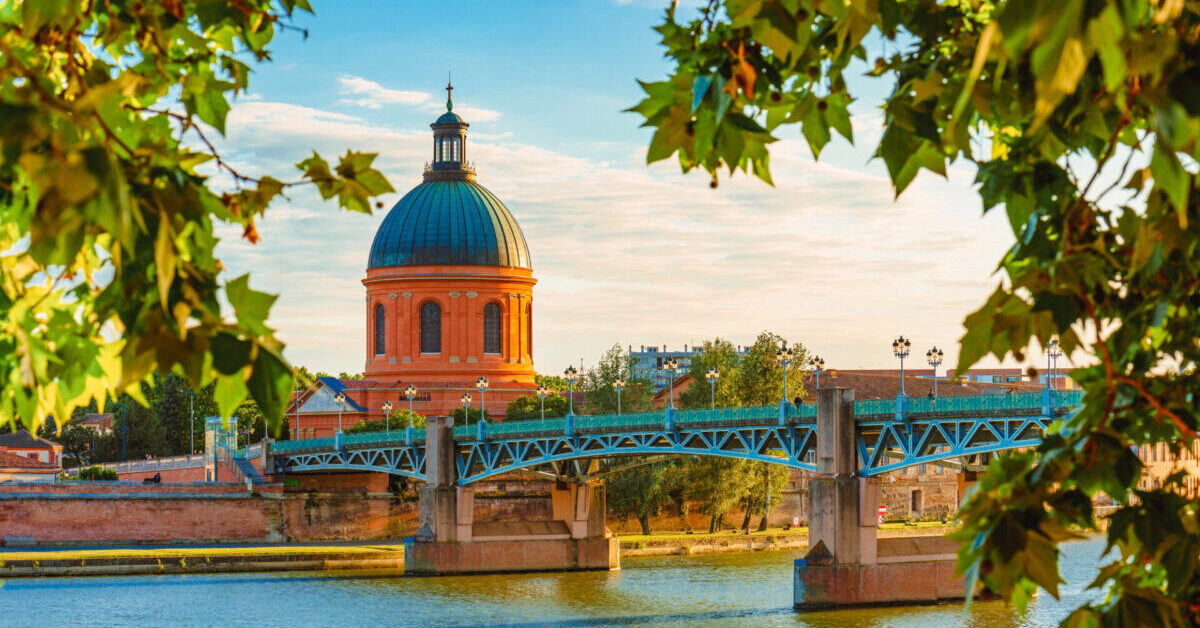
Located in southwestern France, Toulouse is a major university center known for its distinctive pink-brick architecture and vibrant student population. In 2025, the French magazine L’Étudiant ranked it as the best student city in France, citing strong academic infrastructure, quality of life, and overall student satisfaction. With a score of 88 out of 111 and a 97% recommendation rate, Toulouse stands out as one of the country’s most appealing destinations for higher education.
Academic Landscape and International Access
With over 120,000 students, Toulouse is one of France’s biggest student cities outside Paris. It offers a diverse academic environment, including institutions such as Université Toulouse Capitole (law, economics, management), Université Toulouse II–Jean Jaurès (languages, humanities, social sciences) and Université Toulouse III–Paul Sabatier (sciences, health, engineering). On the grandes écoles front, schools like TBS Education and Toulouse INP add programs in business, engineering, and media, with many master’s programs fully taught in English.

What distinguishes Toulouse is the close link between its universities and local industries. As a national center for aerospace, technology, and research, the city offers students practical exposure and internship opportunities alongside academic study. This connection between training and employment is reflected in L’Étudiant’s 2025 ranking, which gave Toulouse a 9.5/10 score for training quality.
For American students, the city is accessible: Toulouse is served by an international airport (TLS) with connections to Paris (CDG/ORY) and via Paris to North America. More importantly, many Toulouse institutions welcome exchange students. For example, Sciences Po Toulouse works with 80+ non-Erasmus partners including universities outside Europe. In addition, programs such as those at Toulouse INP offer English-taught engineering courses for incoming students. One practical caveat: the level of English support in administrative services may vary—international students advise budgeting a little extra time and effort for paperwork.
Student Life, Lifestyle & Mobility
Toulouse supports a lively student culture beyond the classroom. Venues such as Le Bikini, a well-known concert hall near the city centre, host indie and electronic music events throughout the year. Meanwhile, the annual Rose Festival—organized by the rap duo Bigflo & Oli—brings together thousands of young people for a weekend of music and events.

Transportation is also a practical consideration for students. The city’s public-transport network (metro, tram, bus) is operated by Tisséo and features a “Carte Pastel” student pass at about €10/month for unlimited trips. Bike-sharing and cycle lanes are also well-established, making many parts of the city easy to access without a car.
Housing and Budget Realities
Housing remains a challenge. In a 2025 survey, Toulouse scored 11/11 for mobility, but just 4.5/10 for housing. According to local student sources:
- University residences (CROUS) can cost roughly €210-€460/month depending on type.
- Private studios range around €350-€650/month, again depending on location and quality.
- For a private one-bedroom flat in the centre, data shows an average rent of about €610/month and roughly €480/month outside the center.
Some student voices highlight the sense of competition and urgency. “Housing is tricky when you’re not here… many studios go for €400–€650 depending on how close to the center you want it,” says Elisa, a fine arts student from Toulouse.
For comparison, student rents in Paris often run between €900-€1,200/month for a private studio, while in other French cities like Lyon or Bordeaux, the range tends to be €600-€800/month. This places Toulouse somewhat slightly below the national average for student housing.
The takeaway? Toulouse offers good value compared to larger metropolises, but competition is real. You’ll need to start your housing search and submit applications well in advance, stay flexible about location, and consider flat-sharing or suburban options if you’re on a budget.
Study Abroad & Exchange Opportunities for U.S. Students
American students looking to study in Toulouse will find a number of paths available to them. Several Toulouse institutions offer English-taught programs and accept incoming exchange students. For instance, Université Toulouse Capitole lists many master’s degrees fully taught in English, including ones in economics, international law, and public policy. Partner schools often extend exchange spots to U.S. universities through bilateral agreements, and institutions like the Toulouse School of Management maintain a global partner network of nearly 100 universities. For those outside formal academic exchanges, some schools welcome “free mover” students (independent applicants) and international short programs.

If you’re at a U.S. university, check whether your institution has a formal exchange agreement with a Toulouse school, or whether you qualify as a self-funded student abroad. Ask about how credits transfer (ECTS vs U.S. credit systems), what housing support is available for international students, and if programs offer language support for non-French speakers.
Final Word: Is Toulouse Right for You?
Toulouse offers a compelling mix of strong academic programs, a manageable cost of living, and an approachable, student-friendly atmosphere. The city’s balance of history, innovation, and culture makes it stand out without the intensity or expense of Paris. Still, practical preparation matters—especially when it comes to securing housing and ensuring your coursework aligns with your U.S. university’s credit system. For American students ready to plan ahead, La Ville Rose represents not just a study destination, but a well-rounded environment in which to learn, live, and connect.
Valentine Marchou is a French journalist with a keen eye for culture, lifestyle, and society. After honing her skills in several French newsrooms, she now aims to tell stories that bridge French and English-speaking worlds through art, food, and everyday life.