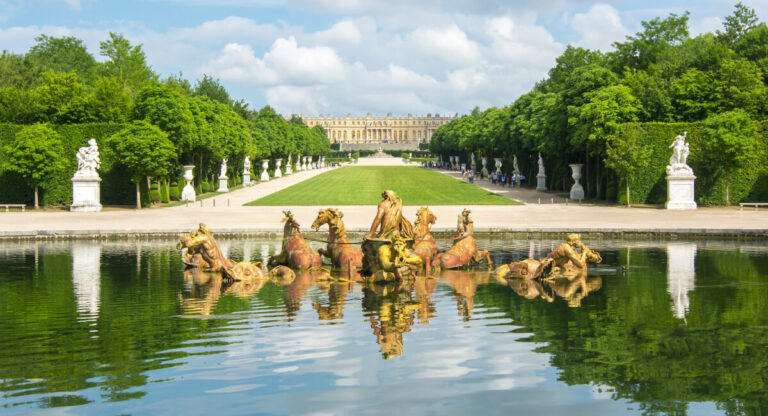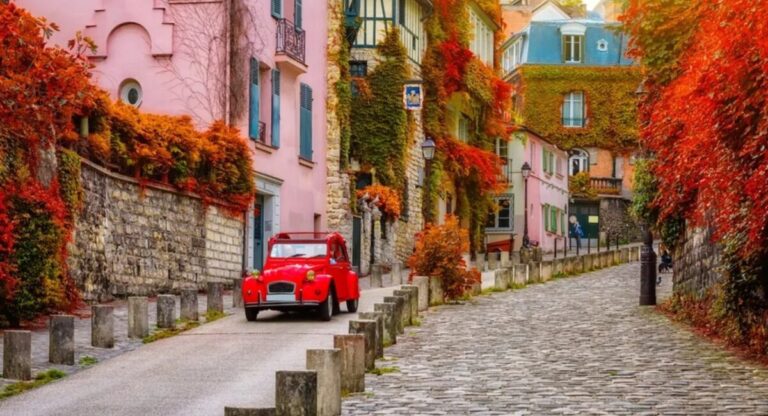
After the French Revolution, Paris created 12 arrondissements (administrative districts), and today there are 20, each with its own Mairie (town hall) and Mayor. Our first home when we moved to Paris in 2020 was in the premier (first) arrondissement, one of the oldest, most historically rich, and exceedingly charming in Paris. (Note: 1st is 1er in French, while 2nd, 3rd, etc. are typically written as 2e, 3e, and so forth.) The abundance of extraordinary food, culture, shopping, architecture, and walking is what makes it my favorite neighborhood in the city. Like Alice’s rabbit hole, this neighborhood transports you back in time to an exhilarating wonderland full of sights, sounds, tastes, and sensations. Here are Frenchly’s recommendations for some of the best places to check out in the 1st arrondissement of Paris.
Things To Do in the 1st Arrondissement of Paris
1. Visit the Louvre and Other Museums
Of course, when visiting Paris’s 1st arrondissement, you must make a pilgrimage to the world’s most visited museum, The Louvre. To avoid the crowds, consider focusing your visit on the Richelieu Wing of the museum, where you’ll find the sumptuously furnished (19th century) Napoléon III Apartments, as well as French painting and sculpture galleries. To skip the interminable line at the main entrance, you can book a private Louvre tour, which allows access through the relatively obscure Richelieu museum entrance.
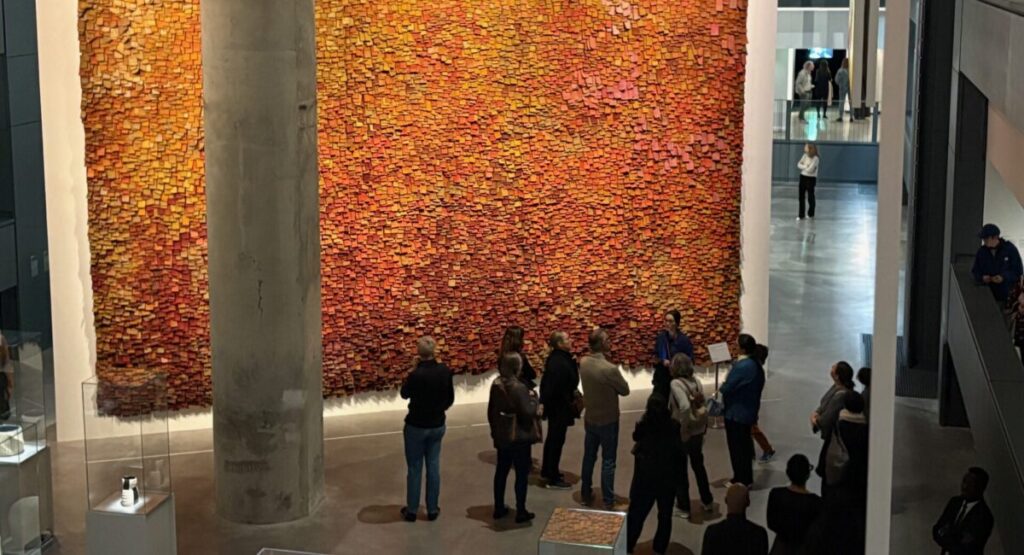
But the Louvre isn’t the only museum worth visiting in the center of Paris. Just steps away you’ll find both the Musée des Arts Décoratifs (Museum of Art and Design) and, the Fondation Cartier, one of the most vibrant contemporary art museums in Paris. Open exhibition spaces seem to hang in space of the five-story interior, allowing views of works on floors above and below you from numerous perspectives. A particularly appealing innovation is the non-linear flow of the exhibits, allowing visitors to access exhibition spaces from multiple points and navigate their own path through the museum and its 500 works on display. The staggering scope of styles and mediums include photography, painting, sculpture, and architectural works.
A 10-minute walk down Rue de Rivoli is the Hôtel de la Marine, originally built to warehouse the furniture of the Louvre under Louis XV. Its palatial rooms are brimming with period pieces, offering a window into the lifestyle of French royalty. The museum also hosts an annual rotating exhibition from the Al Thani collection, one of the world’s largest private collections of historical objects. For a priceless photo op, the museum’s balcony offers a birds-eye view of Place de la Concord (where Louis XVI and Marie Antoinette were guillotined).
On the Île de la Cité, La Conciergerie—a majestic former palace-turned-prison—gained notoriety during the French Revolution’s Reign of Terror, yet today is one of Paris’s most family-friendly and under-appreciated museums. (In other words, a great place to avoid crowds.) As you walk through the castle, pointing a special iPad ahead of you, the medieval world comes to life through computer-generated imagery—from bustling kitchens with food roasting over open hearths, to scenes of grand banquets and royal rituals.
2. Explore the Tuileries and Other Outdoor Delights
Just two blocks from the Louvre, hidden from the busy Paris streets, is the Jardin du Palais-Royal, a 30,677-square-foot oasis designed by Andre LeNotre (who also created the gardens of Versailles). At the center sits a large fountain surrounded by chairs, usually filled with sunbathers, friends chatting, or Parisians taking a lunch break. In the courtyard on the east side of the gardens, you’ll find the Fontaines des Spheres, two fountains with oversized steel orbs hovering above the water. The adjacent Colonnes de Buren—an art installation made up of symmetrical rows of 260 striped columns rising to different heights—has become a perennial selfie hot spot.
Nearby, on either side of Avenue de l’Opéra, the two sumptuous Beaux-Arts–style Fontaines du Théâtre-Français bookend the grand boulevard. Down the adjacent Rue de Richelieu, opposite number 40—where France’s most revered playwright, Molière, once lived and died—stands his namesake fountain, crowned by a 42-foot statue towering above it.
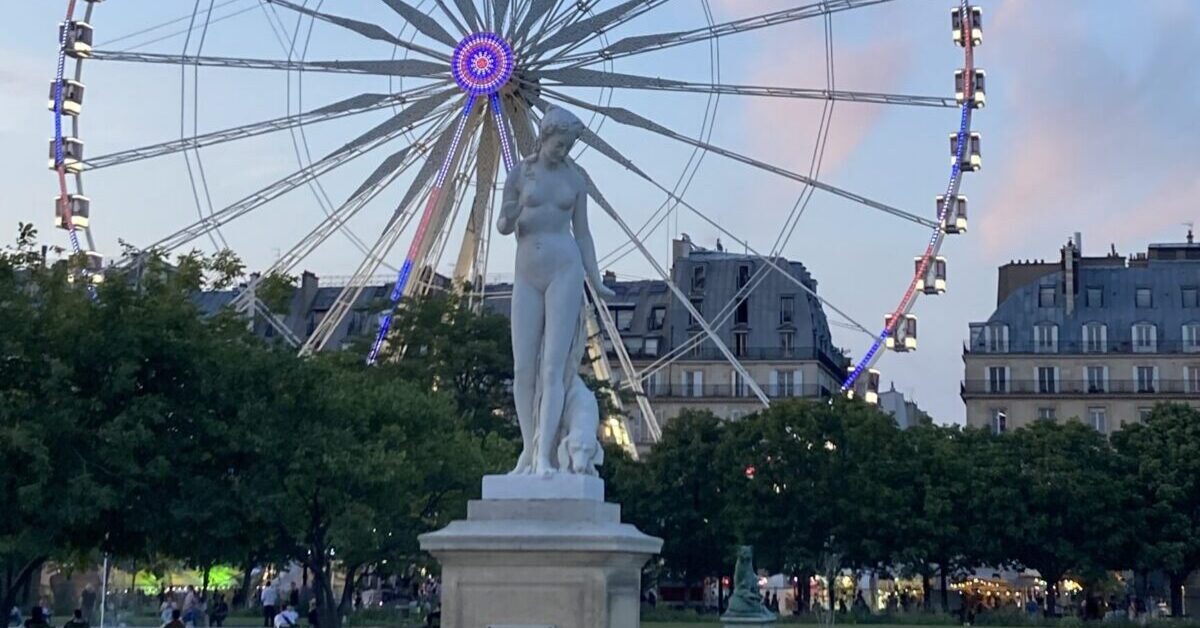
And no visit to the 1st arrondissement is complete without a trip to the Tuileries Garden, the largest and oldest gardens in Paris. Built in 1564, it served as hunting grounds, a royal garden, and for over a century, the King’s private exotic animal zoo. After the revolution, the Tuileries became a public garden, and throughout the 19th century, it was the ultimate place to flâner, hear concerts, and laze about on park benches. It remains one of the loveliest places in Paris to stroll, take a break, or even eat and drink at one of the many stalls throughout the garden. With nearly two hundred statues and sculptural works in the Tuileries Garden, including the sublime nude studies by turn-of-the-century artist Aristide Maillol, you’ll understand why Paris is often referred to as an open-air museum. From late June through August, the garden hosts the Fêtes des Tuileries (Tuileries festival), a funpark with 60 rides, carnival games, and plenty of fast food. (A viable option if you’re traveling with museum-weary kids.)
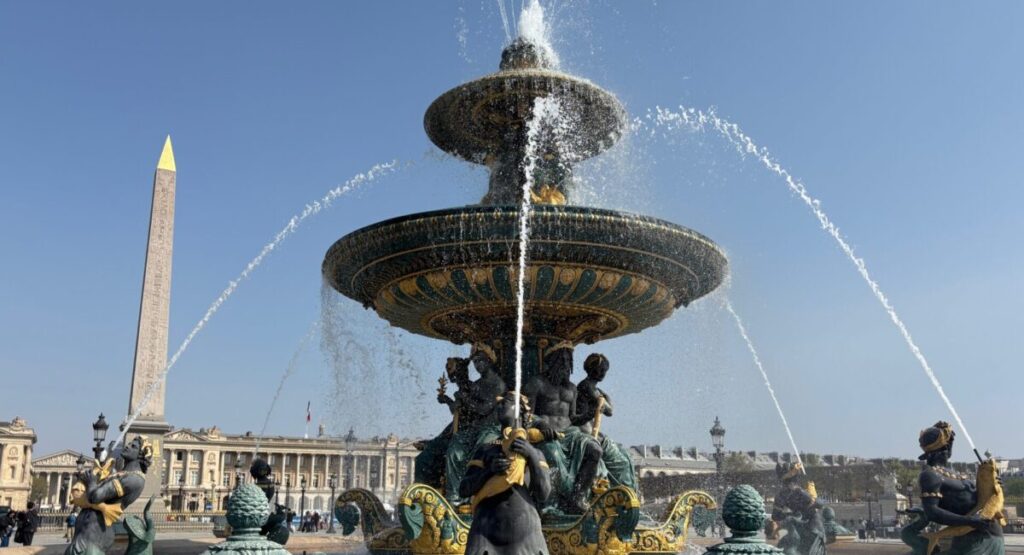
Flanking the Luxor Obelisk at the center of the Place de la Concorde are the Baroque Fontaines de la Concorde, arguably two of the most magnificent fountains in Paris. Commissioned by Louis-Philippe, the last king of France, they are awe-inspiring during the day, but driving past them when they are illuminated after dark is one of the most glorious sights of Paris by night.
3. Go Shopping at La Samaritaine & More
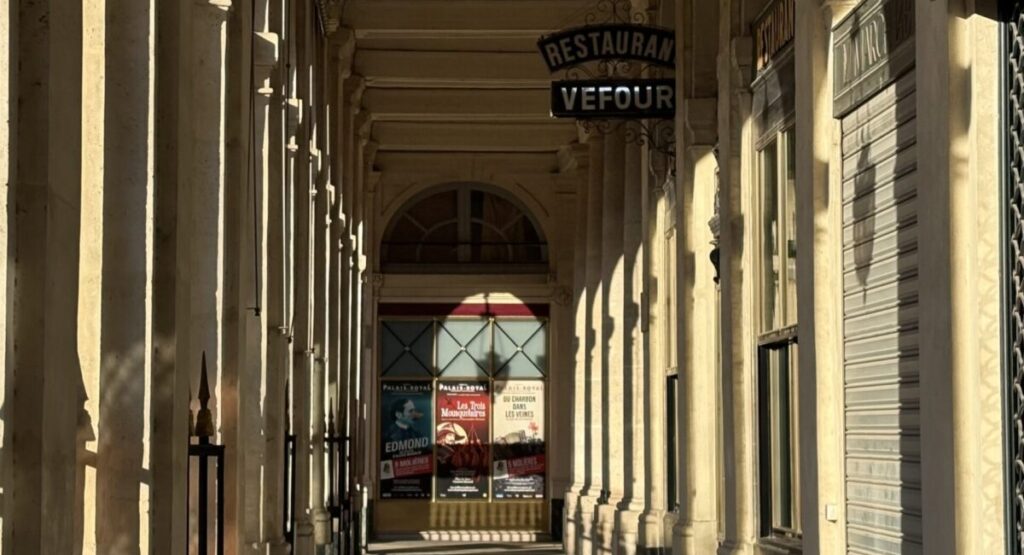
The contrast between the 17th-century covered arcades that frame the Palais-Royal gardens and the profusion of contemporary art galleries, fashionable boutiques, and eclectic shops housed here makes for a delightful contrast… and some of the best window shopping in Paris. Highlights not to miss: Bacqueville, a cabinet of curiosities featuring hundreds of historic, military, and honorific French medals, where collectors, costume designers, and the recently knighted come to shop. If you’re looking for beautiful scarves or a perfect gift to bring home, Épice offers up a myriad of exquisite designs. I always stop to admire the Mondrian-like multi-colored gloves in the window of the elegant glove shop Maison Fabre. For luxury vintage in Paris, Gabrielle Geppert’s shop, with its eye-popping collection of haute couture pieces, is a must.
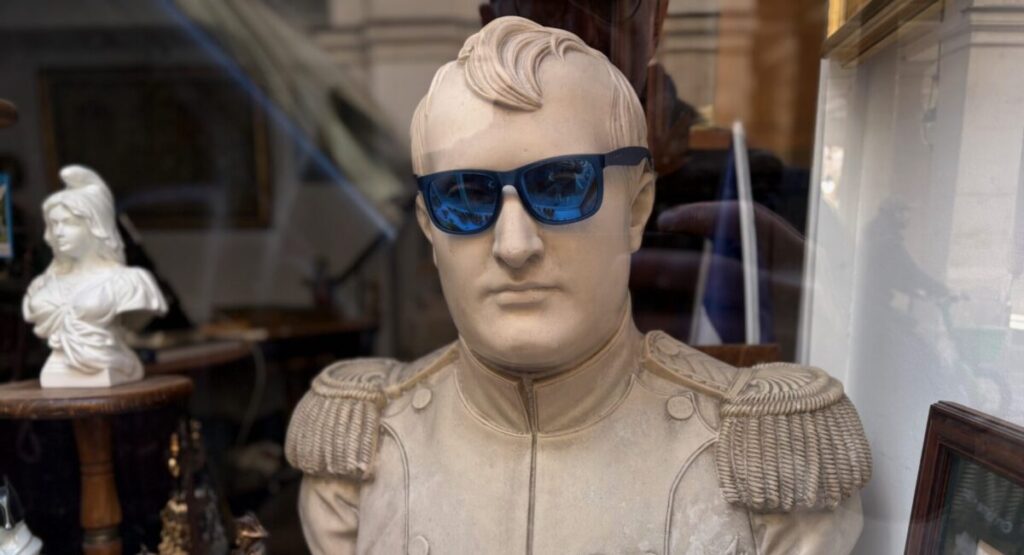
If you exit the west side of the Palais-Royal you’ll find yourself on the Rue du Beaujolais, a two-block-long cobblestone street which predates the French Revolution. Here you’ll find La Boutique Napoleon, featuring books, busts, games, replicas, and every imaginable tribute to France’s most famous emperor.
For some head-spinning time-travel, step off of the Pont Neuf (the oldest bridge in Paris) onto the Right Bank, where the Art Nouveau department store La Samaritaine awaits. Be sure to check out its dramatic wood, iron, and ceramic staircase in the center of the seven-story open atrium.
Halfway across the bridge, down a narrow street, lies Place Dauphine—a tranquil, old-world square where people play pétanque beneath chestnut trees, alongside café terraces and a handful of boutiques. One such is Paire & Fils, which I recommend for high-quality, stylish footwear at surprisingly reasonable prices.
4. Enjoy Great Restaurants, Cafés & People-Watching

Nestled on the edge of the Palais-Royal gardens, where the sound of traffic is replaced by birdsong and children playing, La Crème du Palais Royal is an ideal spot for a light meal or café break on one of the most pleasant outdoor terraces in town. (During spring and summer months, try their exceptional home-made ice cream.) The picture-perfect Parisian café terrace outside Le Nemours, across from the Comédie Française, is another great people-watching post.
If you’re looking for that “special” meal in Paris, a few doors down is Le Grand Véfour, one of the oldest and loveliest restaurants in Paris. Regulars over more than 230 years have included Napolean and Josephine—whose chair still graces the dining room—as well as Victor Hugo, Balzac, Julia Child, Jean Cocteau, and Colette. For a decadent but affordable three-course lunch at €39, consider Le Fumoir, a dark wood-lined classic French restaurant a block from both the Louvre and the Pont Neuf.
On rue de Richelieu is Juvenilles, a small bistro that’s big on quality and taste, which finds itself on the “must” list of many international foodies I know. This part of the 1st arrondissement is also one of the hubs of Asian cuisine in Paris, and the nearby Tosakko Ramen is as good as it gets.
5. Indulge in Some Bean-to-Bar Chocolate
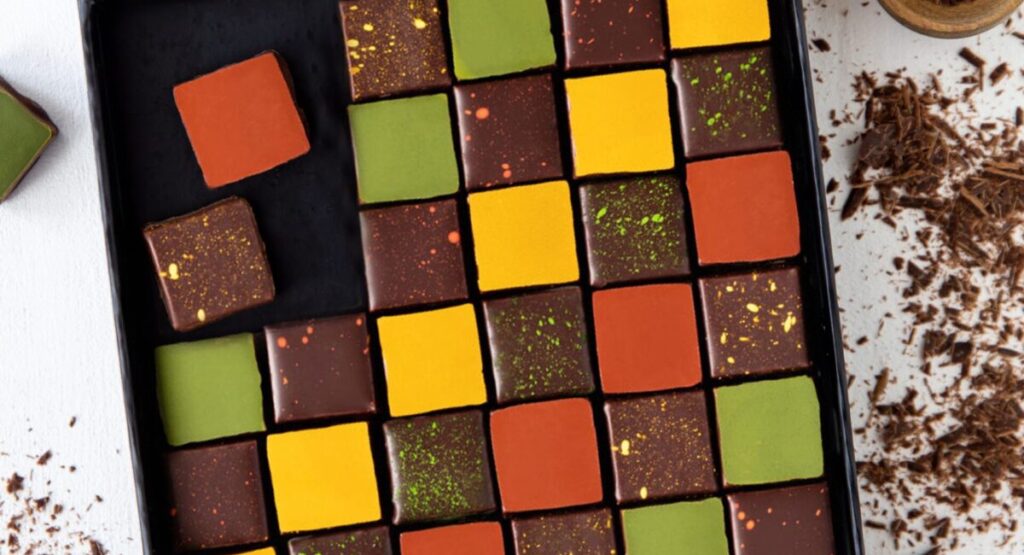
On the rue des Petits Champs some of the best chocolates in Paris are made from bean-to-bar on premise at L’instant Cacao. At this sliver of a shop, you can watch young chocolate maker Marc Chinchole at work in the back while his mom takes care of customers at the tiny counter up front. You can even book a class to make your own custom-initial chocolate bar (for €85 per person).
With a few exceptions, I’d pretty much skip a trip to the 1st arrondissement‘s famed rue de Rivoli, a 30-plus block stretch of covered arcade filled mostly with uninteresting souvenir shops and tourist traps. One of those exceptions is the outpost of Edwart Chocolatier, one of the most talented rising-star chocolate makers in Paris. I particularly like the fact that his chocolates are purposefully thin, which allows you to better savor the brilliant flavor and texture combinations.
6. See a Play at the Palais-Royal
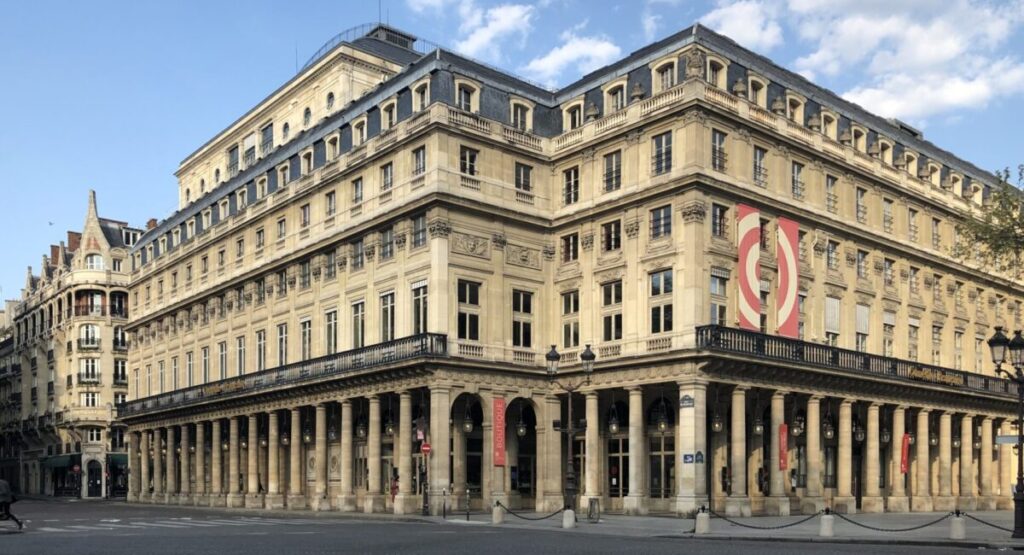
The Palais-Royal complex is home to two of France’s historical theaters. The Grand Salle Richelieu has served as home to the Comédie Française since 1680, making it the oldest continually-active theater company in the world. If you’re a francophone or studying French, watching a classical French play here is one sure way to practice. At the other end of the Palace is the Théâtre du Palais-Royal, where you can see contemporary plays, though many are inspired by history and classic literature, like The Three Musketeers.
While steeped in history, the 1st arrondissement also embraces some strikingly contemporary culture. La Place is a Hip-Hop hub and cultural center which features Hip-hop and dance concerts, recording studios, workshops, and other events.
7. Stroll Along Paris’s Oldest Bridge, the Pont Neuf

In How Paris Became Paris: The Invention of the Modern City, Joan DeJean says that “[the] invention of Paris began with a bridge,” speaking about the Pont Neuf (“New Bridge”), actually the oldest bridge in the city, connecting Île de la Cité with both the Right and Left Banks. When built at the end of the 16th century, it served as one of the first public squares in Paris. As a vibrant gathering place where people of different classes and backgrounds could mingle, shop, flaunt their latest clothes, hear the news, watch street theater, and socialize, De Jean suggests the bridge may have played a significant role in the development of French fashion, theater, the luxury goods industry, and even the Revolution.
8. Learn on the Go with a Walking Tour
What better place to take a French Revolution Walking Tour (€36) than in the 1st arrondissement, where Camille Desmoulins (called the “French Paul Revere”) gave the cry that sparked the French Revolution in the gardens of the Palais Royal? There’s also the Great Women of French History walking tour (€36), which takes you through the 1st arrondissement with stops at Place Dauphine, Palais-Royal, the Tuileries Garden, and Place de la Concorde, as well as a “secret stop” and local bakery visit. For a family-friendly treasure-hunt mystery tour, consider Two Hours to Save Marie-Antoinette, which will have you following clues (while discovering some cool historical spots) to decipher a cryptic letter that is the only chance to help France’s most famous queen break out of La Conciergerie to escape her fate.
Where to Stay in the 1st Arrondissement

The luxury hotel Le Cheval Blanc is in the recently renovated Samaritaine department store. Nestled on the bank of the Seine, the rooftop here boasts one of the best and most breathtaking views of Paris.
For something more artistic, the hip and elegant Drawing Hotel is focused on the theme of creativity and art, which is scattered throughout its five floors. They even have an “art concierge,” perfect for lodging two blocks from the Louvre, on the vibrant Rue de Richelieu. The charming and tastefully decorated Hôtel Thérèse in the heart of the 1st arrondissement is a boutique hotel that combines luxury with exceptional value and warm, attentive service.
Philip Ruskin is an External Lecturer (ESSEC Bus. School), Food Communications Consultant, writer, drummer and regular contributor to Frenchly. He loves to bike around his adopted hometown of Paris. Find him here, on Instagram. All photos by the author, except where indicated.