Paris, the City of Love, Art, and… Swimming? Yes, you read that correctly. The iconic Seine River, known for its romantic cruises and postcard-worthy bridges, is now open to swimmers for the first time in more than a century. Not long ago, this would have seemed impossible. The Seine was admired from afar but strictly off-limits. Its waters ranged in color from olive to gray, its scent in summer was metallic, and most Parisians believed, with good reason, that sewage still emptied directly into it. Heavy rains routinely overwhelmed the city’s old system, causing untreated wastewater to spill into the river. I remember seeing dead animals, even cats, floating just below the banks. This was not a myth. It was part of daily life.
Then, in the summer of 2025, everything changed. After years of political promises, public doubt, and growing climate pressure, the Seine has officially reopened for public swimming. What once seemed like an unattainable dream has become a reality… and a surprisingly stylish one at that.
Here is a closer look, or perhaps a first plunge, into how you can go swimming in the Seine this summer.
Swimming in the Seine Was Banned for 100 Years

The Seine has shaped Parisian life for millennia. Flowing more than 485 miles, or 780 kilometers, the river has meandered through what is now the Paris region for over 14,000 years, since the end of the last Ice Age.
In the 19th century, the Seine was a daily fixture of urban life. People bathed in it, washed their laundry, moved goods, and cooled off during hot summers. Floating bathhouses dotted the riverbanks, and swimming lessons were part of many school programs.
Then the city grew. Paris’s sewer system, built in the same century, combined stormwater and household waste in a single pipeline. During downpours, it frequently overflowed, sending untreated sewage directly into the Seine. The water turned murky, foul-smelling, and hazardous. By the early 20th century, the river had become unsafe.
In 1923, city officials banned swimming in the Seine. For the next hundred years, Parisians walked beside it, painted it, and admired it, but never touched it, fearing that it was dangerous to even wade in.
How the Olympics Made the Seine Swimmable Again

Over the decades, Parisian leaders promised to clean up the Seine. One of the most famous pledges came from Jacques Chirac, then mayor of Paris, who declared in 1988 that he would one day swim in it himself. He never did.
The real shift came when Paris won the bid for the 2024 Summer Olympics. As part of the city’s sustainability initiative, Mayor Anne Hidalgo committed to restoring the river for Olympic events and future public use.
This time, the plan came with serious funding. More than 1.4 billion euros were allocated to revamping Paris’s water infrastructure. The centerpiece of the project was the Austerlitz stormwater basin, a massive underground reservoir capable of storing up to 50 million liters of runoff. Its purpose was to prevent raw sewage from entering the river during storms.
Other improvements followed. Houseboats were outfitted with modern plumbing. Real-time water quality sensors were installed. Trash-collection boats began daily patrols.
Progress was gradual and not without setbacks. During trial events in 2023, rain overwhelmed the new system. Some athletes refused to compete. Others wore nose clips. A few fell ill after their races, though no cases were officially tied to the water.
Still, when the Olympic events began in 2024, they moved forward, occasionally delayed by water testing. Athletes swam past Notre-Dame, fought the currents around Île Saint-Louis, and emerged grinning. The Seine had officially passed its test.
Paris Plages 2025 Lives Up To Its Name
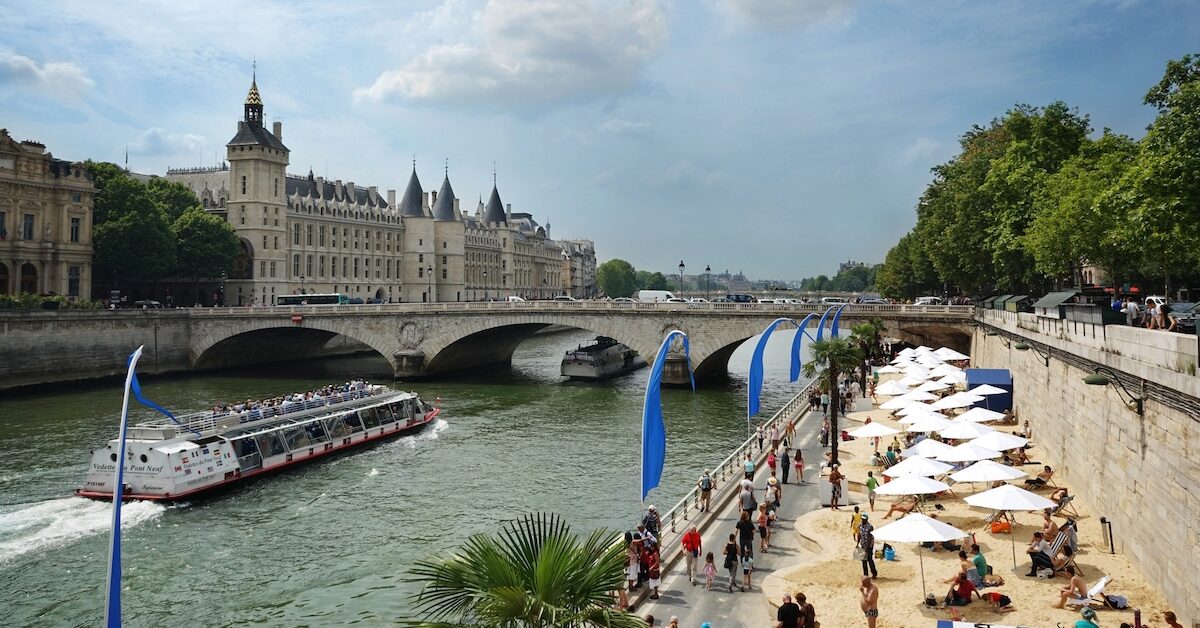
Since 2002, Paris Plages has brought summer flair to the riverbanks, transforming them into urban beaches complete with lounge chairs, sand, pétanque courts, and entertainment. But in 2025, for the first time in a century, Parisians are not just sunbathing by the river, but are actually able to swim in it.
This summer, three public swimming zones opened along the Seine. Excitement was immediate, and so was the demand. With temperatures regularly topping 100 degrees Fahrenheit, and limited access to air-conditioned spaces, Parisians are turning to the river not just for leisure but for relief. In this new climate reality, natural water access has become a public health issue rather than a summer luxury.
Some locals remain cautious. Others see it as a once-in-a-lifetime experience, a new Parisian ritual, or simply the best way to cool off. “Jamais dire jamais,” the French say. Never say never. A few years ago, the idea of diving into the Seine seemed laughable. Now, people are lining up with towels in hand.
Tourists are joining them, eager to say they swam in a river that had long been off-limits. Some do it for the novelty. Others, for the heat. Either way, a quick swim has become a genuine Paris summer tradition.
The swimming sites were carefully selected and are professionally managed. They include:
- Bras Marie (4ᵉ arrondissement), near Île Saint-Louis, with scenic views and a peaceful setting
- Bras de Grenelle (15ᵉ arrondissement), a family-friendly zone with views of the Eiffel Tower
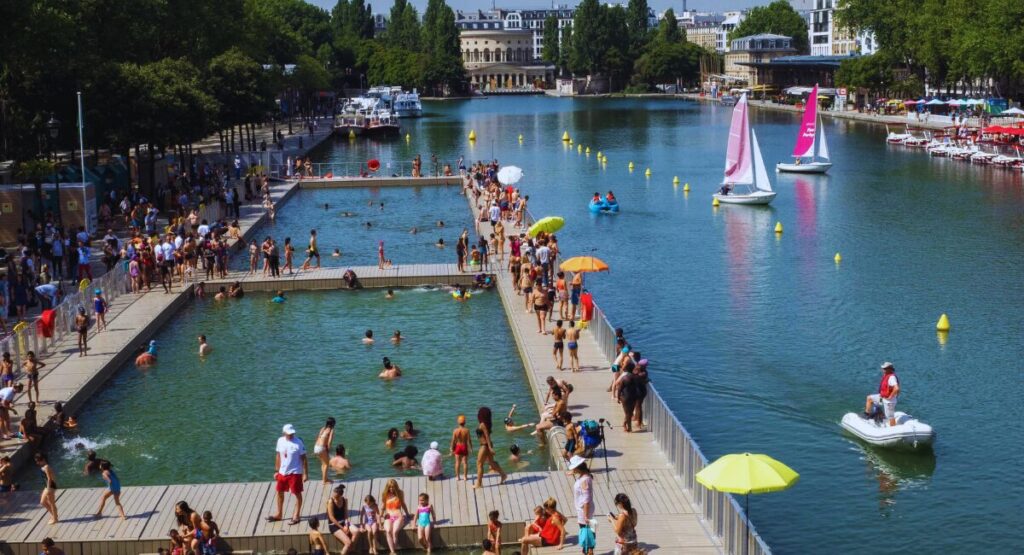
- Quai de Bercy (12ᵉ arrondissement), the largest location, accommodating up to 300 swimmers at once
Each site includes pontoons, changing rooms, lockers, and lifeguard services. Admission is free, and water quality is tested every day. The atmosphere is cheerful, with ice cream vendors, beach chairs, and live music lining the quays.
This year’s Paris Plages also marks 200 years of Franco-Brazilian friendship. The riverbanks are alive with capoeira showcases, samba dance lessons, Brazilian street food, and open-air DJ sets. Film screenings feature both French classics and Brazilian favorites. It’s a cultural celebration, but also a symbol of urban renewal.
What’s Next: The Long-Term Vision for Seine Swimming
These three swimming zones are just the beginning. By 2030, Paris hopes to open up to 23 designated swimming areas along the Seine and nearby canals. Potential future locations include areas near the Eiffel Tower, the Bois de Boulogne, and the Bassin de la Villette.
This initiative is part of a larger effort to reclaim urban rivers for public life. Paris also plans to introduce 300 “cool islands” by 2030, shaded and planted areas meant to lower temperatures and provide rest during future heatwaves.
Other European cities are paying close attention. If Paris can clean up a river once considered too polluted to touch, cities like London, Milan, or Berlin might be inspired to follow. The revival of the Seine may become a model for the future of urban waterways.
A River Reborn and Rediscovered
For older Parisians, swimming in the Seine reopens a long-closed chapter. For younger generations, it feels like a new beginning. What was once a symbol of pollution and decline is now a point of pride and joy. Of course, challenges remain. A single storm can temporarily lower water quality. Ongoing education is needed to help people understand where and when it is safe to swim. Long-term maintenance will also require steady investment and oversight.
But today, the city is celebrating. The river that once divided Paris is now a place where people come together. It is no longer just for sightseeing boats and photographs. It is for families, friends, and summer afternoons.
So next time you walk along the Seine, sweating through a Parisian heatwave, and see someone diving in, ask yourself: would you?
Mariam, originally from Paris and now calls the Bay Area home. A seasoned traveler and writer, she’s always on the hunt for exciting new restaurants, trendy bars, and unique activities to try. By day, she works in tech in Silicon Valley and serves as a board member of the French Cultural Center of Silicon Valley. Mariam has a passion for writing about travel, food, people, and offbeat topics. If you want to share your tips and events about Paris and France, feel free to send them her way at [email protected].