It might come as a surprise that in Paris, the city of couture and the birthplace of haute fashion, a fast-fashion giant like SHEIN has been granted a permanent home. Yet on November 5, 2025, the Chinese e-commerce powerhouse opened its first-ever physical flagship on the sixth floor of BHV Marais, directly across from the Hôtel de Ville, at the heart of the capital.
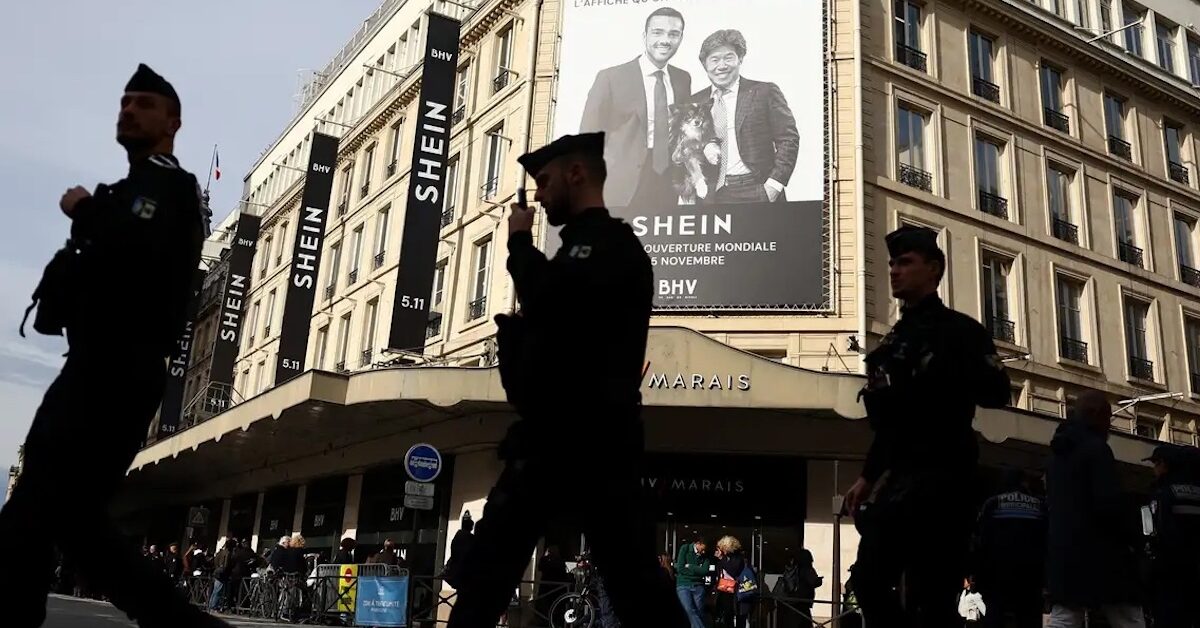
That morning, the department store’s façade was wrapped in stark black-and-white banners announcing the opening. Shoppers lined up early, protesters arrived with placards condemning the brand’s environmental footprint, and police stood guard as Paris woke up to the surreal sight of SHEIN’s logo towering above streets once ruled by Dior, Chanel, and Saint Laurent. Inside, bargain hunters browsed racks of €25 jeans and €40 faux-leather jackets, scanning QR codes that linked directly to the brand’s online platform.
France vs. Fast Fashion
For SHEIN, this was a strategic power move: launching a global fast-fashion empire in the world’s most prestigious fashion capital. For BHV’s parent company, Société des Grands Magasins (SGM), it was a bet on foot traffic and a new generation of shoppers. “We are told every day that physical stores are dying,” said SGM Chairman Frédéric Merlin. “Without innovating, the future honestly doesn’t look bright.”
The decision, however, sparked outrage across France. Lawmakers and activists argue that SHEIN’s low-cost, high-volume business model undermines sustainability efforts and threatens local artisans. Just days before the store’s opening, French regulators announced they were launching proceedings to suspend SHEIN after discovering illegal and sexualized products, including childlike sex dolls, being sold on its platform. The Finance Ministry confirmed the move “on the Prime Minister’s instructions,” saying the suspension would remain in place until SHEIN could prove compliance with French laws.

According to Reuters, the company responded by voluntarily suspending its marketplace in France while it reviews listings from third-party sellers. Paris Mayor Anne Hidalgo criticized the timing of the store launch, calling it “a provocation in the heart of French fashion.”
But inside the 1,000-square-meter space, SHEIN doesn’t hide what it is. The décor is minimal and functional, with sections for casualwear, sportswear, and accessories under sub-brands like Aralina, MOTF, and Dazy. It isn’t luxury, but it’s styled to feel curated—fast fashion polished just enough for a Paris address.
The BHV location is only the beginning. Le Monde reports that SHEIN plans to expand across France with new stores in Dijon, Reims, and Grenoble. Whether this model survives the backlash remains to be seen, but one thing is certain: this isn’t just about clothes. In a city that defines style, SHEIN’s arrival feels like a mirror held up to fashion’s ongoing identity crisis.
That crisis was already visible during Paris Fashion Week in October, when major houses, including Alexander McQueen, Chloé, Balmain, and even Hermès, announced creative shakeups. The carousel of resignations and rebrands has left the industry spinning between heritage and hype, unsure whether to preserve its soul or chase the algorithm.
Meanwhile, SHEIN is facing France’s tightening grip on fast fashion. In June 2025, the French Senate passed a sweeping bill targeting ultra-fast-fashion platforms. The law bans influencer-led advertising for brands like SHEIN, imposes eco-taxes on low-cost garments, and introduces heavy fines for companies that fail to meet sustainability standards. The brand’s Paris debut, then, is less a triumph than a test case for how far France is willing to let commerce override conscience.
And yet, there’s a quieter tension underneath all this outrage. It has become nearly impossible to find a quality T-shirt under €50 in France. As conglomerates like LVMH and Kering buy up smaller labels and push prices higher, accessibility has all but disappeared from the French fashion landscape. Even once-reasonably priced brands like Polène are heading toward cult luxury status. Yes, the French adore heritage and craftsmanship, but those ideals are quickly becoming unaffordable.
Paris has always been the stage for revolutions—artistic, cultural, and commercial. The question isn’t whether SHEIN belongs here, but what its presence reveals about fashion itself: a world caught between exclusivity and mass consumption, beauty and exploitation, creativity and convenience.
Maybe it’s time to shop vintage instead. Paris, after all, has no shortage of secondhand stores—and they might just be the only fashion that still feels truly timeless.
Angelika Pokovba is a writer and longtime Francophile originally from NYC, now based in Mexico. She’s into food, wine, skincare, and all things French—especially summers in the South and pharmacy finds she stocks up on way too early.