
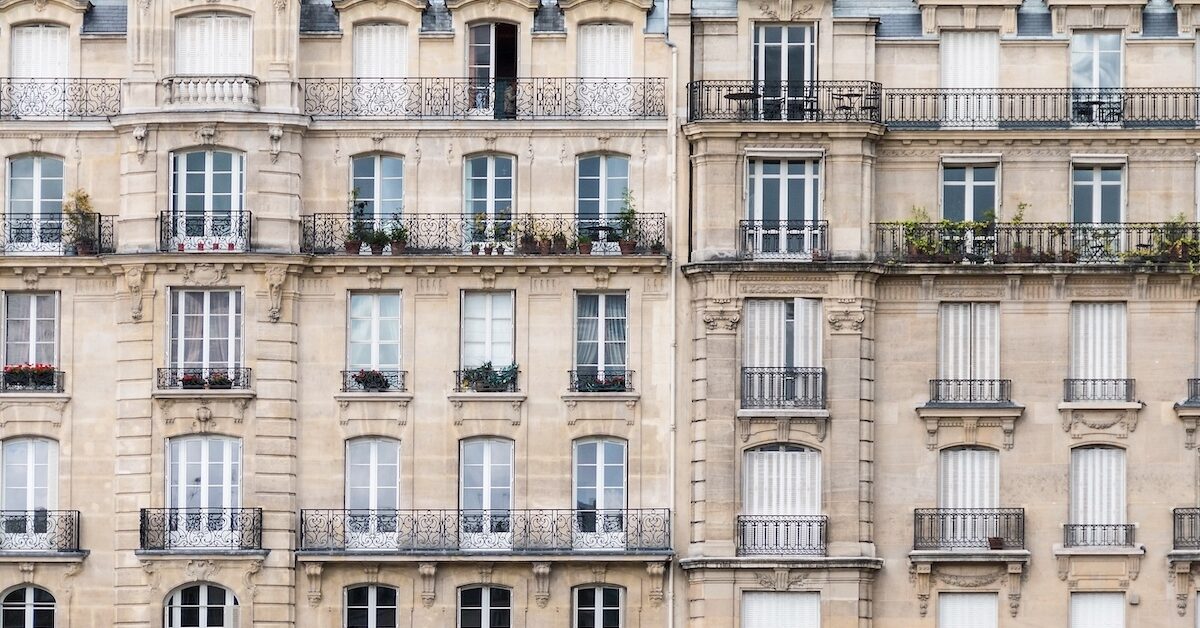
You think you understand Paris because you have mastered the métro and can pronounce arrondissement. But do you know why the second floor used to be the most prestigious address in the building, or why getting on the wrong side of the gardienne can quietly complicate your life? Look past the façade, and you will find a layered ecosystem shaped by architecture, tenure, and etiquette.
Inside Parisian residential buildings, an unspoken hierarchy is at work. It governs everything from property values to neighborly alliances, from who speaks first at the annual meeting to who apologizes when the elevator breaks. For Americans accustomed to detached houses and private spaces, the social choreography of French apartment life can feel intimate, and occasionally unforgiving.
The Floor Factor: A Vertical Class System

Most visitors admire the creamstone harmony imposed on Paris in the 19th century by Georges-Eugène Haussmann, who rebuilt the city with disciplined symmetry. These buildings, which were capped at five or six floors, were designed vertically as much as horizontally. Historically, the most prestigious apartments were on the first floor, or le bel étage. In French floor numbering, this refers to the first elevated floor above the ground level, or what Americans would call the second floor: high enough to avoid street noise and dust, but low enough to easily ascend to before elevators were installed, offering the ideal compromise between accessibility and status. The grandest apartments were designed here, often with the highest ceilings, full-length balconies, and the most elaborate decorative moldings.
Today, the hierarchy has shifted somewhat. Apartments on the highest floors, especially those with terraces and open views over the city’s zinc rooftops, can now command the highest prices per square meter. Real estate listings in central arrondissements often show top-floor apartments selling for up to 25 percent more than lower-floor units, particularly when elevators and outdoor spaces are involved. Even so, the historic prestige of the bel étage remains visible in the architecture itself.
There is also the matter of the chambres de bonne, the former maid’s quarters tucked beneath the eaves. In the 19th century, domestic staff occupied these small rooms; now they are rented to students or consolidated into Instagram-ready lofts, defined by their inconvenient but ever-charming sloped ceilings and picture-perfect views.
The Authority of the Gardienne

In theory, the gardienne, or building manager, is responsible for receiving packages and maintaining the cleanliness of the common areas. In practice, she is the building’s memory, moral compass, and informal regulator. In older buildings, especially those dating to the Haussmannian era, the gardienne’s station, known as la loge, is positioned at the entrance and was designed for surveillance. From this small glass-fronted room, she observes comings and goings with near omniscience. She knows who is renting short-term without declaring it, notices the new boyfriend who suddenly appears every weekend, and remembers who consistently fails to greet her in the morning.
Residents will tell you that a good relationship with the gardienne smooths daily life in ways no lease can guarantee. Building that relationship, however, follows its own etiquette. A simple “bonjour Madame” when passing the loge is not an optional courtesy, but basic protocol. Residents who greet the gardienne regularly, inform her in advance about expected deliveries, or warn her before renovation work begins are generally remembered favorably. Small gestures also matter: introducing yourself when you first move in, thanking her when she signs for packages, and leaving a holiday gift for her and her family are all ways to keep you on her good side.
Missteps, however, tend to be equally memorable. Ringing the loge repeatedly for minor requests, failing to acknowledge her presence when you enter the building, or expecting her to manage constant deliveries without notice can quickly strain your relationship with your gardienne. While a work contract officially defines the building manager’s role, the day-to-day reality operates on a more informal scale of goodwill. Residents who understand this dynamic often find that practical problems resolve themselves more smoothly. A package may be signed for and carefully set aside until you retrieve it, rather than being refused. A plumber can be allowed to wait inside the lobby on a rainy afternoon rather than being instructed to return later because “the resident did not inform us.” The role has diminished in newer constructions, where digital keypads and parcel lockers have replaced the loge. But in older copropriétés, the gardienne remains a quiet power center, especially in buildings where many residents have lived in the same apartment for decades.
The Politics of Copropriété

If the gardienne is the building’s police, the copropriété is its parliament. Every owner in a French apartment building belongs to the copropriété, which collectively manages the building’s common areas and major decisions. Annual general meetings can be uneventful or explosive. For Americans used to homeowner associations or condo boards, the concept is not foreign, but the intensity can be quite surprising.
The annual general meeting of the copropriété reveals a procedural hierarchy. A long-standing resident may carry more persuasive force than a recent buyer who paid a record price per square meter. Length of residence confers a kind of embedded legitimacy, as it signifies investment in past repairs, past disputes, and past compromises. Imagine a proposal to authorize exterior air-conditioning units for top-floor apartments that overheat in summer. Younger owners, many of whom work from home, argue that climate realities and modern expectations require adaptation. A retired couple on the bel étage objects that the units would scar the Haussmann façade and diminish the building’s patrimonial character. Behind the technical language lies a deeper divide. Some residents prioritize comfort and property value; others defend continuity and aesthetic coherence. The vote is not merely about machinery, but about competing visions of what the building is meant to be, and those who have attended meetings for 20 years speak with procedural fluency and personal alliances already in place. They know which neighbor is persuadable and which proxy votes they can count on.
When Something Breaks

The realities of building maintenance often reveal how this internal system actually functions. When an elevator stops working or water begins leaking through a ceiling, the chain of responsibility rarely runs directly from tenant to technician. In most Parisian buildings, the first step is notifying either the gardienne or the syndic, the property management company responsible for administering the copropriété. The syndic coordinates repairs for shared infrastructure such as elevators, pipes, façades, and stairwells. Individual apartment issues typically fall to the owner or landlord, but determining where the boundary lies can take time.
Residents accustomed to faster service in the United States are often surprised by the pace. Repairs may require multiple approvals, visits from several contractors, and then estimates and formal votes if the work affects the building structure. Following up politely but persistently is often necessary before any of the actual work begins, which means it could be weeks before a leak is fixed, and months before a window is replaced. Some Parisians also rely on the city’s municipal reporting system, known as DansMaRue, which allows residents to flag issues affecting public spaces. However, it does not resolve internal building disputes, which are almost always lengthy and intimidating.
In practice, the process is as social as it is administrative. A neighbor who has lived in the building for decades may already know the electrician who services the elevator, or the plumber who understands the building’s aging pipes. As in many aspects of Parisian building life, solutions often emerge through networks of familiarity rather than formal procedure alone.
Etiquette and Proximity

The substance of Parisian building life lies less in design than in the etiquette that proximity demands. These buildings were constructed around shared staircases, thin interior walls, and inward-facing courtyards, creating a density in which lives overlap acoustically and visually. In such conditions, small gestures take on immense importance: You hold the door open while acknowledging the person behind you. You greet neighbors with a formal “bonjour,” even if you have never spoken before. Silence in the stairwell is expected, and quiet hours are not suggestions, but accommodations to a collective reality.
These unwritten rules extend into everyday routines. Music played late at night will travel through the plumbing and floors. A phone call in the courtyard echoes upward into half a dozen kitchens. Even the simple act of leaving a stroller or bicycle in the hallway can quietly irritate neighbors who rely on that narrow passageway several times a day. In buildings where residents share the same staircase for years, these small frictions accumulate and are remembered by all. In the United States, the home is typically imagined as a private domain. In Paris, an apartment exists as a shared organism. You may never enter your neighbor’s home, yet you will come to recognize the cadence of their footsteps, the timing of their showers, and notice when their usual morning coffee ritual changes. From the street, Paris appears uniform. Peek inside and you discover a layered social world that operates according to a quieter system of observation, accommodation, and memory. Living here means gradually learning that the real architecture of a Parisian building is not only its staircases and courtyards, but the habits that allow dozens of lives to unfold here side by side.
Nicole Maria is an American writer and journalist based in Paris. Her work explores fashion, culture, and everyday life in the city. When she’s not writing, she’s usually baking something new or wandering through neighborhood markets.


