
Back in March of 2009, an audio piece of mine aired on NPR and went viral. The piece was about the Great Recession and how my husband, our new baby, and I were going to have to leave Los Angeles, where we’d lived just one year, and move home to Maine to stay with my mother. At that time, the notion of anything going viral was still relatively new. (Today, in 2024, I can’t really imagine an audio piece from NPR going viral at all. Can you?) So rare was it back then, that nothing prepared me for that March morning when, just after the piece aired on the East Coast, I woke up to a deluge of calls, emails, and Facebook messages. People had found me. Strangers. Mostly, they were kind. But there were those who weren’t. Dan and I felt exposed—and, worse, like we had somehow put our new baby at risk.
A few good things came out of it: I created a very popular 4-part series for NPR that used my family as an “every American” story of the Recession. And, before I was even back East, I had an agent and then a book deal to write my story. The book became Made for You and Me in which I wrote about the promise of America, and what it feels like to lose hope for that promise.
Over time, my husband and I developed a deep discomfort with the idea of our kids being used in any way to sell or promote our work. We thrashed around not knowing if I should name them in my books, he should use them in photo shoots, etc. After some weird moments of naming one son Matthew (that’s not his name) in a book, and other times using just initials, we decided we could firmly choose that they should never be on social media. We became more and more strict about limiting the use of their images at their school or in camps or programs that would use their faces to sell, well, anything. As we battened down the hatches, however, social media and the joined-at-the-hip cell phones we all carry were starting to change all of our lives. The question of who we are allowed to expose to the public other than ourselves is something we’ve all –as cultures and societies and parents–had to reevaluate over and over.
Review: The Disappearance of Kimmy Diore
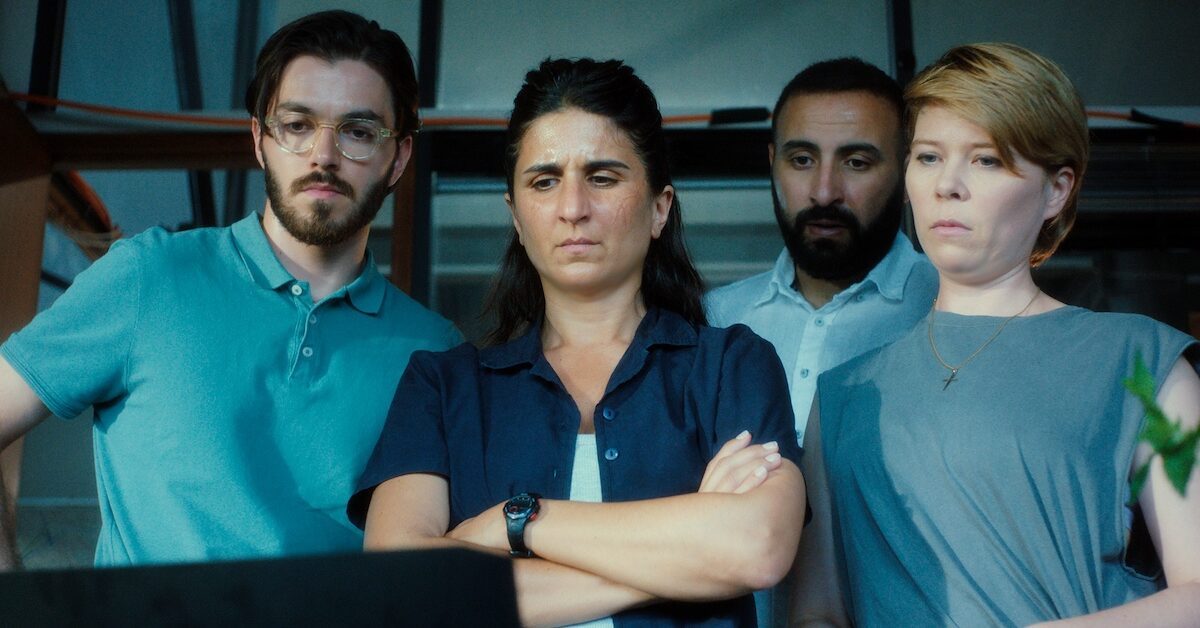
I found myself thinking about my uncomfortable and bumpy journey as I watched a new French series on Hulu called The Disappearance of Kimmy Diore, based on the 2023 novel, Kids Run the Show, by Delphine de Vigan. The novel, and the series it’s based on, focuses on the lives of two women whose stories intersect: Mélanie Diore is a mother who becomes a YouTube star by using her six-year-old daughter Kimmy as her product, until the girl disappears. Sara Roussel is the police officer who investigates Kimmy’s disappearance. The mother/daughter YouTube series is called “Happy Récré” and was begun by Kimmy’s family during the ennui of lockdown in 2020.
Last week, I reviewed the brilliant new French series Culte, about the rise of reality TV in the early aughts. One of things that occurred to me as I watched that series was that reality TV was just the start of what has become social media. Both are, it turns out, at their most basic, the complete disintegration of the 4th wall in media. Today there are no more barriers to seeing inside everyone’s life, there is no division between home, work, kids, adults. And yet, we are all our own reality TV producers: it all can be curated, right down to the last cookie crumb and eyelash. I was thinking as I watched this new show, The Disappearance of Kimmy Diore, that it’s almost like the refrain to Culte: If you thought that was bad, look where we are now, 24 years later.
Set in a park of high rise luxury apartments which appear to be outside of Paris, the series focuses on the morality of using children to help build a YouTube empire, while the parents profit from cash and corporate gifts, corroding and destroying themselves and their relationships in the process.
With incredibly thoughtful and memorable performances by Géraldine Nakache and Panayotis Pacot, both playing les flics, or cops, this new series hurdles along with propulsive drama, as Sara tries to solve the mystery of Kimmy’s disappearance. Somehow, despite the fast pace of the series, it takes its time to delve into larger questions: the culpability of corporations which advertise on child-star YouTube channels, the dangerous side effects of success, the ways in which even those trying to uphold the law can become twisted into the story of those who are breaking the law. The show lays out the ways in which children have become pawns in a culture of relentless consumerism, thanks to the avarice of the adults around them.
The Disappearance of Kimmy Diore also takes its time to depict two complicated angles of mothering in the world we live in today. One extreme is Mélanie, who mortgages her daughter’s happiness for her own immediate fame. The other is the mother of a boy whom Kimmy used to play with; this mother believes that the only safe place is as far away from the Internet as one can get, completely off the grid.
The true moral voice condemning this contemporary world comes to us from Sara’s father, played by Jaques Weber, whom Sara initially dismisses as a washed up old radical. When she asks him what he thinks of the search for Kimmy Diore, he says, “If it were me, I’d arrest all the shareholders of all those tech companies.” Sara responds, “Well good thing this case isn’t yours.” He says, “We’re all guilty, Sara. We all let it happen. We’re monetizing the whole world.” And in that way, just as Culte explored the culpability of viewers like us in the reality TV sphere, Kimmy Diore makes the viewer like us feel complicit in the abduction of an innocent six-year-old girl.
At the beginning of Tolstoy’s Anna Karenina, he writes: “All happy families are alike; each unhappy family is unhappy in its own way.” With the rise of social media, it often appears as though no family is unhappy anymore. On the contrary, if you scroll through on your phone, everything is just “fantastique,” as Kimmy is forced to say about her so-called life in “Happy Récré.”
But in fact, these living-online families have put so many filters on their cameras to present as happy—to look younger, fancier, richer, cooler, thinner—that they may have become anything but happy. There are so many problems, it’s impossible to enumerate them all here, as social media has become larger than our lives. But studies (and even our own U.S. Surgeon General) agree that when children are forced to fit into the image of their parents’ perfect-family Insta accounts, they can become deeply unhappy. Some of them never forgive their parents… or worse, according to a recent article in The New Yorker, the line from social media to teen suicide is just a bit of charcoal. Social media and its dangers aren’t just a problem for the influencers of the world, honestly, but for all parents navigating the landmines of social media. A life lived under the public eye may be as dangerous as witnessing that same life from the comfort of online anonymity.
Since my own encounter with virality, I have known for years that I have two absolutely beautiful and charming sons who could help sell the “brand” of my books and my stance in the world as a homespun intellectual from Maine who travels regularly to France. As much as it might have helped me gain followers and, perhaps, made me money, I have always been haunted by the question: But at what cost?
Caitlin Shetterly is Frenchly’s Editor-at-Large. She is the author of the novel, Pete and Alice in Maine (published by Harper Books in 2023).


