

France is preparing to take one of its most ambitious steps yet to regulate children’s digital lives. The French government is planning a law that would ban access to social media platforms for anyone under the age of 15, a move that places the country among a small but growing group of nations willing to directly challenge the power of Big Tech in the name of child protection. Announced at the very end of 2025 and set to begin committee debate on January 13, 2026, the proposal has already sparked intense debate in France and abroad, particularly because of its implications for Europe-wide digital regulation and for platforms like Instagram, Snapchat, and TikTok that are deeply embedded in teenagers’ daily lives.
A Long-Running Concern About Children and Screens
Concerns about children’s exposure to screens and social media are not new in France. For years, policymakers, educators, and health professionals have warned about the impact of algorithm-driven platforms on young users. French authorities frequently cite issues such as exposure to inappropriate content, cyberbullying, addictive design features, and sleep disruption among adolescents. These worries have been reinforced by international studies, including OECD research suggesting that heavy smartphone use is associated with significant learning delays among students.

Unlike in the United States, where debates around social media regulation often center on free speech and parental responsibility, France approaches the issue through a more interventionist public policy lens. The state has traditionally played a strong role in regulating education, media, and public health, which helps explain why lawmakers are willing to consider a blanket age-based restriction rather than relying solely on parental controls or voluntary platform measures.
What the Proposed Law Actually Says
The proposed legislation is strikingly short, consisting of just two articles. The first would make it illegal for social media platforms to provide their services to children under the age of 15. This obligation would fall directly on the platforms themselves, not on parents or schools. Enforcement would be overseen by Arcom, France’s audiovisual and digital communications regulator, which already monitors television, radio, and online platforms.
The French government is not merely recommending age limits or encouraging better moderation. It is proposing a legal ban that would require platforms to implement effective age verification systems. If passed, the law would apply nationwide starting in September 2026, aligning with the beginning of the French school year.
The second article of the bill focuses on schools, extending an existing ban on mobile phones into high schools. Phones are already prohibited in French elementary and middle schools, although enforcement varies. The government sees this measure as complementary to the social media ban, reinforcing the idea that schools should remain spaces largely free from digital distractions.
Why This Time Might Be Different
France has tried something similar before. In 2023, lawmakers passed a law establishing a “digital age of consent” at 15, theoretically requiring parental authorization for younger teens to use social media. In practice, the measure was never fully enforced.
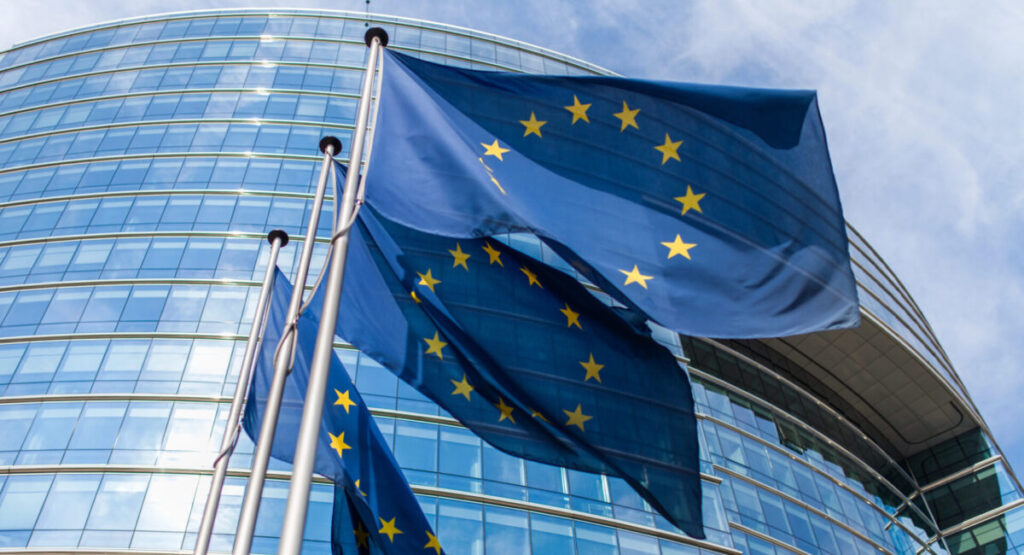
European authorities argued that the law conflicted with the EU’s Digital Services Act because online platforms are meant to be regulated under a single, EU-wide framework. The DSA sets common rules for age protection and platform responsibilities across all member states, and France’s attempt to impose its own national age ban was seen as creating a separate set of obligations. In practice, this would have forced platforms to apply different rules in France than elsewhere in Europe, undermining the EU’s goal of harmonized digital regulation.
This time, the government insists the new proposal is compatible with European law. Officials argue that the Digital Services Act allows member states to adopt stronger child protection measures, as long as they do not undermine the broader framework of the single market. The French government has also carefully framed the bill as targeting platform behavior rather than individual users, a legal nuance designed to withstand scrutiny in Brussels.
President Macron’s Political Push
President Emmanuel Macron has personally championed the initiative, presenting it as one of the final major reforms of his presidency. With limited political capital left and no possibility of running for another term, Macron appears eager to leave a legacy on child protection and digital regulation. In his New Year’s address, he promised to protect children and teenagers from the harms of social media and excessive screen time, signaling that the issue is as much symbolic as it is legislative.
The timeline is ambitious. The bill is expected to move quickly through parliamentary committees, with the government hoping for adoption in time for implementation by the 2026 school year. That speed reflects both political urgency and a desire to act before the issue becomes further entangled in European or electoral complications.
Support, Criticism, and Open Questions
Reactions in France have been mixed. Many parent associations and child advocacy groups support the principle of stronger regulation but argue that banning access alone is not enough. They want the government to go further by holding platforms accountable for their algorithms and business models. Teachers’ unions, meanwhile, have expressed skepticism about enforcement, particularly in schools already struggling with staffing and resources.
Critics also question whether an outright ban is realistic in a world where teenagers are highly adept at bypassing age restrictions. Others worry about unintended consequences, such as pushing young users toward less regulated corners of the internet.

Still, France is not acting in isolation. Australia recently adopted a similar ban for under-16s, and several European countries are exploring comparable measures. For American readers, France’s approach offers a glimpse into a regulatory philosophy that prioritizes collective protection over individual choice, even in the digital sphere.
Whether the law will succeed in reshaping teenagers’ online habits remains uncertain. What is clear, however, is that France is willing to test the limits of how far a democratic state can go in regulating social media, and in doing so, it is once again positioning itself at the forefront of global debates over children, technology, and the role of government.
Valentine Marchou is a French journalist with a keen eye for culture, lifestyle, and society. After honing her skills in several French newsrooms, she now aims to tell stories that bridge French and English-speaking worlds through art, food, and everyday life.


