
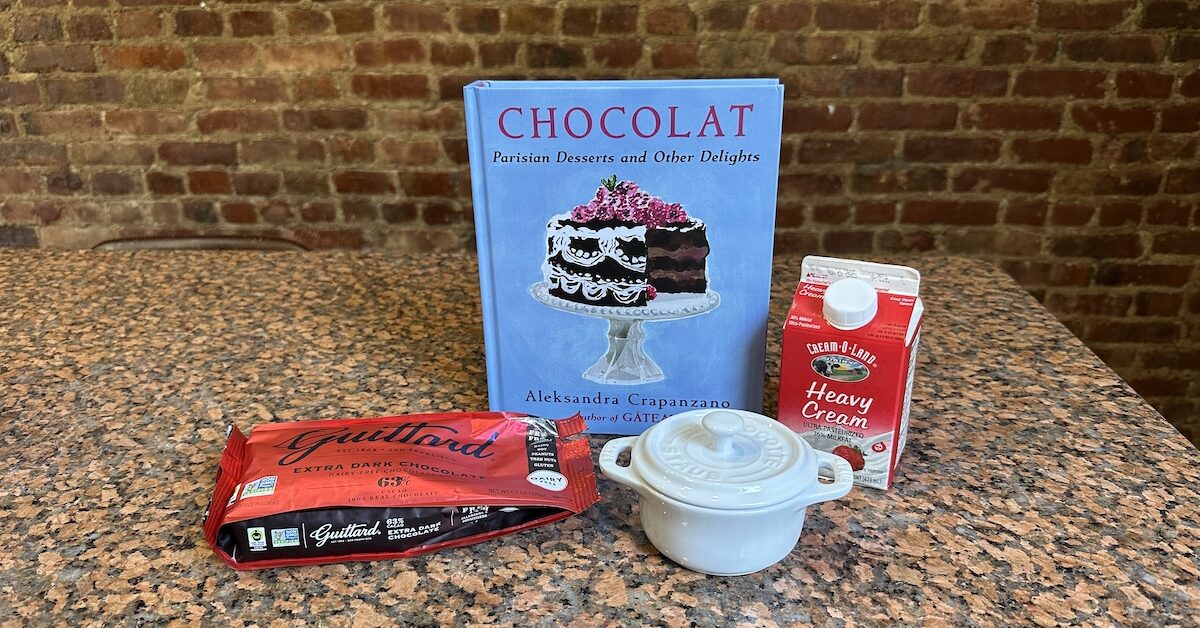
“The thing about chocolate is, it’s like, what else do you need? You need water, and you need some flour and some eggs, and that’s it. Chocolate’s such an easy thing to work with that way,” Aleksandra Crapanzano says about working with the star ingredient of her new cookbook, Chocolat: Parisian Desserts and Other Delights. The follow-up to her 2022 book, Gâteau, Chocolat is a guide to French desserts that sidesteps the pretentiousness of posh pâtisserie windows in favor of an honest, affectionate exploration of the French love affair with chocolate.
The introduction brings readers from the French monarchy’s obsession with the stuff through to Alain Ducasse’s bean-to-bar revolution in the 2010s. But the recipes themselves are built for the humble homecook, the French maman whipping together a sweet treat in ten minutes at the end of a long day.
Crapanzano spent much of her childhood in Paris, thanks to her journalist mother and professor father, and the city became a second home for her, the place where she would return for summers throughout high school and college. Being in Paris meant receiving, from a young age, a culinary education unlike the kind developed in sterile American supermarkets. In addition to cheese and fresh produce, she also began a lifelong obsession with chocolate.

French vs. American Chocolate
“One thing about France is that chocolate is really part of everyday life,” Crapanzano tells me. “And I think that education was, first of all, away from milk chocolate and candy towards really stunning dark chocolate. The idea, too, that there’s more pleasure to be had in having a small bite of something really good, and that has had care put into making it, and leads you to consume it with care.”
What began, as a kid, with easy recipes for yogurt cakes, marble cakes, chocolate crêpes, and madeleines, evolved into a thorough knowledge of French baked goods. Into adulthood, she discovered that the French fondness for chocolate didn’t go away—it became incorporated into homecooking, with back pocket recipes making dessert an accessible luxury that could be found in any French home. This kind of preference for simple, classic recipes remains a foundation of French cooking, even in the face of haute cuisine and viral dessert trends, according to Crapanzano. “Once I got past the incredible windows of pâtisseries and incredible chocolate confections and was invited into people’s houses and homes and saw what they were cooking, I realized that the chocolate recipes that they were making were not as fancy, but were every bit as delicious.”
This concept of tried and true home classics extended to her recipe development for Chocolat, since her first and last judges were typically her husband and son, whose palates for chocolate sharpened as they were presented with cake after cake, mousse after mousse. And which went the fastest? Both her recipes for crémeux (Crémeux Simple and Mousse Crémeuse), and the Soufflé au Chocolat, not to mention her coconut meringue cookies filled with ganache (Biscuits à la Meringue Coco Fourrés à la Ganache Fouetté). And let’s not get started on the Tiramisu Bûche de Noël—one of eight Yule Log recipes in the book, and certainly something to consider for this upcoming holiday season. (Also for the holidays, Crapanzano recommends making chocolate truffles at home, as they are effortless, versatile, and great for gifting.)

If all that decoration seems a bit much for you, perhaps you’re wondering what she would make in a pinch for an after-dinner dessert? “A really rich hot chocolate” spiked with Grand Marnier and topped with whipped cream and orange zest. There’s also the Ganache Chantilly aux Fruits Rouges, which is a whipped ganache combined with raspberry puree (though this one does need to chill overnight if you’re making the ganache from scratch). Or some chocolate financiers, which can be made in mini-muffin pans if you don’t have the specialty bar-shaped tins on hand.
Chocolate as Blank Canvas
Both in the book and in our interview, Crapanzano was constantly tossing new ideas out, for switching out nuts or fruit, throwing in a drop of extra flavoring, or having fun with some creative toppings. “I want people to really feel that improvisation is part of cooking and that, once you know a recipe and you know that it’s kind of foolproof and structurally sound, then you can play with it,” she says.
Of course, you can play around as much as you want, as long as your core ingredient is high quality. Crapanzano is a stalwart proponent of Valrhona chocolate—a fondness which she developed, I discovered, as the result of a long-ago recommendation from Frenchly contributor Philip Ruskin, who wrote our definitive guide to the best chocolate shops in Paris. Even if the cost for quality cacao is higher, she insists that it’s a net gain.
“With inflation, so much has gotten so expensive, so I think people hopefully are less inclined to go and buy that dessert and maybe just realize that they can make something pretty fantastic, pretty easily and pretty cheaply. And that, to me, is a very French approach.”
Crapanzano chose to have the book be illustrated rather than filled with photographs to hammer home the idea that these are timeless recipes, but also to encourage people to experiment with them without being intimidated by perfectly-styled food photography.
“Part of what I want to convey is, have fun, improvise. This isn’t meant to look as good as it would if it was made by a pâtissier who had trained for seven years. It’s really about recipes that are classic and casual and simple, and hopefully that you’ll bake from for years and years to come.”
Chocolat: Parisian Desserts and Other Delights is available wherever books are sold.
Catherine Rickman is a writer, professional Francophile, and host of the Expat Horror Stories podcast. She is currently somewhere in Brooklyn with a fork in one hand and a pen in the other, and you can follow her adventures on Instagram @catrickman.


