
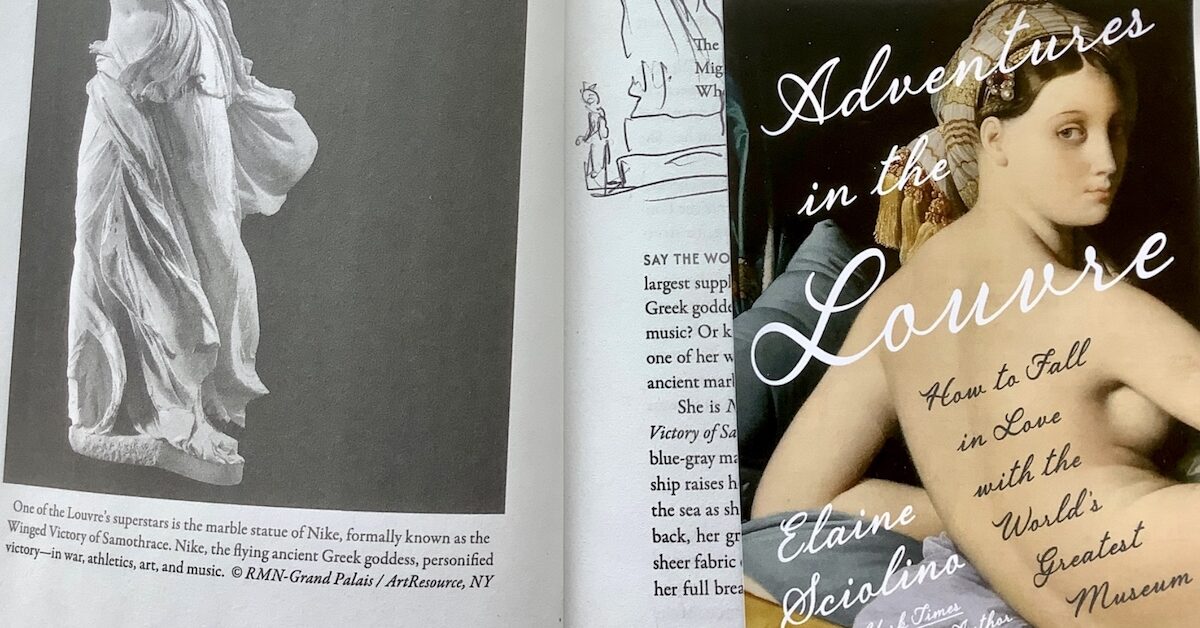
The Louvre is a paradox. It is at once the most famous museum in the world and, for many visitors, the most bewildering. Crowds surge past iconic masterpieces, corridors twist in ways that defy logic, and even the signage seems designed to test patience. In Adventures in the Louvre: How to Fall in Love with the World’s Greatest Museum, Elaine Sciolino, former Paris bureau chief for The New York Times and seasoned observer of French culture, turns this intimidating labyrinth into a place of discovery, reflection, and even intimacy. Far from a conventional guidebook or dry history, Sciolino’s work is a hybrid of investigative reporting, memoir, and narrative reflection, serving as both a practical guide to the Louvre and a lesson in how to engage more thoughtfully with art.
A Museum as Living, Breathing Entity
From the outset, Sciolino frames the Louvre as not just a building, but a living organism. Through her vivid storytelling, we meet the people who sustain it: curators meticulously restoring “The Winged Victory of Samothrace,” firefighters who learn the museum’s labyrinthine layout over the course of a year, and night guards who speak of ghosts in echoing corridors. One of the book’s most memorable episodes follows the curator during a delicate restoration, replacing a tiny fragment of marble and demonstrating how masterpieces are not static relics but living objects requiring care, and devotion. In these passages, Sciolino transforms the museum from a monumental temple into a space pulsing with human energy, curiosity, and expertise.
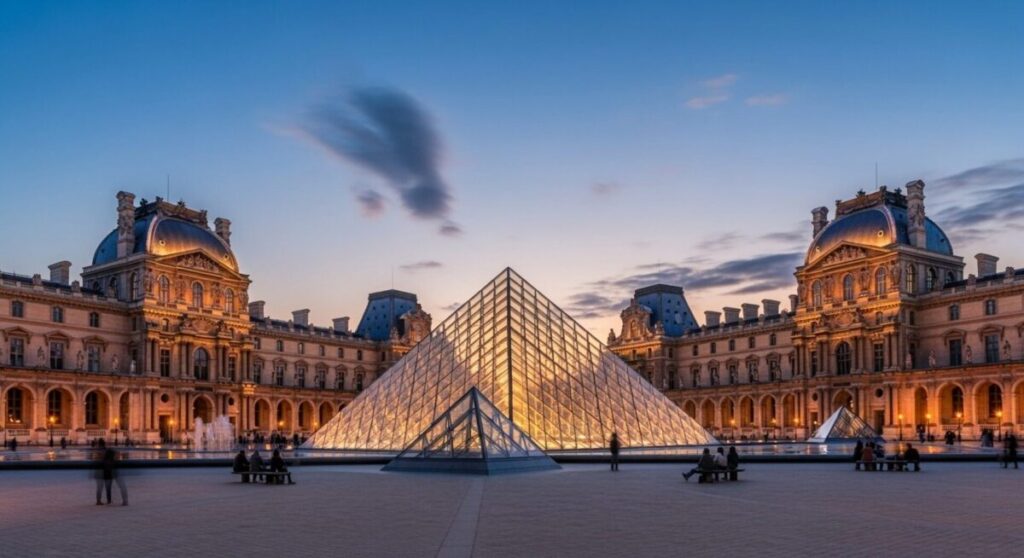
Her attention to the hidden corners—the rooftops, basements, and workshops—offers readers a sense of intimacy often denied to visitors who rush from the “Mona Lisa” to the “Venus de Milo.” Sciolino captures the museum’s rhythms, its internal logic, and its surprises, inviting us to see the Louvre not as a static repository of art, but as a dynamic institution shaped by both history and the people who inhabit it.
History, Controversy, and the Weight of Time
Sciolino does not shy away from the Louvre’s moral and historical complexities. The museum is, after all, a mirror of human ambition and imperfection. She examines the provenance of objects taken during Napoleon’s campaigns, as well as works held in the National Museums Recovery collection, awaiting restitution to the heirs of Jewish families from whom they were taken by Nazis during World War II. She raises thoughtful questions about colonial legacies, the underrepresentation of women artists, and the institution’s engagement with contemporary debates around cultural diversity and restitution. These discussions emerge organically, woven into her explorations of specific galleries or objects, rather than as abstract essays. Reading Sciolino, one realizes that to admire the Louvre without considering these layers is to see only half of the story: its beauty is inseparable from its history, its politics, and its ethical complexities.
Yet she balances these heavier moments with ones of delight and wonder. She lingers over the meticulous planting projects in the Tuileries Garden and uncovers the quieter treasures of the Flore wing, where visitors can pause before overlooked masterpieces tucked far from the Mona Lisa crowds.
She also delights in small, human moments of discovery. At one point, she describes the playful curiosity of a father and son examining “The Wedding Feast at Cana,” pointing out the small dogs in the foreground rather than the central religious figures. The museum, she shows, is both a historical archive and a space for personal engagement, capable of inspiring awe, reflection, and joy simultaneously.
From Intimidation to Intimacy
One of the book’s most compelling threads is Sciolino’s personal journey. She recalls her first visit to the Louvre as a student: fatigued, uninspired, and overwhelmed. Instead of being moved by the masterpieces, she found herself preoccupied with when she would stop for lunch and what she might eat, remembering the logistics of the day more clearly than any painting on the walls. This admission immediately breaks the myth of instantaneous cultural epiphany. Learning to see, she argues, is a process that requires patience and openness. Over the course of the book, we follow her transformation as she wanders the museum, asks questions of experts, and observes the hidden details that reveal the institution’s life.
Her dream of being lost within the Louvre is particularly symbolic: wandering endless corridors, she is disoriented and anxious until the “Winged Victory” appears to guide her. This imagined journey captures the essence of Sciolino’s argument—engagement with art, like navigating the museum itself, is a practice in patience and attentiveness.
Practical Wisdom and Hidden Corners
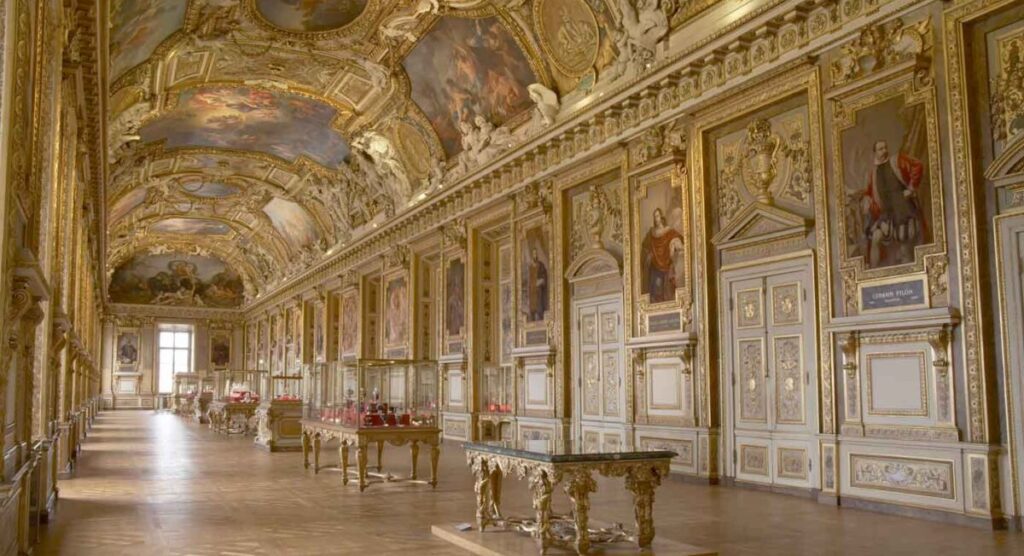
Sciolino’s expertise as a journalist manifests in her concrete, practical advice. She guides readers beyond the crowded, well-known galleries to intimate spaces where masterpieces can be seen up close, often without crowds. She explains how to access drawings and engravings in the Flore wing, and even recommends satellite sites like Louvre-Lens for a less overwhelming encounter with the museum’s collections. Through these moments, the book functions as both a travel companion and a meditation on observation: seeing well is as much about slowing down and noticing as it is about touring.
She peppers her narrative with small, humanizing details: the fire chief showing her hidden stairwells, the restorationists delighting in a rediscovered fragment, the guards telling stories of haunted galleries. These episodes animate the museum, showing that the act of preserving and presenting art is a deeply human endeavor, full of curiosity, pride, and even humor.
Style and Sensory Immersion
Sciolino’s prose is both accessible and rich, blending journalistic clarity with sensory detail. Readers can feel the echo of footsteps in empty halls, the faint smell of old stone, and the hush of night visits, while also absorbing historical context and ethical reflection. She avoids art-world jargon while maintaining intellectual rigor, creating a text that is immersive for both the casual reader and the culture-minded traveler. The museum itself becomes a character, full of personality, surprises, and nuance.
Her writing is particularly effective at conveying the rhythms of exploration: the fatigue, frustration, and eventual delight of wandering the Louvre mirrors the experience of many visitors. Even those who have been to Paris or the Louvre before will find themselves seeing the institution anew through her vivid, attentive lens.
Adventures in the Louvre: How to Fall in Love with the World’s Greatest Museum by Elaine Sciolino, published by W.W. Norton & Company, will be released in paperback on March 3, 2026.
Valentine Marchou is a French journalist with a keen eye for culture, lifestyle, and society. After honing her skills in several French newsrooms, she now aims to tell stories that bridge French and English-speaking worlds through art, food, and everyday life.


