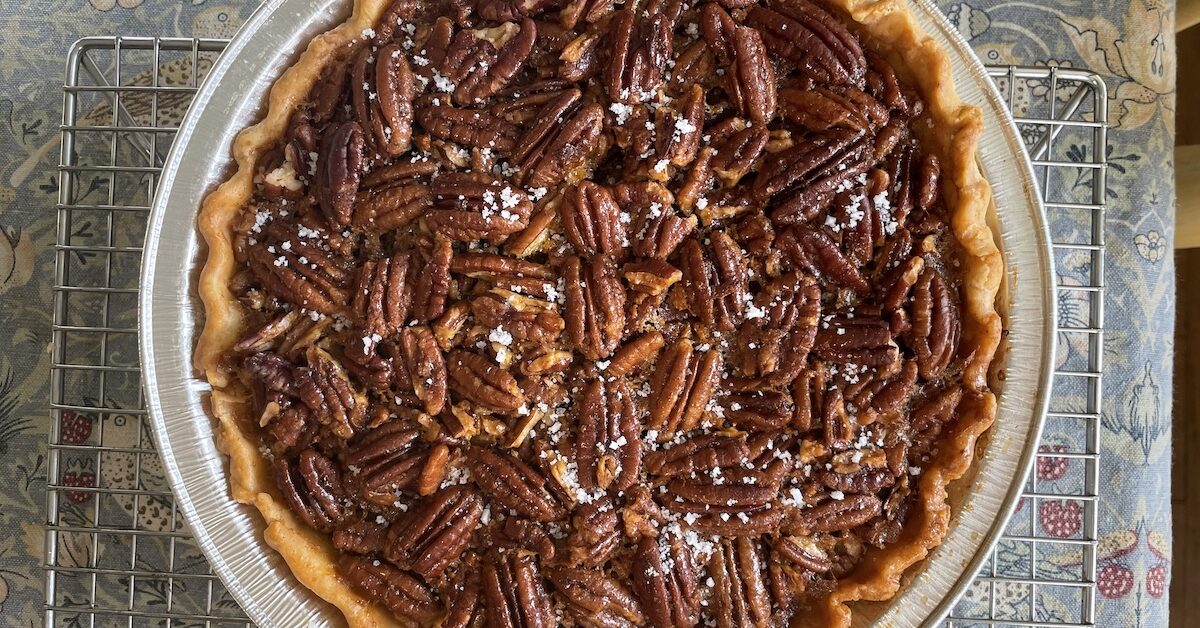
The holidays bring with them two competing food problems: the earnest desire to make something delicious, even exquisite, coupled with the bone-deep wish that it not be too hard, because damn it’s dark and we’re tired. Enter the tarte: almost a pie, except you don’t necessarily need a second crust. It can be savory or sweet, or even a little of both (those are my favorites). And it has one wonderful bonus: If you nail the three-point shot of the crust, the rest of it can be pretty simple—a little sugar, some fruit or nuts, and just the right squeeze of lemon or grate of nutmeg will elevate even the most banal apple to exquisite. Furthermore, it is my belief that a tarte, if done right, has the potential to obliviate everything that came before it—after that first deliciously sweet bite, it won’t matter if your turkey was sort of dry, your gravy was lumpy, your mashed potatoes not quite salty enough—no one will remember. They will remember that pecan pie because you remembered that all that pie needed to go next-level was a tiny dusting of fleur de sel just before serving.
What is a Tart, Anyway?
Let’s back up for a second and learn some history: The word “tart” comes from the ancient Roman word, “torta,” which just means twisted bread. Early tarts were exclusively savory, with herbs and meat fillings, an easy thing to wrap in a napkin and carry in your hand, filling enough to keep a knight or a farmer going on dreary fall nights. As often happens with the best of things, once some French and Italian cooks and chefs got inspired by the whole torta idea, back in the Renaissance, they started experimenting with luxury items like sugar, spices, and ricotta on top of or in between two crusts. The French, in particular, then began refining the pastry vehicle for these extravagant fillings, tinkering away, rolling and larding. Years went by, hundreds of them. The Austrians created the Linzer torte. Custard tarts were served to kings. Fruit was preserved and used as a base layer under other flavors. Eventually, in 1880, the glistening iconic tarte Tatin was invented by the Tatin sisters, Stephanie and Caroline, who ran an Inn in the town of Lamotte-Beuvron, just south of Orléans. And the rest, as they say, was history. The bar was now set for all that a tarte could achieve: transcendent flavor with ingredients of modest origins, made quickly, eaten even faster, and savored forever.
It’s All in the Crust
Since I started my own made-to-order organic and gluten-free pie and tart company, Pretentiously Pious Pies, a little over a year ago, I’ve been reaching back into all my years of trial and error to perfect the best gluten-free pie crust you’ve ever tasted, so good you have no idea it’s gluten-free. My tricks actually go back hundreds of years, as none of us does anything without standing on the shoulders of those who came before us. And the origins of my pie crusts lie in the pâte brisée, which is just a French way of talking about butter shortcrust pastry. Sometimes I veer closer to a pâte sucrée, which is also a flaky, buttery shortcrust, but a bit sweet. All in all, my crusts rely heavily on great-quality unsalted butter and my own organic and GF flour mix.
How Hard is it to Make a Great Tart or Pie?

Even though you might not be able to buy one of my pies this holiday, I am here to share some tricks I have developed since my family went gluten-free back in 2013. But these tricks will work with gluten and GF store-bought crusts. What you need to know about my pies is that although they are exquisite, they also aren’t too time consuming, fussy or demanding.
I, myself, need easy and delicious baking projects because I have two sons and a writing career, and patience is not my natural place of repose. I don’t mind consuming fussy things, but I lean more into sumptuous and hearty dishes than I do into technical perfection. So, without further ado, I am going to share my tricks with you. They are easy, won’t add time, and I promise they will deliver. Being a multitasker, I promise you can adjust your pie and tart baking to these tips while also making mashed potatoes and gravy. You got this!
Tips for Making a Classic French Tart or Pie Crust
- You can make any crust, even store bought, taste like light, flaky, perfectly laminated pâte brisée crust with one simple hack: take a stick of butter, unwrap it, and stick it on a plate or in a mason jar in the freezer overnight. When it’s totally frozen, take your pie crust out of the fridge, and roll it out to the size of a personal pizza. Grate frozen butter on the crust, fold the crust over the butter like you’re folding a letter, now roll from the opposite direction. Repeat, repeat, repeat. When you’ve done this about 5-6 times, rolling from different directions and adding all that frozen butter in, about 3-4 tablespoons worth, you will now have lovely, flaky pockets in your pie pastry. Butter your pie plate, drop your crust in, put the entire thing back in the fridge until you are ready to either blind-bake or fill and bake—the point is, keep it cold. If you only do this tip, you are good.
- To elevate just a little more, remember this: Every crust you make from scratch needs at least ¼ to ½ tsp of salt. And your filling needs about ⅛ to ¼ tsp of salt. The salt actually accentuates the sweet flavors inside the pie. Remember MSG? That’s the whole point of MSG: the sodium in it helps put your flavors on steroids. You don’t need MSG, just some great sea salt, fleur de sel if you’re really gonna wow ‘em, or perhaps some gray Celtic salt or La Baleine.
- Bake your fruit pie for ten minutes at 400 degrees Fahrenheit, then turn the oven down to 300 or 350 for whatever the time is left. This gives the crust a second to puff up and make all those air bubbles, and the sugar in the crust will take on a deeper flavor.
- Always do a wash on the top of your crust. I never believed this would make such a big difference until I started making Maine shaker lemon pies. Some people use egg, whipped and mixed with water, or just egg white. I do that sometimes. But I actually prefer whole milk and then a lovely sprinkling of organic sugar—not too much—since the milk sugar mixture leaves the top of the pie glistening like new fallen snow and tasting like you just picked it up from a pâtisserie on the Rue Mouffetard.
- If you want your crust to go to the next level, when the butter is in the mixer, add a bit of vanilla and a tablespoon of sugar. If you want it even sweeter, add two. But don’t go crazy! Even for a savory pie, a tablespoon of sugar adds a delicious level of flavor.
- Don’t overly brown your crust. To avoid this, when your crust gets the perfect golden brown but you know your apples or pears aren’t fully tender, cover the top of your pie with a loose piece of foil or parchment. This will save your crust while the rest of the pie gets perfectly cooked.
How to Level Up Your Tart or Pie Filling

- Unless the skins of your fruit are terribly pockmarked or tough, leave them on, for just about any fruit that you’d normally eat the skin of. (I use the skins even in my lemon pie, but that’s a whole other thing.) Otherwise, your pie can get insipid and gummy. There are exceptions–like the tarte Tatin, which uses peeled apples in a lovely stove-top caramel, or if you’re trying to make a pie from overripe fruit.
- When it comes to sugar and spice, sometimes less is more. No one knows this better than a French baker. A pinch of nutmeg, cinnamon, or allspice, or a good pour of vanilla might do the trick.
- Use a little acid: apple cider vinegar (¼ – ½ teaspoon), orange juice, lemon or lime juice, pomegranate juice. These additions, plus the aforementioned salt will make your tart taste amazing.
Make the Most of Your Crust Scraps
I take any leftover bits of pie crust and roll them out. Then my kids take the bits and free-form or cut them into shapes. I then throw them onto a baking sheet covered with parchment paper, sprinkle some sugar or pour a little maple syrup on each one, and bake for about 7-ish minutes. I call them “pie crust treats.” These should keep the beasts satisfied until dinner, or dessert, whichever comes first.
Top Off Your Tart in Style
Just remember: most everything can be saved just before serving by adding some Chantilly whipped cream, or heavy cream whipped with a touch of sugar and vanilla.
Go forth and bake. Let me know how it goes.
Caitlin Shetterly’s new novel, The Gulf of Lions, is set in France and will be published in May of 2026. Check out her made-to-order pie company, Pretentiously Pious Pies, on the coast of Maine, where she lives.